
Last updated November 25, 2026
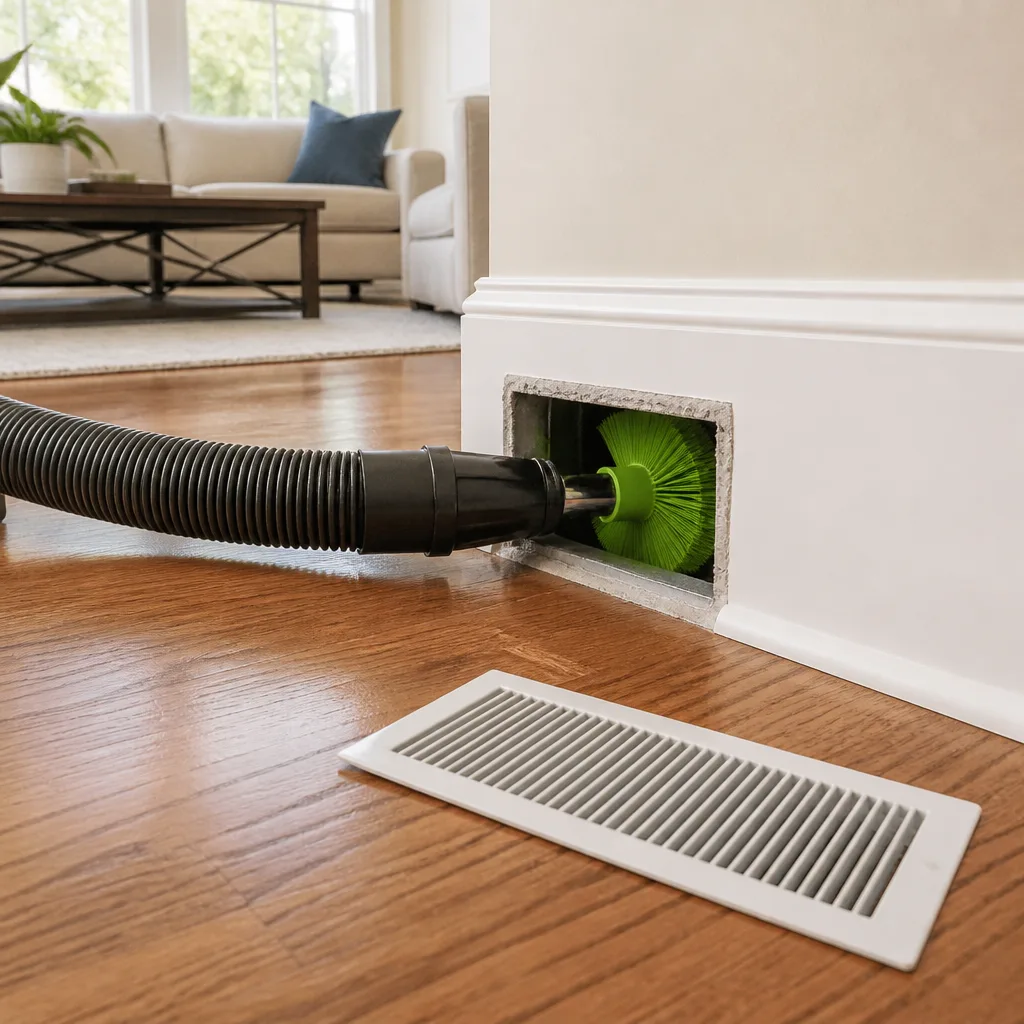 Whole-home duct cleaning
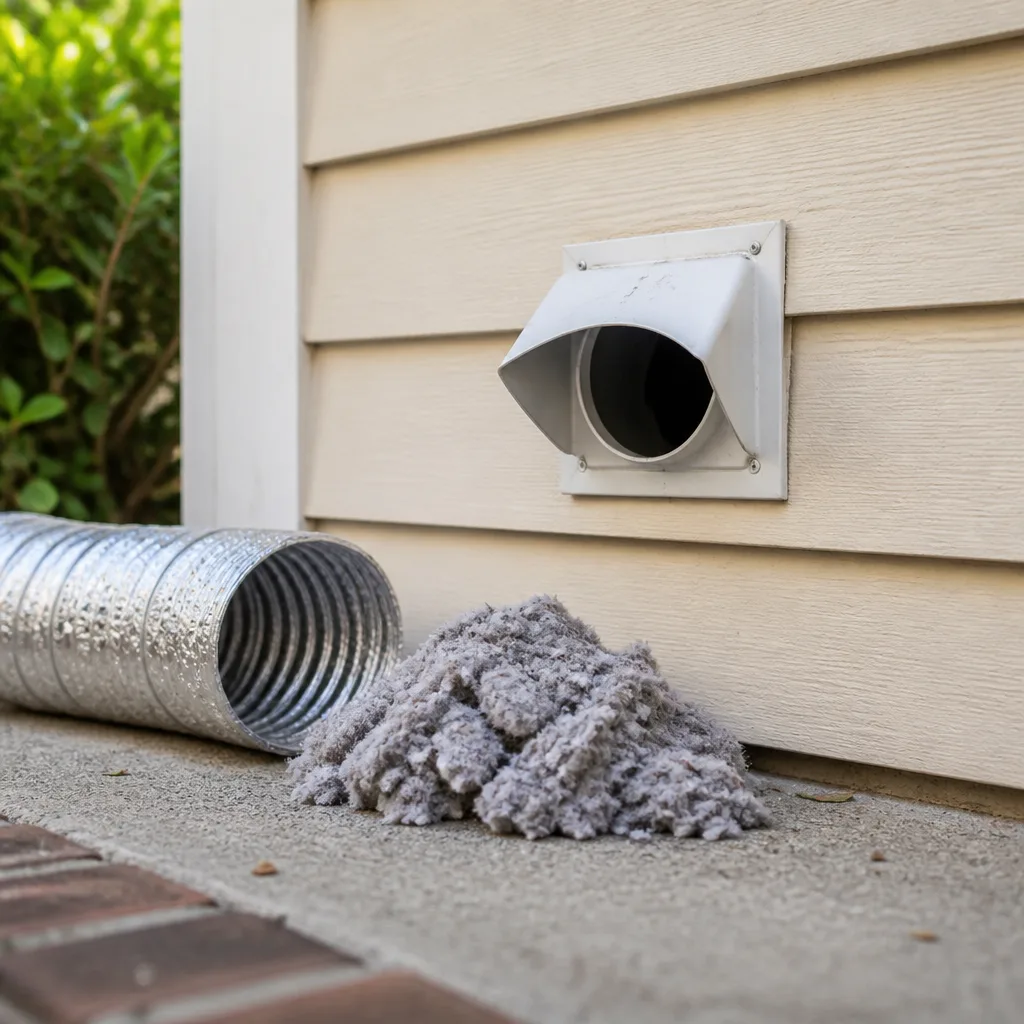 Dryer vent cleaning
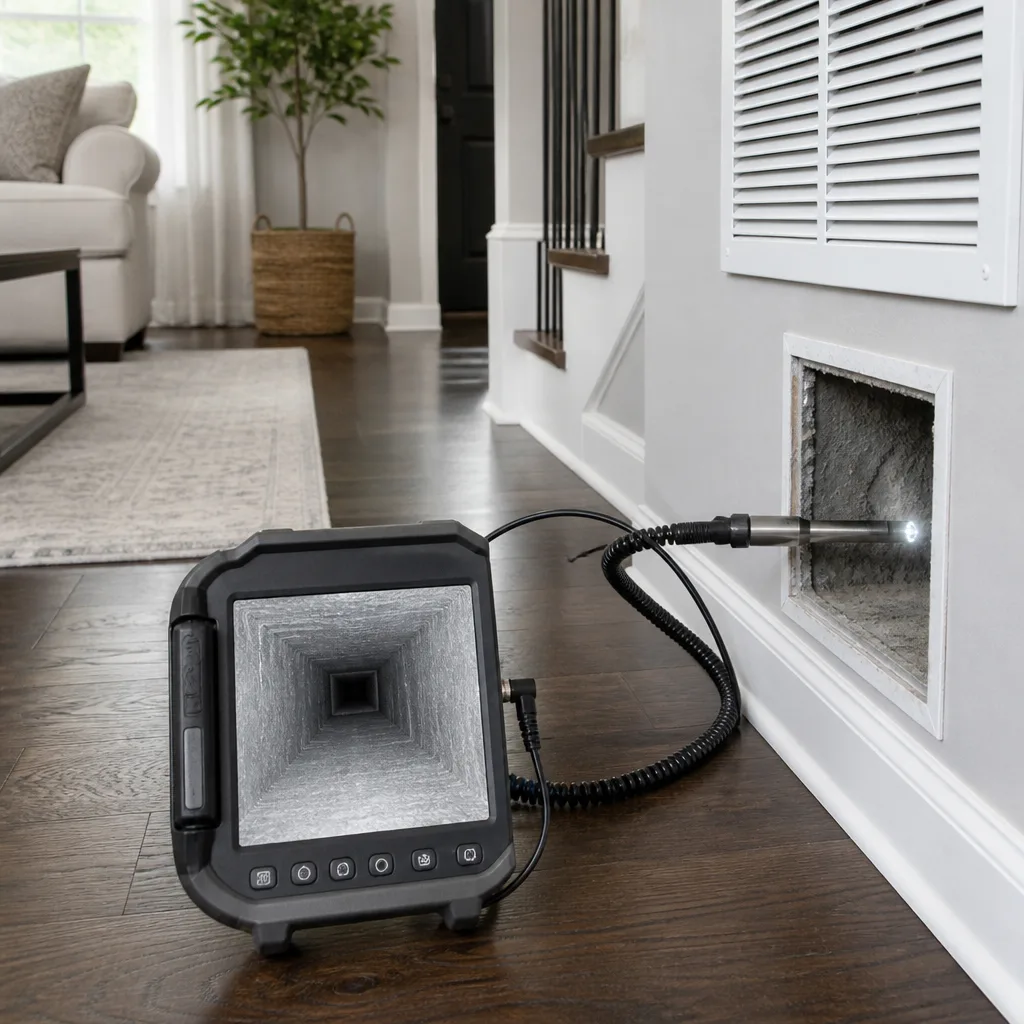 Camera inspection
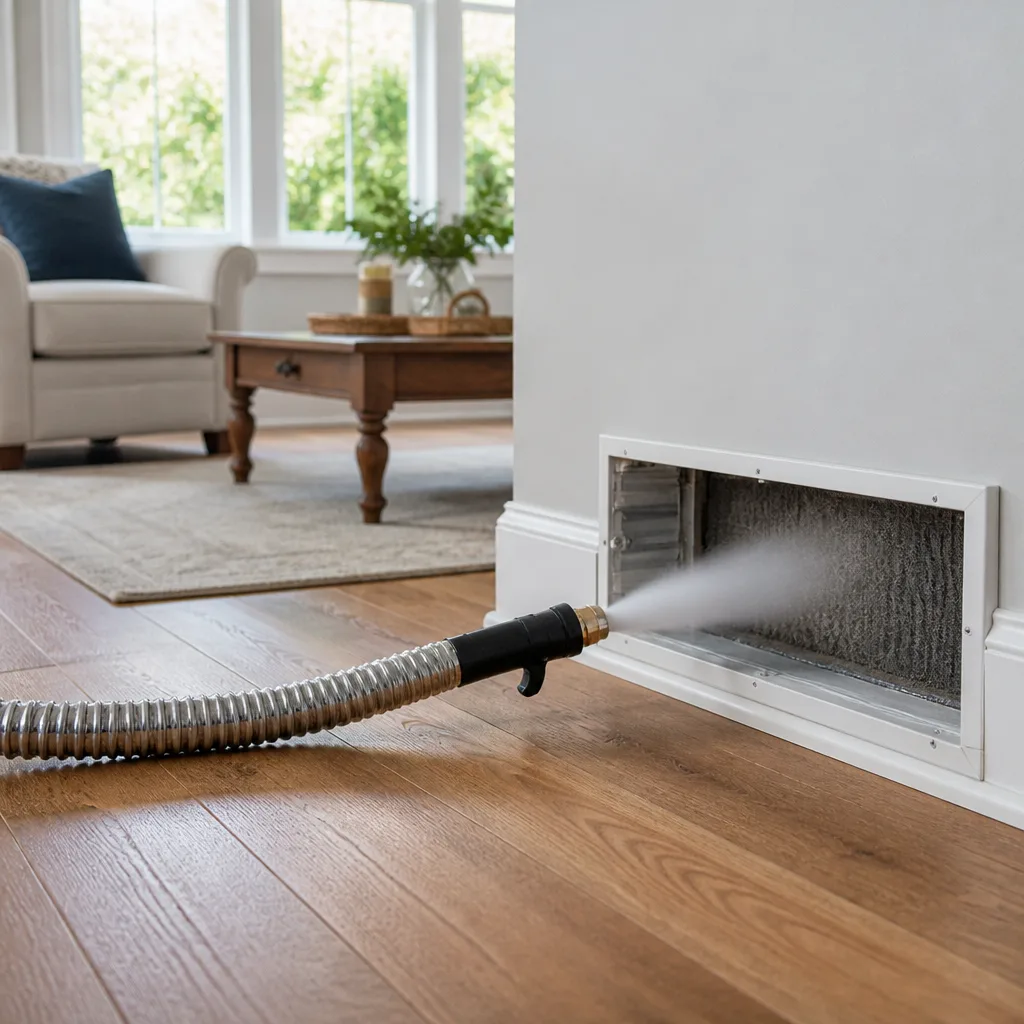 Sanitizing & deodorizing
Whole-system duct and dryer vent check with before-and-after photos - you see exactly what came out of your vents
That "$99 whole-house special" is a bait ad - the real number appears once they are in your hallway, or the "clean" is a shop-vac at the register. We photograph the inside of your ducts before and after instead.
Air Duct Cleaning Cost Breakdown: The Layton Homeowner’s Reference for 2026
The duct cleaning quote you’re staring at is probably a lie, and not the lie you think. The price itself may be real. What’s missing is what that price buys you. In Layton, the same 2,400 square foot house can command anything from an $89 “special” to a $900 proposal, and neither number means a thing until you know what equipment shows up, how many hours the job takes, and whether anyone intends to actually clean your ductwork or just run a vacuum past the registers. This guide breaks down what a legitimate cleaning costs and why, what drives the price up or down in Davis County homes, which add-ons earn their keep, and how to read a written scope so you can compare quotes on process instead of on the bottom line.
Quick Answer
Air duct cleaning in Layton typically runs $300 to $700 for a standard single-family home, with larger or more complex systems (multi-zone, two-story with a finished basement, multiple air handlers) reaching $800 to $1,200. A dryer vent cleaning usually adds $125 to $225. The written estimate you receive before work starts sets the final price, so treat any range here as a planning figure, not a quote.
Styles & brands we work with
- Whole-home duct cleaning
- Dryer vent cleaning
- Camera inspection
- Sanitizing & deodorizing
Table of Contents
- Why the Same House Gets an $89 Quote and a $900 Quote
- What Actually Drives the Cost of a Legitimate Cleaning
- Layton Pricing Context: Tract Homes, Custom Builds, and System Complexity
- Line-Item Cost Ranges for Layton Homeowners in 2026
- Which Add-Ons Are Priced Fairly and Which Are Margin Plays
- How to Get a Written Scope of Work Before You Accept a Quote
- The Long-Term Cost Math: Why $500 Beats Three $150 Cleanings
- Dryer Vents: A Fire Risk, Not a Chore to Postpone
Why the Same House Gets an $89 Quote and a $900 Quote
The $89 duct-cleaning special being advertised across Davis County right now costs $89 because of what it leaves out. A portable vacuum with less pull than a decent shop-vac. A technician whose time is scheduled around selling sanitizer spray rather than rotating a brush through your trunk lines. The cleaning itself takes minutes because it was never the point. We’ve seen the aftermath often enough that the pattern is predictable: a homeowner pays the special, gets a photo of a dusty register, agrees to a fogging treatment that runs several hundred dollars, and still has the particulate load in the system that caused their allergy symptoms in the first place.
At the other end, a $900 quote is not automatically an honest one. Price alone signals nothing. What signals honesty is whether the proposal tells you what equipment will be used, how the technician will access each section of duct, how long the work is expected to take, and what you’ll receive as verification when it’s done. A legitimate cleaning in Layton Air Duct Cleaning Pros pricing territory accounts for real labor, real equipment, and real time. Three components. Any quote missing one of them isn’t a bargain; it’s a different service wearing the same name.
This guide walks you through the cost structure so you can see what you’re actually paying for. That’s the whole trick. Once you understand the drivers, comparing quotes gets much easier.
What Actually Drives the Cost of a Legitimate Cleaning
A properly priced cleaning in Layton isn’t determined by square footage alone. Four cost drivers account for nearly the entire difference between a fair quote and a low one:
- Equipment tier. Professional rotary-brush and negative-air systems cost tens of thousands of dollars to buy and maintain. Consumer shop-vacs cost a few hundred. The amortization of that equipment is baked into every honest quote. We run air duct cleaning with Rotobrush and Nikro mechanical systems because a portable vacuum can’t dislodge the compacted dust and biological growth that clings to duct walls. It just can’t. Suction alone moves loose debris; it doesn’t scrub.
- Labor hours per register. A proper cleaning takes roughly 15 to 30 minutes per supply register once you factor in brush rotation, containment, and verification. A 12-register home is 3 to 6 hours of technician time. A quote that assumes 1 hour for the whole house is a quote for a different job.
- Access-point creation. Every duct system needs access cut points for the brush and vacuum to reach the trunk and main runs. A skilled technician plans these access points to minimize patches. A cheap crew skips them and cleans only what the existing registers expose, which is roughly 15% of the system.
- Camera inspection time. Before and after photos of your own ductwork are the only verifiable proof the work happened. That inspection takes time and equipment. A quote with no visual verification step is asking you to take it on faith.
All four drivers appear in a well-written proposal. They also appear on the invoice as time and scope. When a quote prices cleaning at a flat $89 with none of these line items called out, that’s the signal. Something is being skipped.
Layton Pricing Context: Tract Homes, Custom Builds, and System Complexity
Layton’s housing stock shapes duct-cleaning pricing more than most homeowners realize. The tract homes built through the 1990s and 2000s across neighborhoods like East Layton, Oak Forest, and the areas around Ellison Park share a similar profile: 1,800 to 2,600 square feet, single air handler, short trunk runs, and ductwork that’s generally accessible from a central utility closet. That profile tends to land in the middle of the range because the labor is predictable.
Custom builds and older properties complicate things. A home with two air handlers (common on two-story builds with a finished basement) roughly doubles the equipment setup and inspection time. A house with a zoned system, multiple returns, or ductwork routed through finished ceiling cavities needs more access planning and more patching after the cleaning. A home built before the mid-1980s may have ductwork that’s been added to, spliced, or rerouted over the years, which means the technician has to trace the layout on arrival rather than assume it.
Utah’s dry, dusty summers and inversion-prone winters amplify the problem. Fine particulate settles in ductwork faster here than in humid climates, and the spring pollen load in Davis County pushes through return-air grilles within a season for households running their HVAC continuously. That doesn’t change the pricing structure, but it does mean Layton homes often sit at the higher end of the labor-hour range because there’s more material to move. When we clean a Layton home that hasn’t had service in several years, the extraction time alone can add 30 to 60 minutes compared to a similar square footage elsewhere.
Line-Item Cost Ranges for Layton Homeowners in 2026
Below are the typical 2026 ranges for Layton residential duct work, broken into line items so you can see how a proposal should be structured. These are planning ranges only. The written estimate you receive before work starts is the final price.
| Service | Typical Range | Notes |
|---|---|---|
| Whole-home air duct cleaning (standard 1,800-2,600 sq ft, single system) | $300 – $700 | Includes rotary brush + negative air, all supply and return registers, camera verification |
| Whole-home air duct cleaning (larger or multi-system) | $800 – $1,200 | Two-plus air handlers, zoned systems, or extensive trunk runs |
| Duct repair and sealing (per section) | $150 – $500 | Depends on accessible vs. concealed leaks and whether mastic or tape is required |
| Dryer vent cleaning | $125 – $225 | Includes lint extraction and airflow verification |
| HVAC unit cleaning (blower, coil, cabinet) | $250 – $500 | Priced for the air handler servicing the ducts |
| Post-cleaning sanitizing treatment | $150 – $350 | Guardsman-based products for biological contaminant neutralization |
| UV lamp installation (in-duct) | $250 – $550 | Hardware and installation; ongoing bulb replacement is separate |
| Whole-home filtration system | $400 – $1,200 | Honeywell and Aprilaire media filtration cabinets priced by size and integration |
One more line item worth understanding: HVAC cleaning is sometimes bundled with duct cleaning and sometimes quoted separately. It should always appear as its own line, with its own scope, so you can see whether the technician is actually cleaning the equipment that moves your air or just the ductwork around it. When a quote folds both into a single opaque number, that’s a signal to ask for a breakdown.
Which Add-Ons Are Priced Fairly and Which Are Margin Plays
Add-ons are where a cheap quote becomes an expensive job. Some are legitimate and worth the money. Others exist to pad the invoice on site, and they’re priced to close while the technician is standing in your hallway. Here’s how to tell the difference.
Legitimate add-ons with real value
- Duct repair and sealing. Leaking ducts waste conditioned air and pull attic air into the living space. This is real work with measurable results (airflow verification before and after). If your technician can find, fix, and seal leaks in the same appointment, that’s an efficiency upgrade, not a sales pitch. We handle repair and sealing alongside cleaning because it’s genuinely the right time to do it.
- Dryer vent cleaning. This is a fire-risk reduction service, and the NFPA has documented the danger of accumulated lint in dryer vents for decades. Treat it as its own service with its own price, not as a $39 upsell tacked onto a duct cleaning.
- Whole-home filtration upgrades. A Honeywell or Aprilaire media filter cabinet installed at the air handler does more for indoor air quality than any fogging treatment. Unless you plan to replace the filter regularly yourself, though, the ongoing cost (roughly $40 to $100 per filter, replaced one to two times a year) belongs in your math.
- Coil cleaning. A dirty evaporator coil reduces system efficiency and can ice the system in summer. Priced as part of the HVAC cleaning line if it’s accessible, or as a separate line if the coil needs an enclosure removal.
Add-ons to question
- Fogging treatments sold on their own. Applying a sanitizing fog without first removing the biological load in the duct is like spraying air freshener in a dirty room. Sanitizing is the finishing step after mechanical cleaning, not a substitute for it. A legitimate treatment uses products like Guardsman and is priced with the cleaning, not as a standalone spray.
- UV lamps pitched as a silver bullet. In-duct UV lamps work best when they’re sized to the air handler and paired with filtration. A cheap lamp sold as “kills everything” is not the same thing. Ask what it’s installed in front of, and what filtration is in place upstream.
- “Sealing” that’s really tape. Duct sealing means mastic or proper sealing systems applied to leaking joints. It doesn’t mean duct tape. Ask what product will be used.
How to Get a Written Scope of Work Before You Accept a Quote
The single most useful thing you can do when comparing Layton duct-cleaning quotes is refuse to accept any proposal that doesn’t come with a written scope of work. Scope tells you what the technician intends to do, in what order, with what equipment, and what you’ll receive as proof when the work is complete. Here’s a practical sequence for requesting and evaluating one.
- Ask for the scope in writing before anyone comes out. A legitimate company will ask about square footage, number of registers, number of systems, and any specific concerns (allergies, musty odors, visible dust) to price the job honestly. A quote given over the phone in ten seconds with no questions is a number with no scope behind it.
- Confirm the equipment tier in the proposal. The proposal should name the system being used. If it says “professional vacuum” and nothing else, ask what that means. Rotobrush and Nikro are the names to look for because they’re the same rotary-brush and negative-air systems used on commercial jobs.
- Confirm access-point plan. The proposal should state how many access points will be created, and whether patching or sealing those access points afterward is included. This is the most-often-skipped line item in cheap quotes.
- Confirm verification. Before-and-after photos of your ductwork are non-negotiable. If the proposal has no verification step, ask why.
- Confirm the flat price per system. A written estimate is the final price for the scope described. No per-register pricing, no “starting at” figures that balloon once the technician is on site.
- Confirm what happens if additional issues are found. If the technician opens the system and finds a leaking or collapsed duct section, how is that priced? A legitimate company provides an estimate for the repair before the work is done, not after.
Non-negotiable line items on any professional proposal: equipment specification, register count, system count, access-point plan, verification method, the flat price, and what’s excluded. If any of those are missing, the quote isn’t ready to sign.
The Long-Term Cost Math: Why $500 Beats Three $150 Cleanings
Here’s the counterintuitive part. A $500 cleaning every five years costs less than three $150 cleanings over the same period, and the difference isn’t just money. It’s the total dust load you’re breathing, the efficiency of the system you’re paying to run, and the lifespan of the equipment the dust is passing through.
Cheap cleanings share the same characteristics: they skip access points, they use suction without a brush, and they don’t verify their work. That means the compacted debris stays in the trunk lines. The system looks cleaner at the registers. The technician walks out. Three years later the homeowner calls again because the symptoms haven’t improved, gets another cheap cleaning, and repeats. The total cost across five years approaches the cost of a single proper cleaning, but the indoor particulate load has been continuous the whole time.
Three factors compound the math:
- Filter quality. A properly sized media filter (typical replacement $20 to $60, changed every one to three months depending on the season) captures a substantial share of particulate before it settles in the ducts. Cheaper fiberglass filters pass more through. The cost difference per year is small; the downstream difference in duct cleanliness is not.
- System efficiency. Leaking or dirty ducts force the blower to work harder and push conditioned air into places that don’t need it. Cleaning plus sealing restores the system’s delivered airflow. Running the system at reduced efficiency over several years costs more than the cleaning ever did.
- Frequency. A home with pets, smokers, allergy sufferers, or recent construction should be cleaned more often (every two to three years) than a low-occupancy home (every five to seven years). Cleaning on the right frequency for your household avoids both premature cleaning and buried problems.
If you’re managing multiple rental properties, the math runs the same way on a portfolio scale. Property managers we work with in Layton prefer a documented cleaning schedule because it caps unexpected HVAC costs and gives tenants evidence of the service, which cuts turnover-related disputes. That’s a business consideration, not just an indoor-air one.
Dryer Vents: A Fire Risk, Not a Chore to Postpone
Dryer vent cleaning lives in a strange category for most homeowners. It’s cheap enough to postpone, easy to convince yourself the lint trap catches everything, and quietly dangerous in a way that doesn’t announce itself. NFPA data has documented for years that failure to clean dryer vents is a leading contributing factor in residential dryer fires. The lint that escapes the trap collects in the vent run and around the dryer housing. It heats up. Sometimes it ignites.
A proper dryer vent cleaning is a genuine safety service, not a quick vacuum pass. It involves extracting the accumulated lint from the entire vent run, not just the segment immediately behind the dryer, and verifying airflow afterward. If the vent run is too long or has too many bends, the technician should tell you that too, because that’s a code concern, not a simple cleaning issue.
Pricing for dryer vent cleaning in Layton sits in the $125 to $225 range for a standard residential installation. That covers a full vent run extraction and airflow verification. If the dryer takes noticeably longer to dry a load than it used to, or the load comes out hot, or you notice lint collecting behind the dryer, the vent is a likely culprit and worth checking before you buy a new dryer. Cleaning and repair are sometimes needed together when the vent run itself is compromised.
For property managers, this one carries a specific liability weight. Tenant-documented dryer vent cleaning at unit turnover is a low-cost way to demonstrate the system is safe and functioning, and it removes an entire class of “we didn’t know” from the risk column.
Common Mistakes to Avoid
- Comparing quotes on price alone. An $89 quote and a $900 quote are not the same service at different margins. They’re measuring different work. Compare scope, equipment, labor time, and verification before you compare dollars.
- Accepting a phone quote without a site assessment. Layton home layouts vary enough that no legitimate company can price a cleaning accurately without knowing register count, system count, and accessibility. Ten-second phone quotes are not estimates. They’re openings.
- Paying per register. Every legitimate duct cleaning price should be a flat price per system, not a per-register line. Per-register pricing rewards the company for adding register counts and punishes the homeowner for having a bigger house. Nobody wins except the invoice.
- Skipping the before-and-after photos. This is the only verification available to you. If the technician can’t show you photos of your own ductwork, ask why. If the answer is vague, that’s your answer.
- Fogging instead of cleaning. Sanitizing is the last step, not the whole job. If your quote is $99 plus $300 for sanitizing and no mechanical cleaning, you’re buying air freshener.
- Waiting until you have symptoms. Dust in the ducts doesn’t announce itself until a household member reacts. In Layton’s dry climate, particulate accumulates faster than most homeowners expect. A visual check every year is worth the ten minutes.
- Ignoring the dryer vent. It’s the single most expensive thing in this guide to postpone. Cleaning is inexpensive and the consequence of skipping it is not.
See the difference
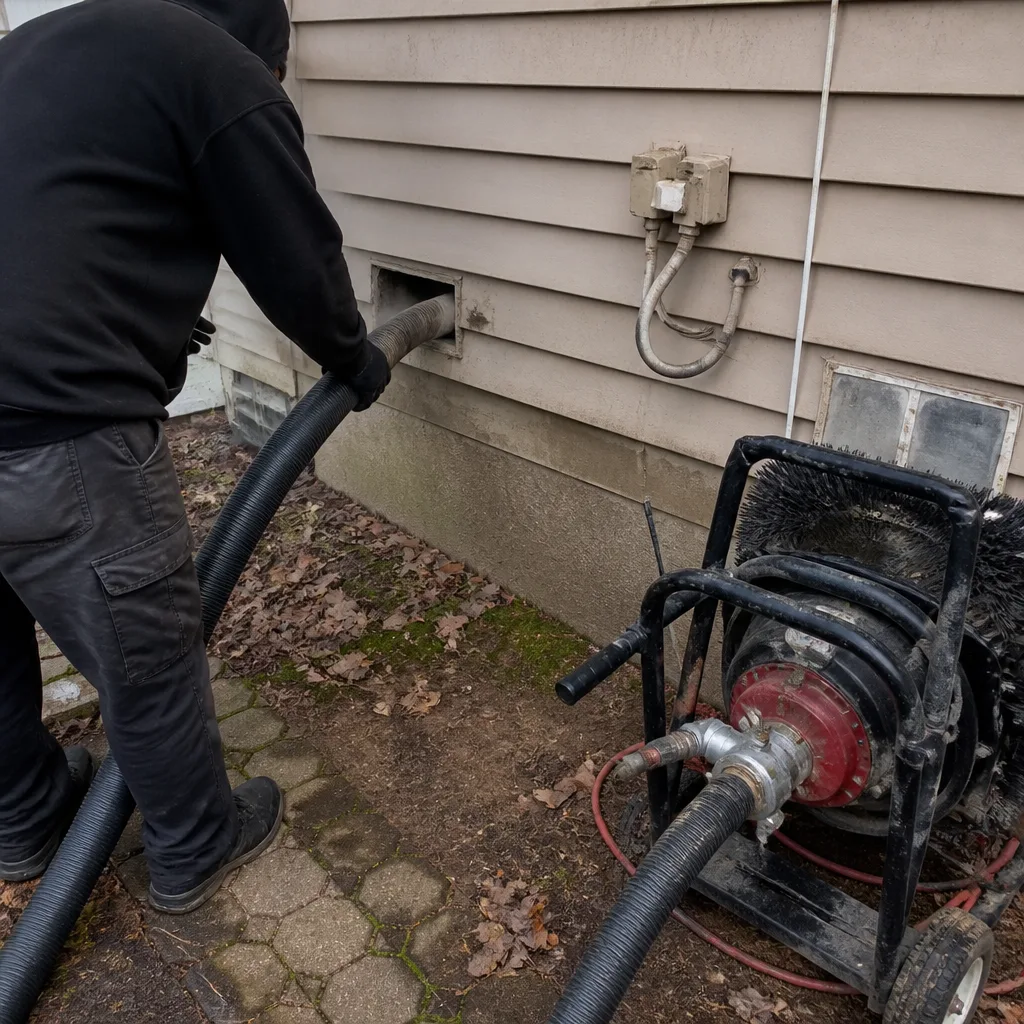 Before
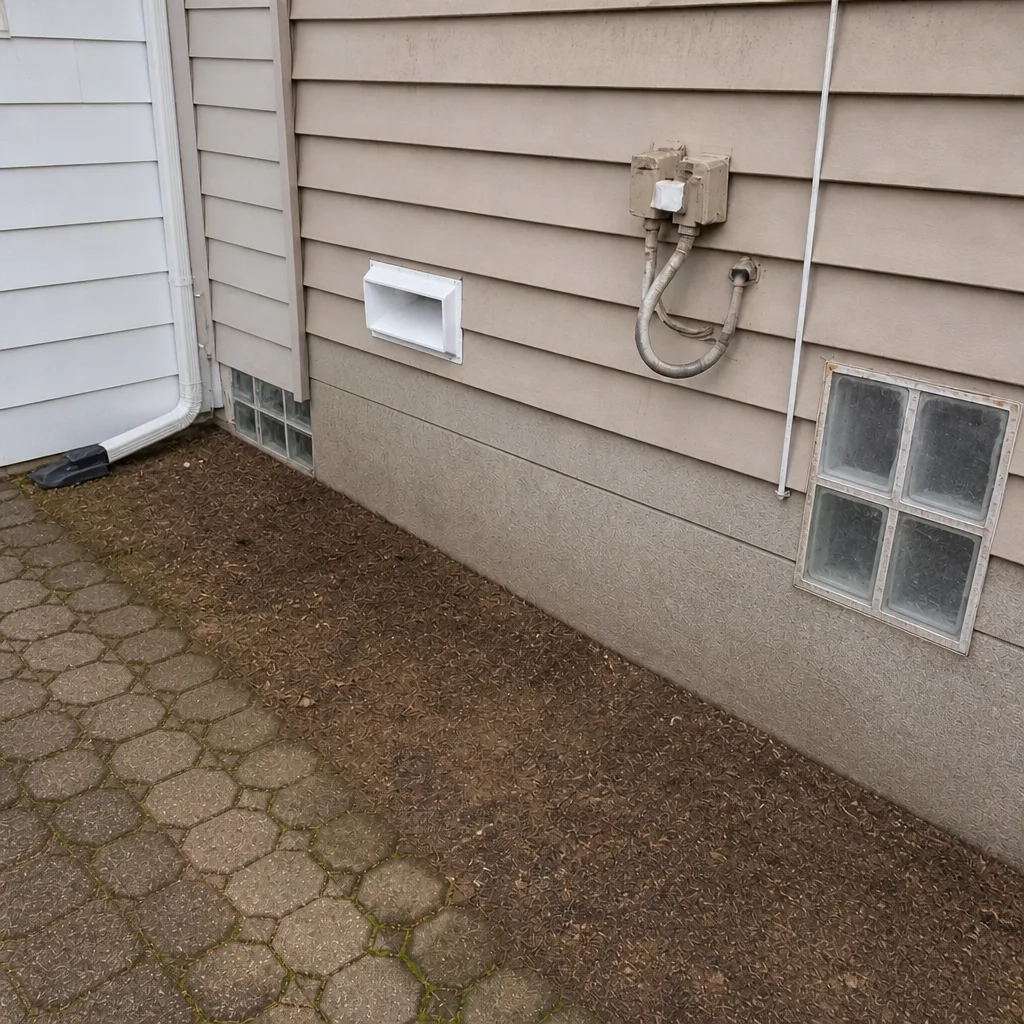 After
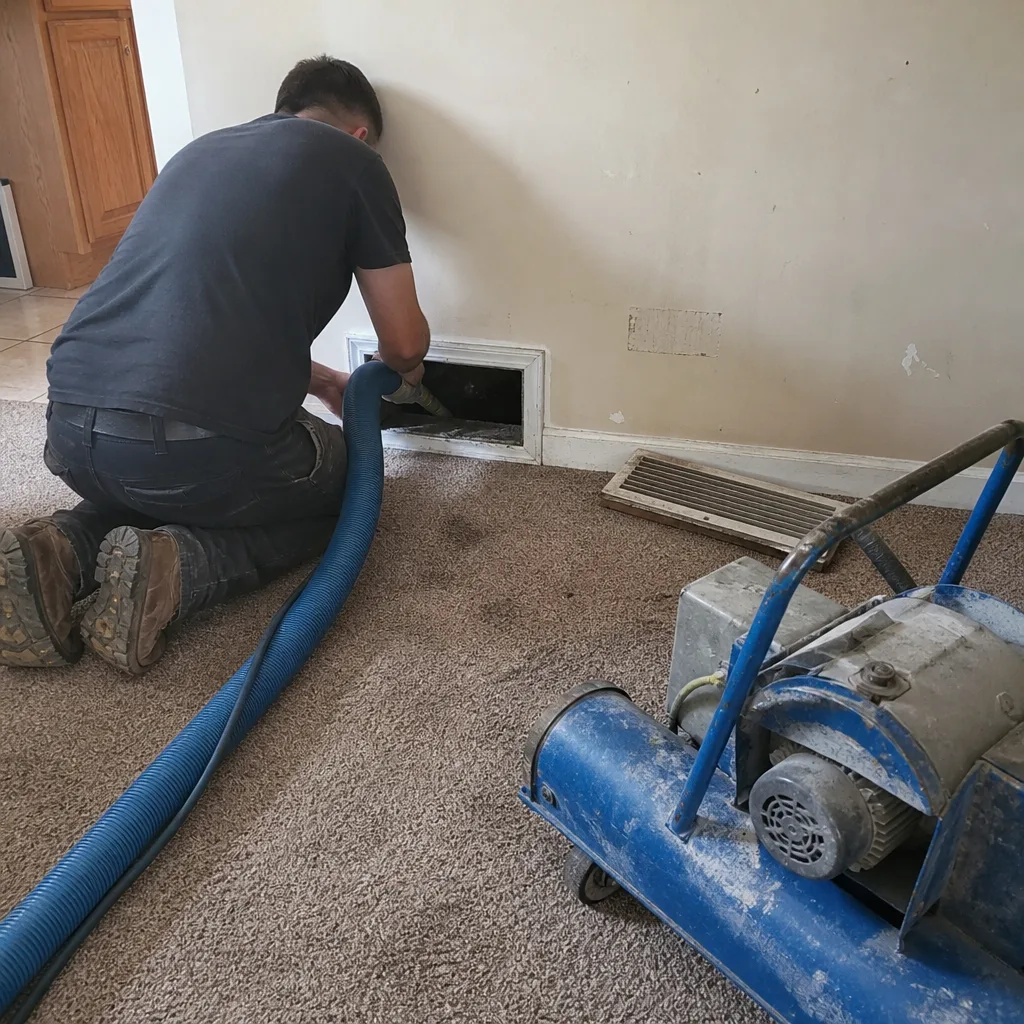 Before
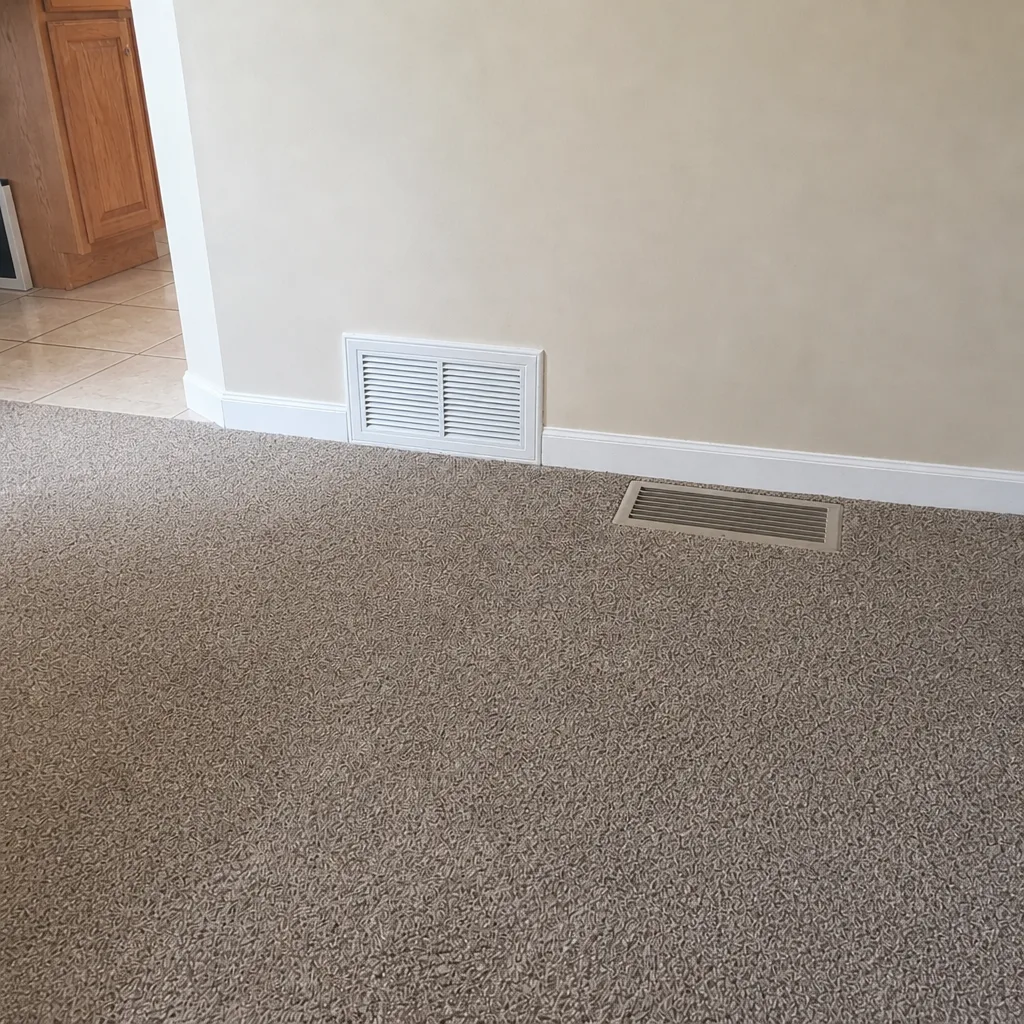 After
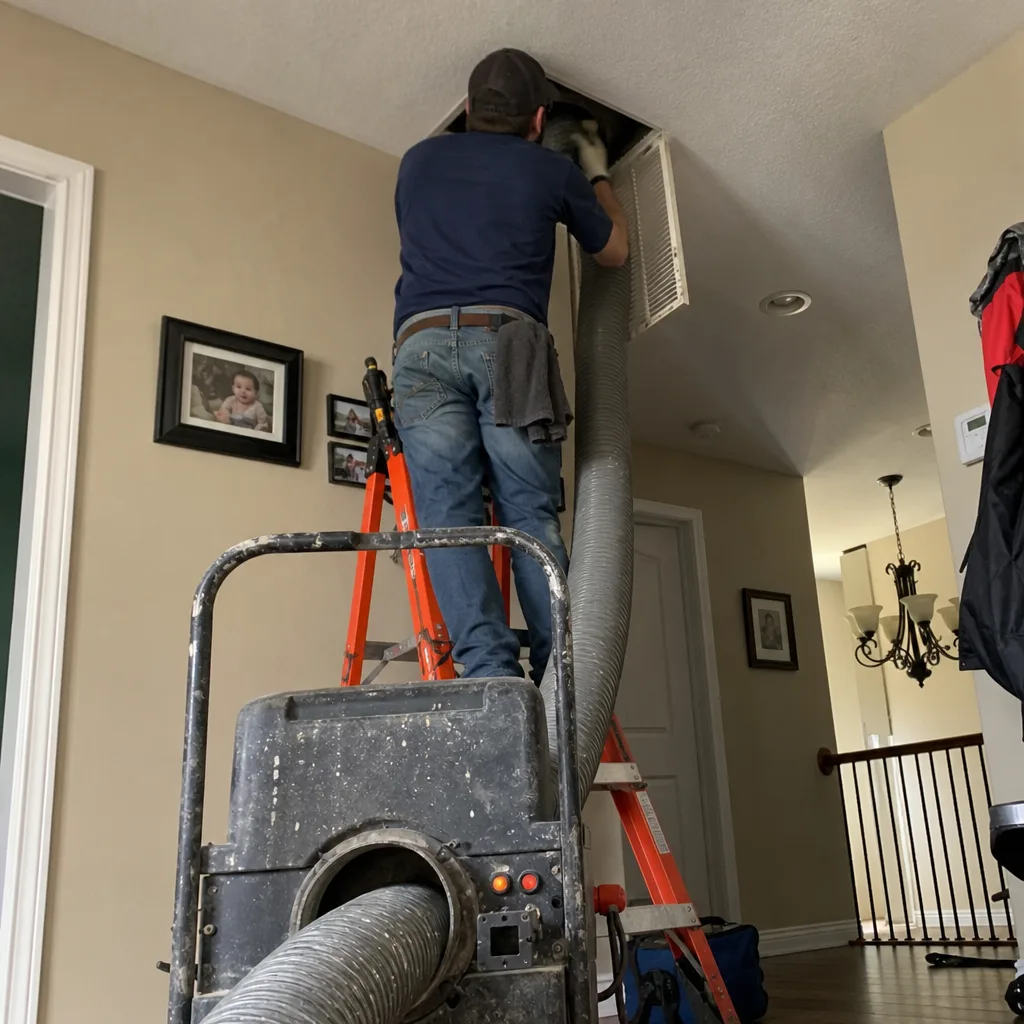 Before
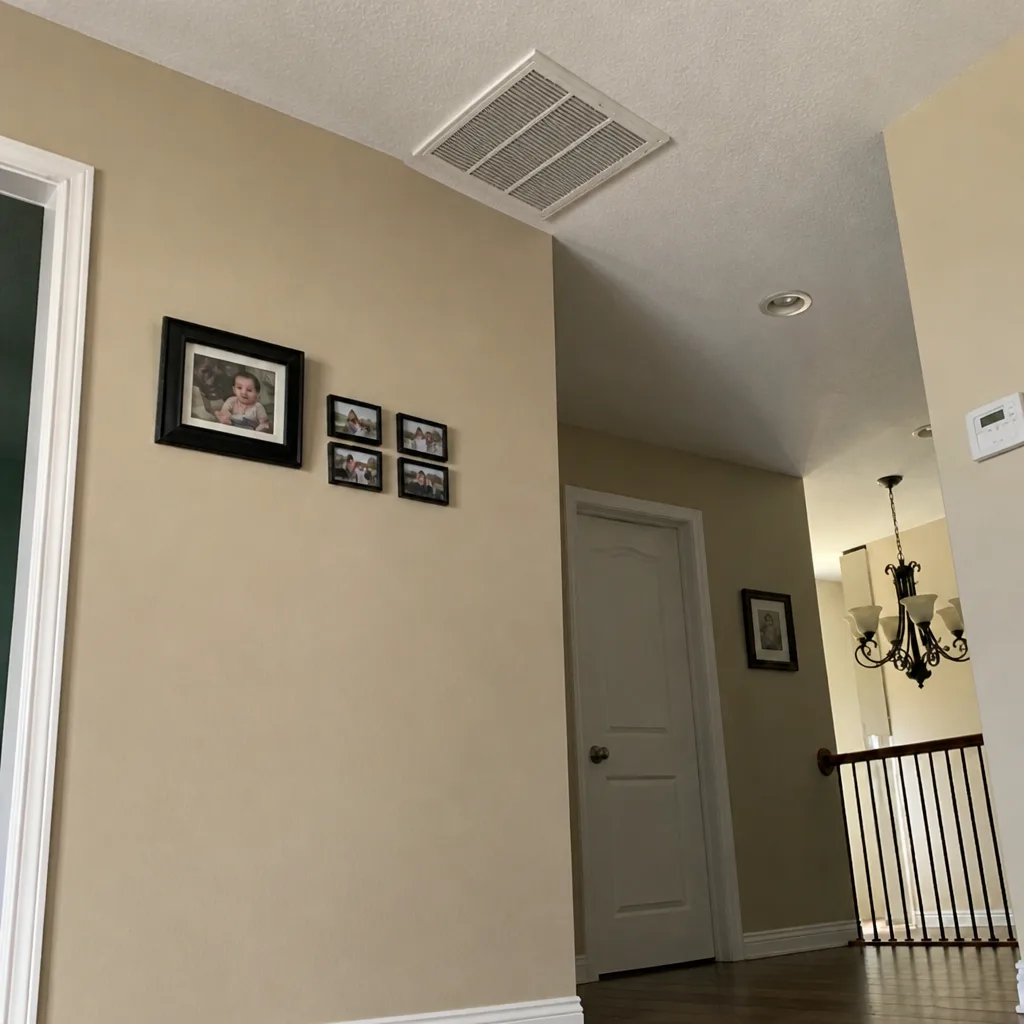 After
When to Call a Professional
Some duct conditions call for a professional sooner than the general cleaning schedule suggests. Call us when you notice any of the following: visible dust in the supply-air stream right after the system kicks on, a musty or stale smell in the return-air grilles that doesn’t clear when you change the filter, an uptick in allergy symptoms for anyone in the household that tracks with HVAC cycles, a recent renovation that left construction dust in the living space, or a dryer that takes more than one cycle to dry a normal load. Those are physical symptoms, not hypothetical ones, and each points to a system that needs attention.
If you’re comparing quotes and want a written scope before you commit, we provide free estimates in Layton. Call (855) 726-7045. We answer 24/7. Fast dispatch from 7am to 7pm, Sunday through Friday. Bring your current quote if you have one and we’ll tell you what to ask the other company.
Frequently Asked Questions
Air duct cleaning in Layton typically costs $300 to $700 for a standard single-family home with one air handler, and $800 to $1,200 for larger or multi-system homes. Dryer vent cleaning is a separate service at $125 to $225. The written estimate you receive before work starts sets the final price for the scope described. Call (855) 726-7045 for an exact quote. Estimates are free.
Cheap quotes skip work. They use portable vacuums instead of rotary-brush and negative-air systems, they cut fewer access points, they spend less technician time per register, and they don’t document before-and-after. The number isn’t a smaller price for the same service; it’s a smaller price for a smaller service. Ask any quote what equipment is used, how many access points will be created, and what verification is provided before you compare dollars to dollars. Call (855) 726-7045 if you want a written scope to compare against the cheaper quote.
Before-and-after photos of your own ductwork are the only reliable verification. A legitimate cleaning includes camera inspection before work starts and photos taken at the same points afterward. If a technician can’t or won’t show you that documentation, the work may have happened or it may not, but you have no way of knowing. Ask for it in writing before you schedule. Call (855) 726-7045 to see what our verification process looks like.
Most Layton households should plan on a professional cleaning every three to five years. Homes with pets, smokers, allergy sufferers, recent renovations, or continuous HVAC use during inversion season should be cleaned every two to three years. Homes with minimal occupancy and regular filter changes can stretch to five to seven years. The dryness and airborne dust in Davis County push the schedule toward the shorter end for most households. Call (855) 726-7045 if you’re not sure which schedule fits your home.
Sanitizing is worth it when it follows mechanical cleaning, not when it replaces it. The purpose of a Guardsman-based treatment is to neutralize biological contaminants (mold spores, bacteria, allergens) that remain after the brush and vacuum have removed the physical load. If a technician offers sanitizing on its own without a cleaning first, that’s not a treatment, that’s a spray. Our approach is mechanical cleaning first, then sanitizing, priced together. Call (855) 726-7045 to discuss whether sanitizing makes sense for your situation.
Yes. Duct repair and sealing in a Layton home can be performed in the same appointment as the cleaning and often should be, because the cleaning reveals which leaks are actually affecting airflow. Sealing with mastic or a proper sealing system at the joints and connections is a real efficiency upgrade. Taping over a visible gap is not the same thing. Ask any company what product they use for sealing before you book. Call (855) 726-7045 to schedule an assessment.
The Bottom Line
Duct cleaning pricing in Layton isn’t a mystery once you understand what’s being priced. Equipment tier, labor hours per register, access-point creation, and verification account for nearly the whole difference between a $300 quote and an $800 one, and between an $89 special and the $700 invoice it turns into. The lowest quote is rarely the cheapest option once you factor in what it doesn’t include, and the schedule matters more than any single job: a proper cleaning every few years costs less over time than repeated cheap ones, and it keeps your system delivering the airflow and air quality you’re actually paying to run. Compare quotes at the scope level, not the dollar level, and ask for the written estimate before anyone touches your ductwork.
Layton Air Duct Cleaning Pros handles air duct cleaning, dryer vent cleaning, HVAC cleaning, duct repair and sealing, and sanitizing as separate line items because each one does a different job. That’s the whole reason we price them separately. Call Layton Air Duct Cleaning Pros at (855) 726-7045 for a free estimate. We answer 24/7. Fast dispatch from 7am to 7pm, Sunday through Friday. You’ll get a written scope before any work begins, and the price on that scope is the price you’ll pay.
Written by the team at Layton Air Duct Cleaning Pros.