
Last updated November 25, 2026
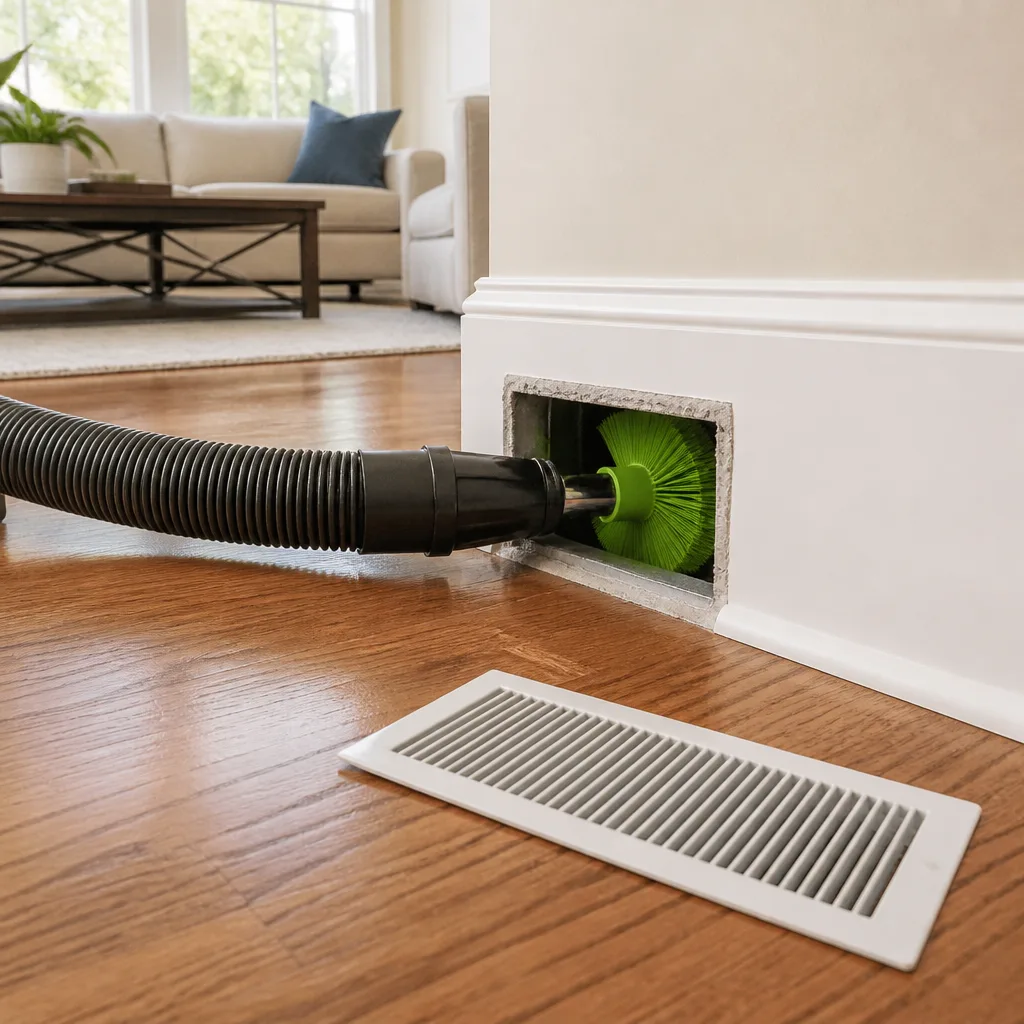 Whole-home duct cleaning
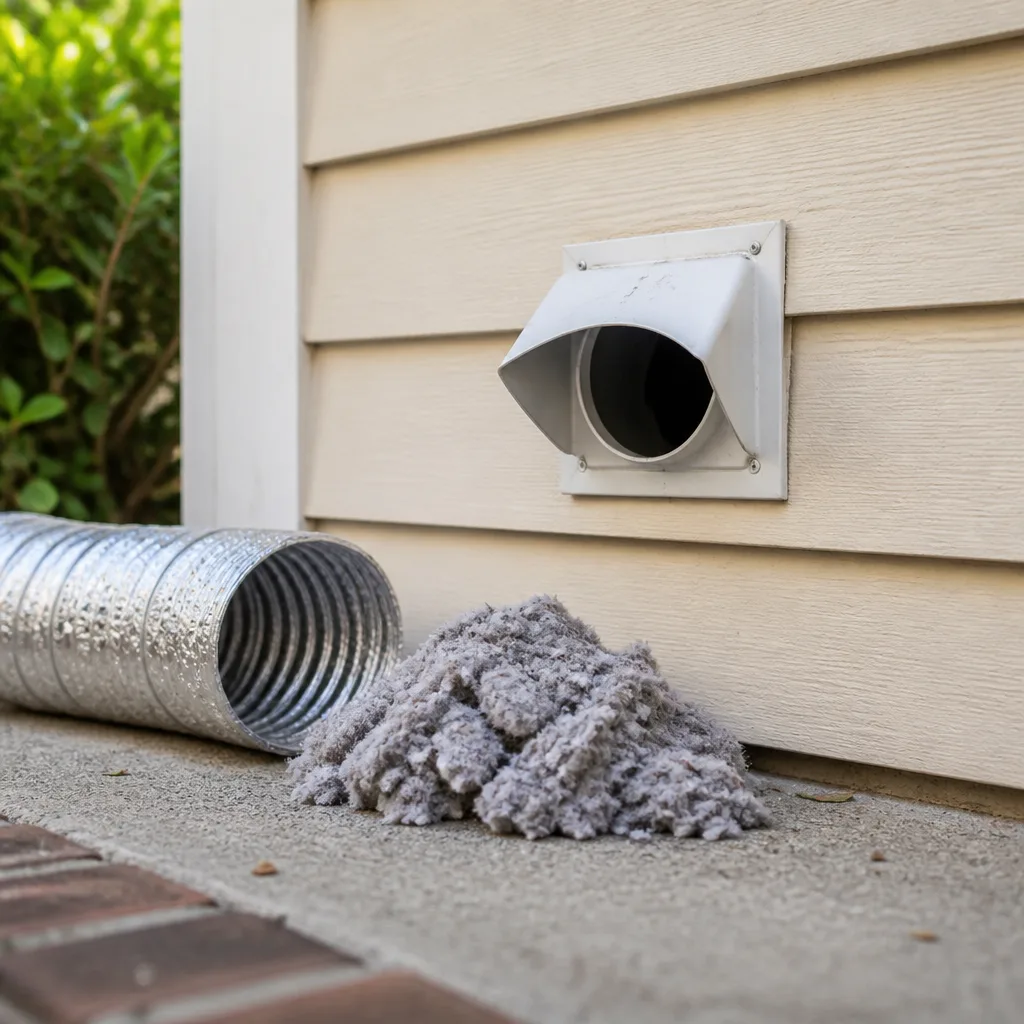 Dryer vent cleaning
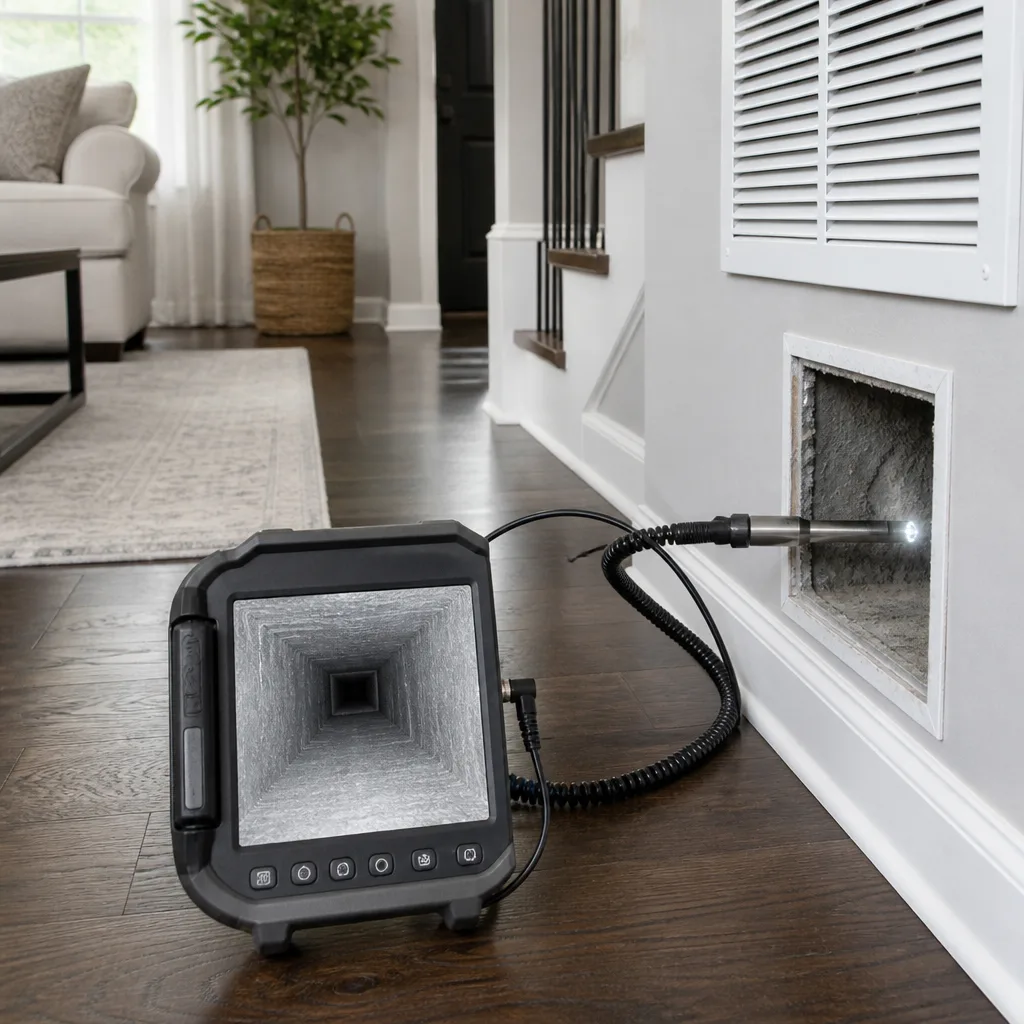 Camera inspection
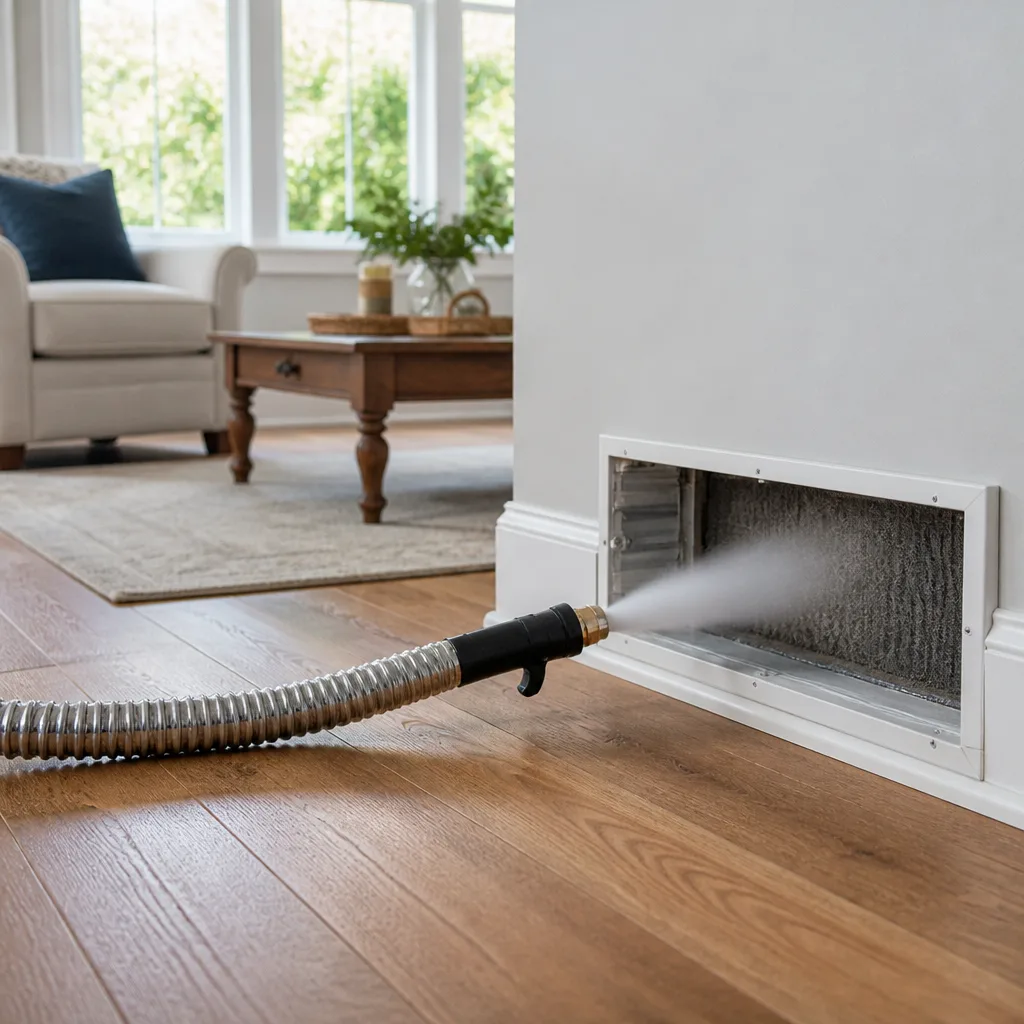 Sanitizing & deodorizing
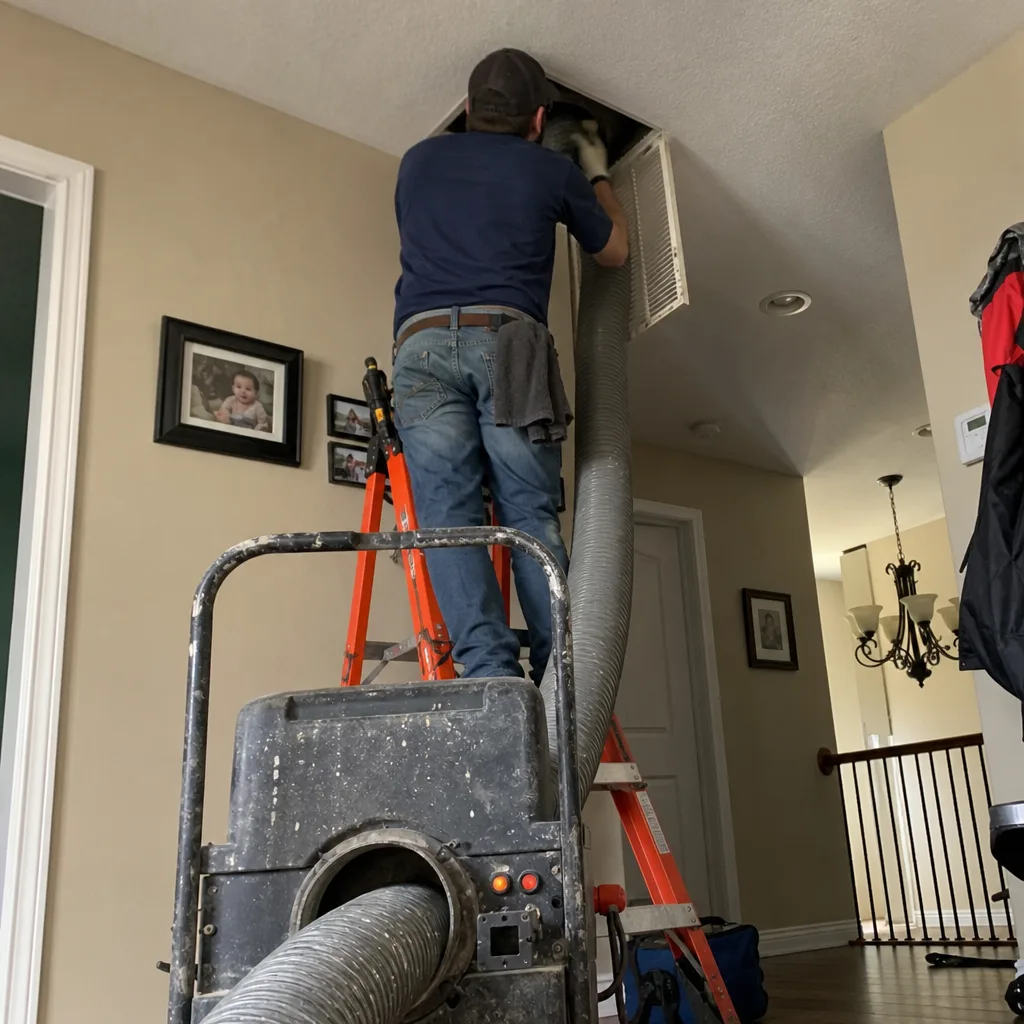
Whole-system duct and dryer vent check with before-and-after photos - you see exactly what came out of your vents
That "$99 whole-house special" is a bait ad - the real number appears once they are in your hallway, or the "clean" is a shop-vac at the register. We photograph the inside of your ducts before and after instead.
Air Duct Cleaning Emergency Preparedness Guide for Layton Homes
Most homeowners think of duct cleaning as a spring-cleaning chore, something you get to when the closets are done and the garage is finally sorted. We’d argue it belongs in a different category entirely: emergency preparedness. Layton sits in a valley where winter inversions can trap cold, polluted air over the city, summer wildfire smoke drifts in from far beyond the county line, and the ground itself occasionally reminds us that it moves. In each of those situations, a forced-air system in poor condition stops being a comfort appliance and becomes a delivery route for whatever is outside. This guide walks through what to do before an air quality event, how to run your system during one, how to assess the aftermath, and how seismic movement affects flexible duct connections. By the end you’ll know when filter replacement is enough and when duct cleaning after wildfire smoke in Layton UT actually earns its cost.
Quick Answer
Air duct cleaning after a wildfire smoke event in Layton is usually warranted when smoke odor persists more than about a week after outdoor air clears, when a white swab wiped inside a register comes back visibly gray or brown, or when visible soot and ash have settled inside the grilles. If none of those apply, a high-MERV filter change plus a few days of system run time is often the only step needed. Before fire season and before winter inversion season, have the system inspected and the filter upgraded so your ductwork isn’t storing contaminants it will later push back into your rooms.
Styles & brands we work with
- Whole-home duct cleaning
- Dryer vent cleaning
- Camera inspection
- Sanitizing & deodorizing
Table of Contents
- Why Duct System Condition Matters More in Layton
- Before an Air Quality Event: The Pre-Season Protocol
- During a Wildfire Smoke or Inversion Event: How to Run the System
- After the Event: Smoke Penetration Assessment
- Seismic Preparedness for Duct Systems
- Emergency Documentation for Insurance
- What a Full-Scope Duct Service Actually Involves
Why Duct System Condition Matters More in Layton
Layton’s geography stacks three different air-quality risks on top of each other. To the east, the Wasatch Range walls off the valley; to the west, the Great Salt Lake sits below the bench. In cold winter months, dense cold air pools against the mountains and traps warmer air – and everything suspended in it – close to the ground. That’s a cold-air inversion, and it means Layton homeowners can spend days breathing air that doesn’t clear until a storm moves through. Add wildfire smoke from summer and fall fires across the West, and the number of days where you’re genuinely glad to close the windows each year is higher than most people expect.
When outdoor air is bad, a forced-air system becomes your only ventilation strategy. That is exactly why duct condition matters here more than it might in, say, a coastal city with steady onshore breezes. If your ductwork has accumulated dust, pet hair, construction debris, and old filter bypass, that material is available to be re-suspended every time the blower runs. A dirty system doesn’t just sit there. It cycles.
The third risk is seismic. Layton sits in a region with active fault lines, and a moderate-to-strong shake can stress flexible duct connections, dislodge joints and register boots, and open small gaps that leak conditioned air into crawlspaces or attics. A duct system that was fine before a quake may be quietly leaking 15 to 20 percent of its airflow afterward, and the homeowner may only notice the energy bill climb months later.
So the argument for looking at your ducts isn’t cosmetic. In Layton, duct condition is a real variable in how well your home holds up to a smoke event, an inversion, or a shaker. That’s the lens we’ve built this guide around. Five service categories matter for that – air duct cleaning itself, dryer vent cleaning, HVAC cleaning, duct repair and sealing, and air quality and sanitizing – and they’re covered throughout. If you want the short version, our team at Layton Air Duct Cleaning Pros does all of them under one roof.
Before an Air Quality Event: The Pre-Season Protocol
Preparation is where most homeowners miss the point. The time to think about duct readiness is not when the smoke is already at 150 AQI and the hardware stores are sold out of filters. It’s in the calm weeks before fire season and before the first hard freeze. Here’s the sequence we recommend, in order.
- Have the system inspected inside the ducts, not just at the filter slot. A camera inspection of the trunk line and a look at the supply boots will tell you whether you’re starting the season with a clean system or one that’s already carrying deposits.
- Upgrade the filter, but don’t overshoot. A MERV 11 to MERV 13 filter is a sensible range for smoke and fine particulate in most residential systems. Going higher than the blower can handle will choke airflow and cost you comfort and equipment life. Check your furnace spec or ask your HVAC tech.
- Seal the filter slot and any gaps around register boots. A filter that bypasses air around its edges does almost nothing. This is a five-minute fix that improves every filter you install afterward.
- Confirm the return duct is sealed. Returns pull air from living space; if they leak inside a wall cavity or attic, you’re pulling attic dust or crawlspace air straight into the system.
- Schedule duct cleaning if the system has never been done or is several years past its last service. You don’t want your first professional cleaning to be in the middle of a smoke emergency.
- Check your blower and coil. A dirty evaporator coil and blower wheel reduce airflow, which means the system can’t push enough filtered air to matter during an event. HVAC cleaning should be on your pre-season list too.
The goal of this protocol is simple: make sure the system you’re going to rely on during a smoke event is capable of doing the job. That means the ducts are clean, the filter fits and seals, and the air handler is moving air. Each of those is fixable, and none of them is expensive relative to the cost of dealing with a system that stored a season’s worth of contaminants.
During a Wildfire Smoke or Inversion Event: How to Run the System
This is the part where homeowners get it wrong most often. During a smoke or inversion event, the correct strategy depends on your filter and your system. A few ground rules make a difference.
- Close the house up. Windows and doors closed, exterior vents that don’t need to be open shut. This reduces the particulate load your system has to handle.
- Run the blower continuously on low speed, not on Auto. Continuous low-speed circulation keeps air moving through the filter, which is where captured smoke particulate ends up. Cycling the blower off lets particulate settle into ducts and on surfaces.
- Use a fresh filter and know its rating. MERV 13 is a reasonable target for smoke if the system can move air through it. If the blower can’t, run a lower MERV and accept slightly less filtration efficiency in exchange for airflow that doesn’t stall.
- Run recirculation mode on any fresh-air intake, not outside air mode. If your home has a fresh-air duct, energy recovery ventilator, or make-up air system, switch it to recirculate during the event so you’re not pulling smoke directly into the return.
- Keep interior doors open. Closed doors create pressure imbalances that push air through gaps and past seals into the wall cavities.
- Don’t cook, vacuum, or burn anything indoors during the event. Indoor particulate sources stack on top of what’s already outside.
- Do not run the system if it smells like burning or has visible soot. Shut it off and have it inspected. Running smoke-loaded air through dirty ductwork just spreads it.
When the event clears, don’t immediately throw the windows open and start the blower back up on high. Let the outdoor air settle for a few hours first, then ventilate the house with windows open, then run the system so the filter can grab whatever came in during the exchange.
After the Event: Smoke Penetration Assessment
Once outdoor air improves, you need to know whether your duct system absorbed enough smoke to warrant professional cleaning or whether a filter change alone puts you back to normal. We use a few simple tests that any homeowner can apply, plus a professional one that requires an inspection camera.
- Register swab test. Take a clean white paper towel or cotton swab, dampen it slightly, and wipe inside the throat of a supply register – not the grille face, the sheet metal just inside. If the swab comes back visibly gray, brown, or black after one wipe, that’s a signal that deposits are present inside the duct.
- Odor persistence test. Smoke odor that lingers more than about a week after outdoor air improves, especially odor that gets stronger when the blower starts, usually means the ductwork and coil are holding volatile compounds. Filter replacement alone won’t fix this.
- Settle test. Put a white plate or sheet of paper on a table under a running supply register for a day. Fine gray dust on the surface is a signal of particulate distribution.
- Lint on the blower wheel. Have an HVAC tech pull the blower access panel. A wheel coated in dark lint means the coil is probably worse.
- Camera inspection. A professional borescope run through the trunk and a couple of branches confirms what the swab test hints at. This is the step that separates a filter-only response from a full cleaning.
Our rule of thumb: if two of the first three tests come back positive, schedule a professional cleaning. If none do, replace the filter and consider your system cleared.
Seismic Preparedness for Duct Systems
A magnitude 5.0+ earthquake can be surprisingly gentle on a modern home’s structural frame and surprisingly harsh on its mechanical systems. Flexible duct connections, particularly the non-metallic flex runs common to additions, basement remodels, and attic drops, are usually the first thing to fail. They’re held to register boots and trunk fittings with sheet metal screws and mastic or foil tape. Under shaking, the tape cracks, screws pull out, and joints separate by a fraction of an inch. That fraction is enough to leak a significant portion of your conditioned air into an attic or crawlspace.
Post-event inspection is worth scheduling before heating season, for three reasons. First, a leak that’s pulling attic air back into the supply will pull fiberglass, dust, and pest debris with it. Second, a dislodged connection can let the supply side pressurize a crawlspace, which drags soil gas and moisture into the home. Third, the energy penalty of a leaky duct system that runs all winter is real and shows up in the January and February bills.
Seismic duct prep itself is simple. Have metal strapping on rigid duct sections checked; confirm flex runs are supported at least every four feet and not sagging; and make sure the disconnect switch on the furnace is accessible in case of a gas smell after a quake. If you’re unsure how your system is connected, an inspection is the way to find out. Duct repair and sealing are part of what we do, and the same crew that cleans can find and fix the separation in one visit.
Emergency Documentation for Insurance
After a contamination event – smoke intrusion, soot settling from a nearby fire, or a dust event from construction or a windstorm – the difference between a covered claim and a denied one usually comes down to what you can prove happened after the event passed. Here’s what to retain.
- Date-stamped photos of the outdoor conditions during the event. A photo of the sky or the smoke layer with the date visible establishes incident timing.
- Photos of visible deposits inside registers, on grilles, and on the blower compartment after the event.
- The used filter, bagged and labeled with the date. Filters are physical evidence of what the system captured.
- Air quality log data from a consumer sensor or a public AQI monitoring app screenshot. Layton-area AQI readings during an event are useful documentation.
- Any service records from before the event showing the system was maintained and clean. This establishes the baseline the event moved from.
- The post-event inspection report from a professional service, with photos of inside-the-duct conditions.
Hold onto these for a couple of years if you’ve filed or plan to file. Insurers vary in what they ask for, and having a folder already assembled makes the conversation short.
What a Full-Scope Duct Service Actually Involves
The label “air duct cleaning” covers a lot of different work depending on who you hire. A consumer-grade shop vac and a hand brush is one version. A commercially rated rotary brush system attached to a HEPA negative-air unit is another. The difference matters more in Layton than most places, because a smoke or inversion event leaves fine particulate that a shop vac doesn’t capture – it just re-suspends it.
Our process runs through a complete sequence. We use Rotobrush and Nikro mechanical cleaning systems – commercial-grade rotary-brush equipment and negative-air containment rather than portable vacuums. During the cleaning, Abatement Technologies negative-air filtration holds the work area under slight negative pressure so disturbed particulate is captured rather than blown into living space.
Once mechanical cleaning is complete, we offer post-cleaning sanitizing with Guardsman products to neutralize odors, mold spores, and biological residue left after the cleaning passes. A mechanical clean doesn’t always remove every last trace of smoke odor, and sanitizing closes that gap.
Where it fits, we install and service air quality hardware from Honeywell and Aprilaire – media filters, electronic air cleaners, humidifiers, and ventilation controls. If your ducts are already the right vehicle for improving indoor air, adding the right filter and control system is how you make the vehicle pull its weight.
And we repair and seal. Cleaning without addressing leaks just means you’ll be re-contaminating the system from a crawlspace or attic. Duct repair and sealing closes the loop.
The dryer vent is its own category in our service lineup. The NFPA has documented dryer vent lint as a leading contributor to residential house fires, and a vent line that’s never been cleaned is a genuine fire risk. That’s why we treat it as a dedicated service, not a courtesy add-on. Call (855) 726-7045. We answer 24/7. Fast dispatch from 7am to 7pm, Sunday through Friday.
Common Mistakes to Avoid
- Running the system with a clogged filter during a smoke event. A loaded filter doesn’t capture smoke – it forces the blower to work harder and lets particulate bypass. Keep a spare filter on hand before fire season starts.
- Assuming a filter change alone is always enough after smoke. If interior duct deposits are already present, a filter change just puts a clean filter on a dirty system. The waste ends up back in your rooms.
- Using ozone generators to “fix” smoke odor. Layton has plenty of ozone-generating devices sold online. They don’t clean ducts and can irritate lungs. Sanitizing after mechanical cleaning is a different approach.
- Skipping the return-side seal. Most homeowners focus on the supply grilles. The return is where unfiltered air enters the system. A leaky return pulls attic dust straight into the filter and beyond.
- Not inspecting after a shaker. A moderate earthquake can separate flex joints without any visible sign inside the home. Have the system checked before heating season if you felt the shake.
- Hiring on price alone during an air emergency. Emergency-season pricing from out-of-town crews that show up after a smoke event is a real pattern. Ask about equipment, about what’s included, and about what will actually be cleaned inside the system.
- Forgetting the dryer vent when doing a whole-home safety pass. It’s not part of the HVAC ductwork, and it’s not on most homeowners’ radars. It’s a fire risk that’s simple to eliminate.
See the difference
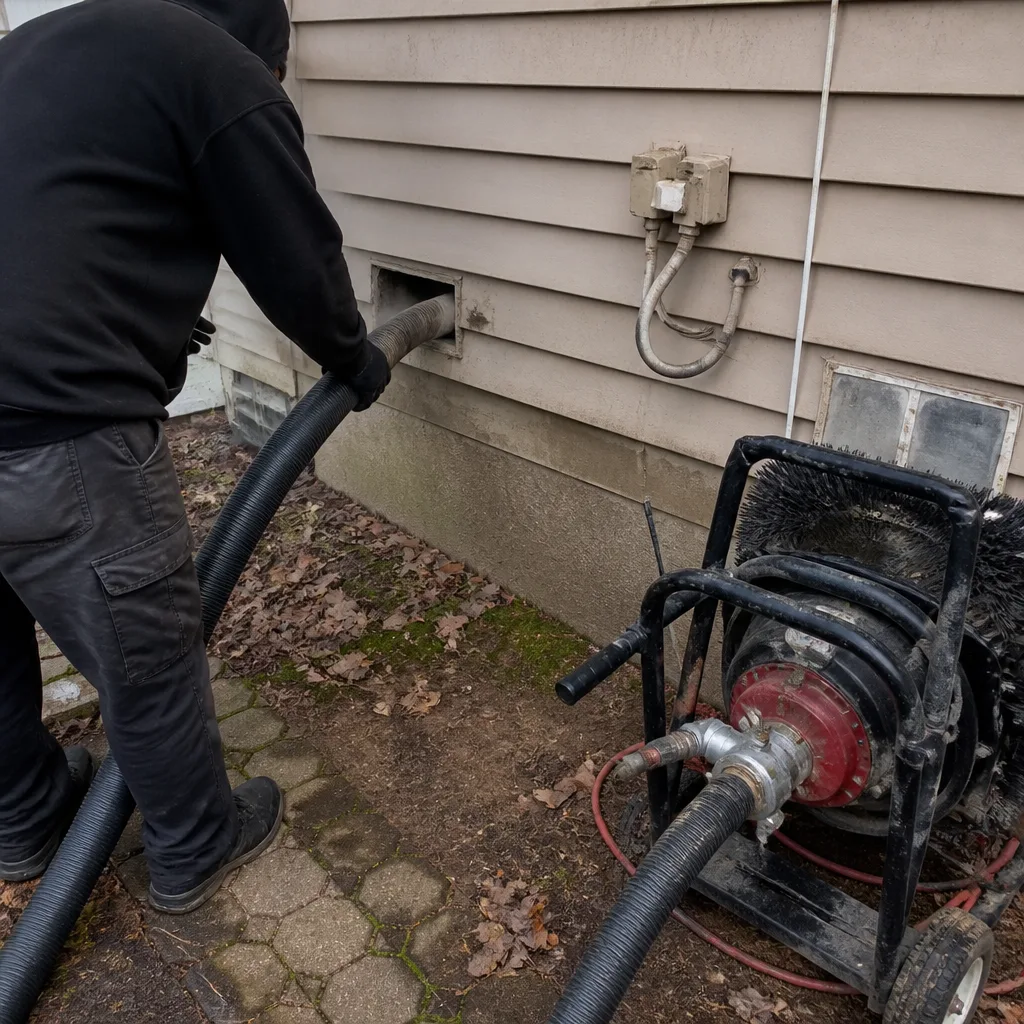 Before
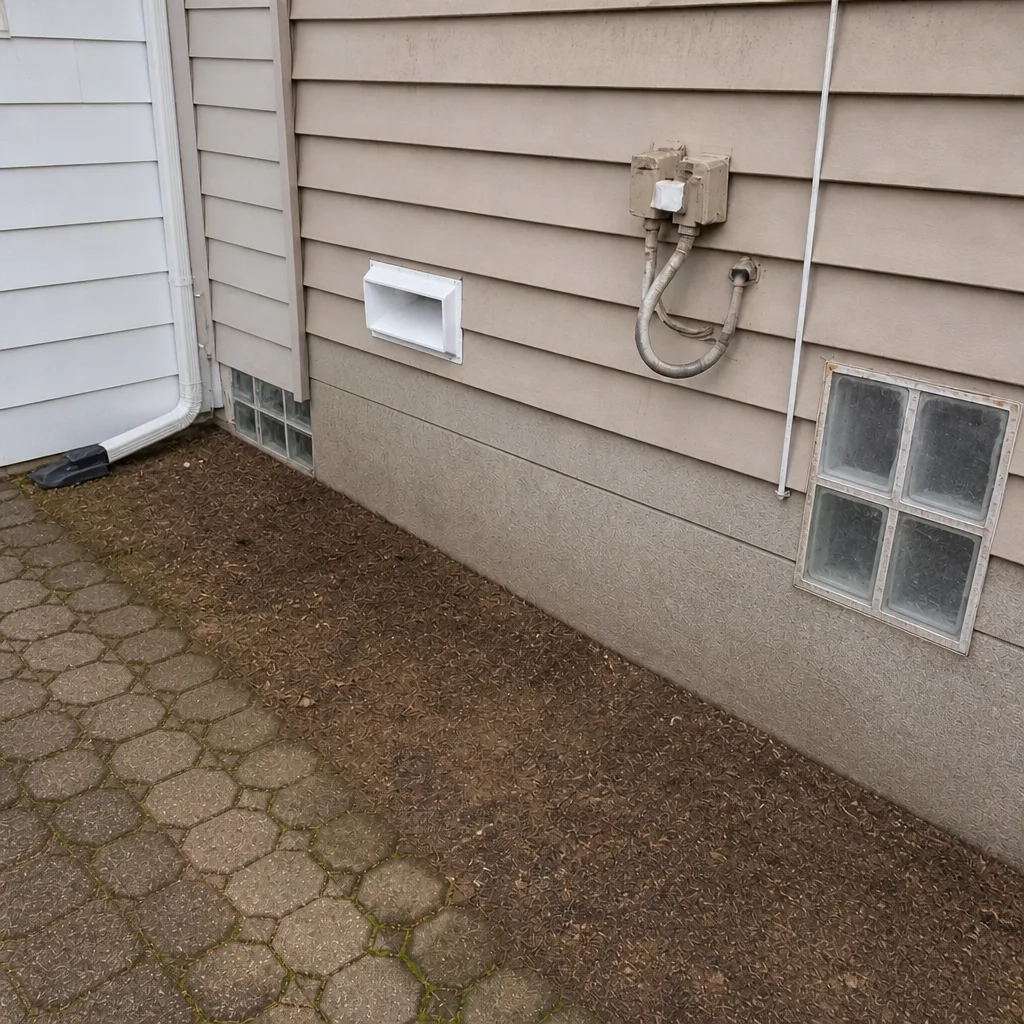 After
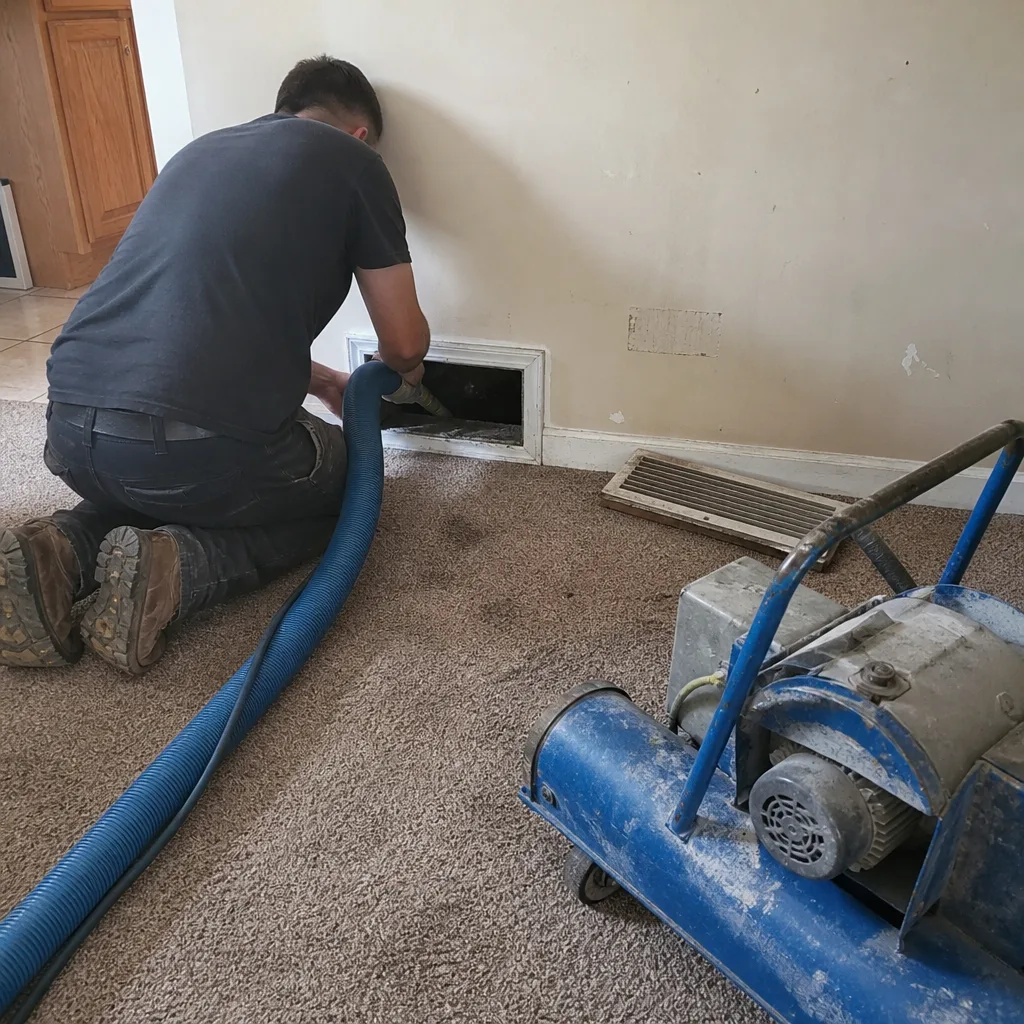 Before
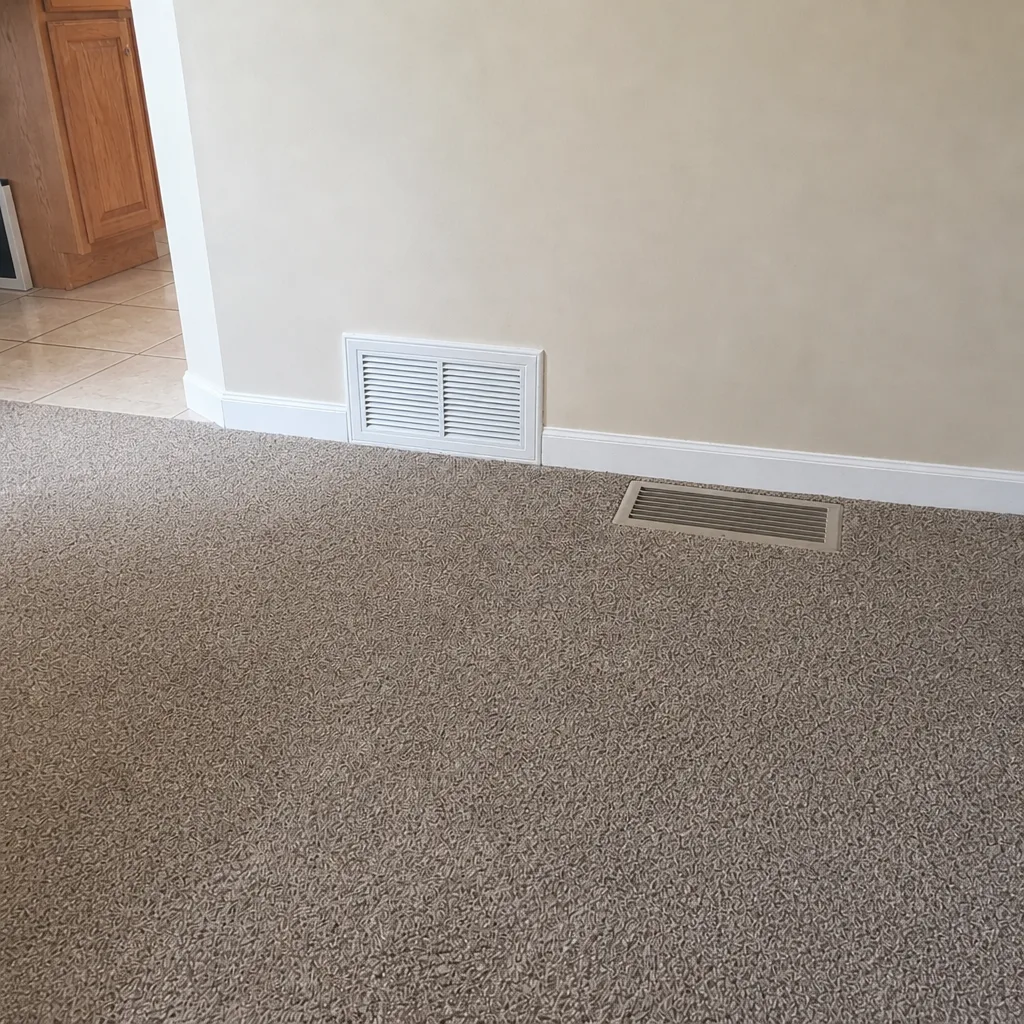 After
 Before
 After
When to Call a Professional
Some post-event situations are DIY-friendly. A filter change and a few days of running the system is often all a brief smoke event requires. Others need a trained set of eyes and commercial equipment. Call us if any of the following apply: smoke odor persists more than a week after outdoor air clears; a register swab comes back visibly dark; you’ve felt an earthquake in the 5.0 or higher range and haven’t had the system inspected since; the home is older and hasn’t had a duct inspection on record; there’s visible soot or ash inside the register throats; or the energy bill has climbed without an obvious cause. Layton Air Duct Cleaning Pros offers free estimates in Layton – call (855) 726-7045. Our technicians have up to 14 years of experience, and we use commercial-grade Rotobrush and Nikro equipment rather than consumer-grade vacuums.
Frequently Asked Questions
A full residential air duct cleaning in the Layton area typically runs in the range of several hundred dollars for an average single-family home, with the final figure set by the written estimate after we see the system configuration and its condition. Whole-home pricing, not per-vent pricing, is what we quote, and the price is agreed before work starts. Call (855) 726-7045 for a free estimate.
It depends on how much smoke penetrated the system. If the ductwork was clean going into the event, a MERV 13 filter swap and a few days of continuous low-speed blower operation usually clear the smoke. If the ducts already carried dust and deposits before the event, the smoke pigments and volatile compounds attach to that material and a filter swap alone won’t remove them. The register swab test and odor persistence are the two fastest indicators. Call (855) 726-7045 and we’ll walk you through what to check.
Cheap quotes usually mean a shop vac, one technician, and a visit of an hour or less. That kind of cleaning removes surface dust from the register faces and the first few feet of duct, then leaves the rest of the system untouched. Our work uses Rotobrush and Nikro rotary-brush and negative-air equipment with Abatement Technologies containment – the same class of tooling commercial and industrial duct contractors use. The equipment and the time are the difference in price. Call (855) 726-7045 for an honest whole-system estimate.
Ask for before-and-after photos of the inside of your own ducts, not stock images from a brochure. We document the trunk line and a sample of supply branches on camera before and after cleaning. If a provider can’t show you photos of your specific system, that’s a real signal. Call (855) 726-7045 to schedule and we’ll show you what we find before we start.
Yes, run it on continuous low-speed circulation with a fresh MERV 11 to MERV 13 filter and the fresh-air intake switched to recirculation. Continuous run keeps air moving through the filter and reduces how much particulate settles into the ducts. Turn the system off if you smell burning or see soot. Call (855) 726-7045 if you’re not sure the system is up to it.
For most Layton homes, a professional duct cleaning every three to five years is a reasonable interval, plus an additional cleaning after any major smoke or contamination event. Homes with pets, recent remodeling, or a smoker in the household should be on the shorter end. Filter changes are a separate rhythm – every two to three months during heating season is typical. Call (855) 726-7045 for an inspection if you’re unsure where your system stands.
We answer 24/7. A call outside dispatch hours is booked into the next opening, Sunday through Friday, 7am to 7pm.
The Bottom Line
Layton homes face three distinct air-quality risks – wildfire smoke, winter cold-air inversions, and seismic events – that all route through the duct system. Preparing before an event means cleaning the system, sealing the filter slot, confirming the return is tight, and confirming the air handler can move air. During an event it means closing the house, running continuous low-speed circulation with the right filter, and switching fresh-air intakes to recirculation. After an event it means running the swab test, watching for odor persistence, and knowing when a filter swap isn’t enough. If the system needs a full cleaning, a repair, or a sanitizing pass, one crew can handle all of it. Call (855) 726-7045 for a free estimate. We answer 24/7. Fast dispatch from 7am to 7pm, Sunday through Friday.
Written by the team at Layton Air Duct Cleaning Pros.