
Last updated November 25, 2026
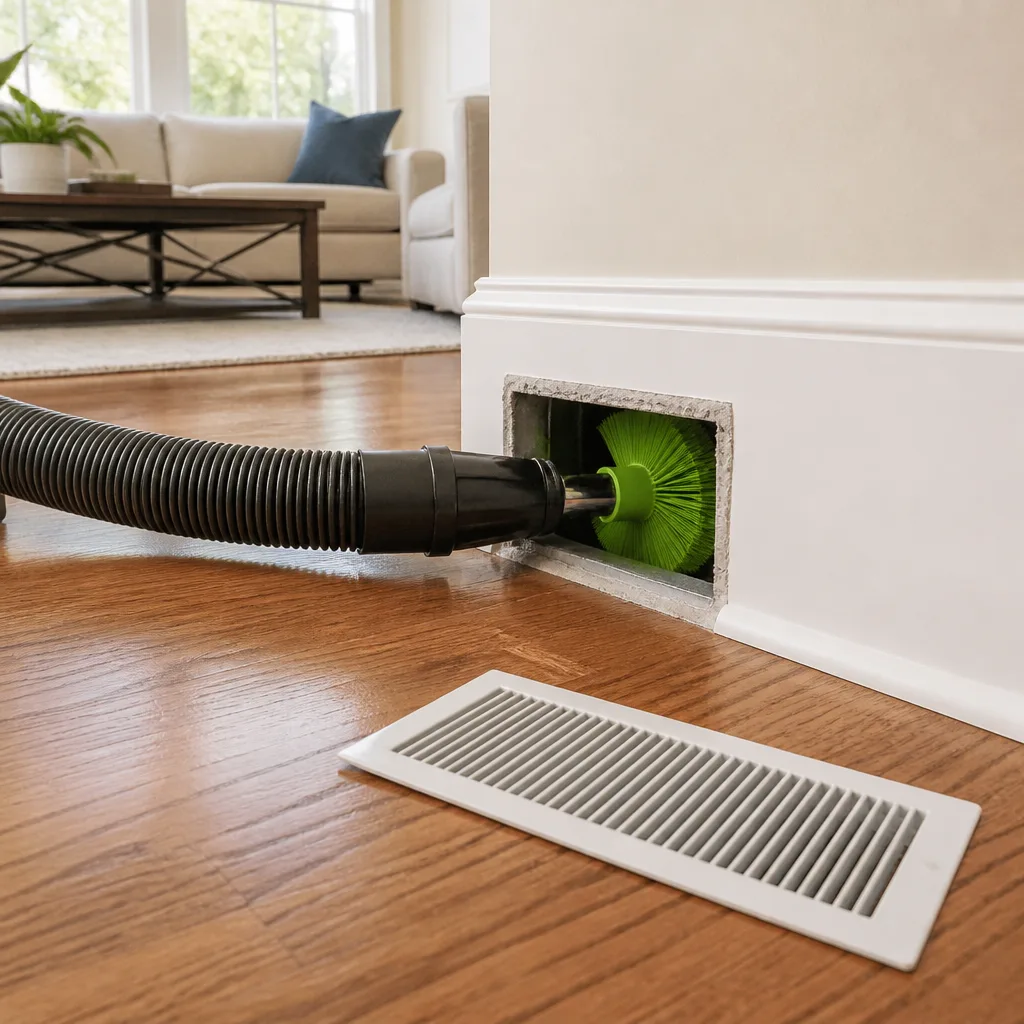 Whole-home duct cleaning
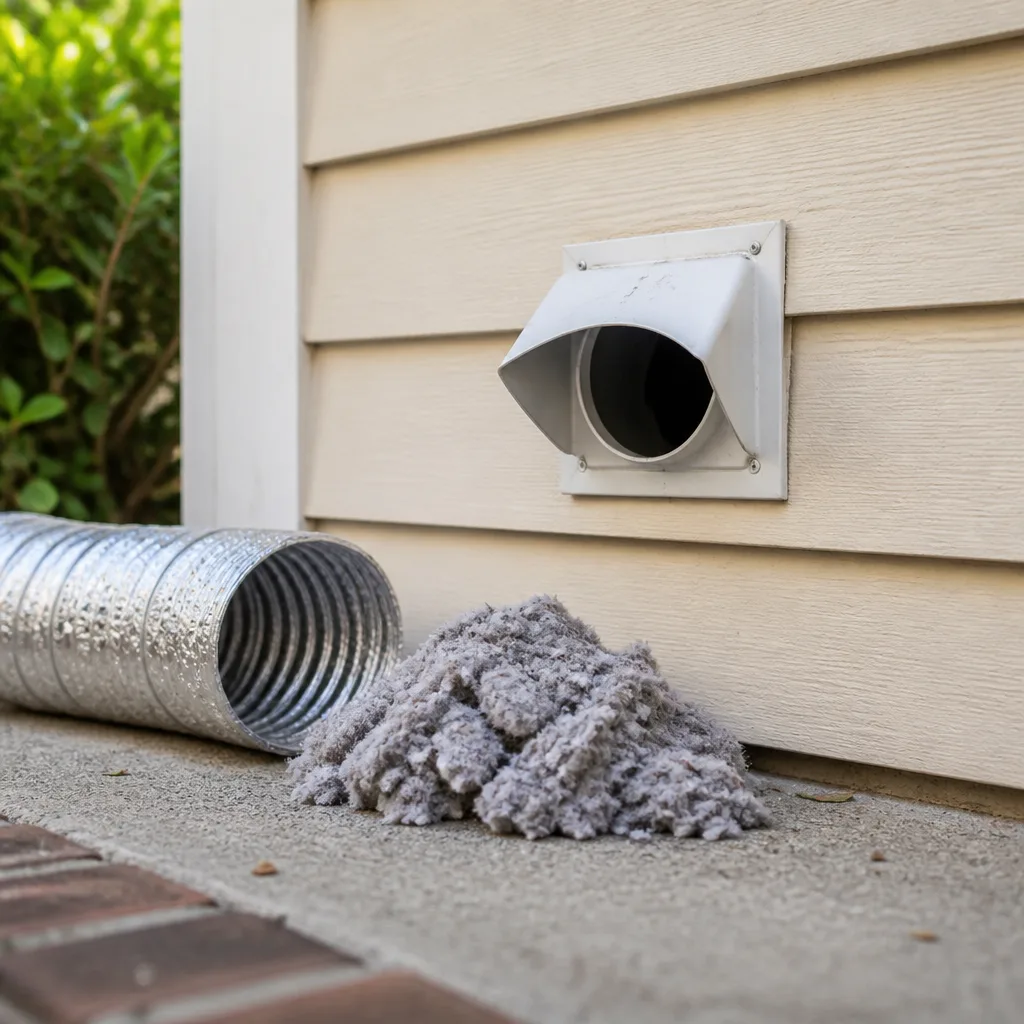 Dryer vent cleaning
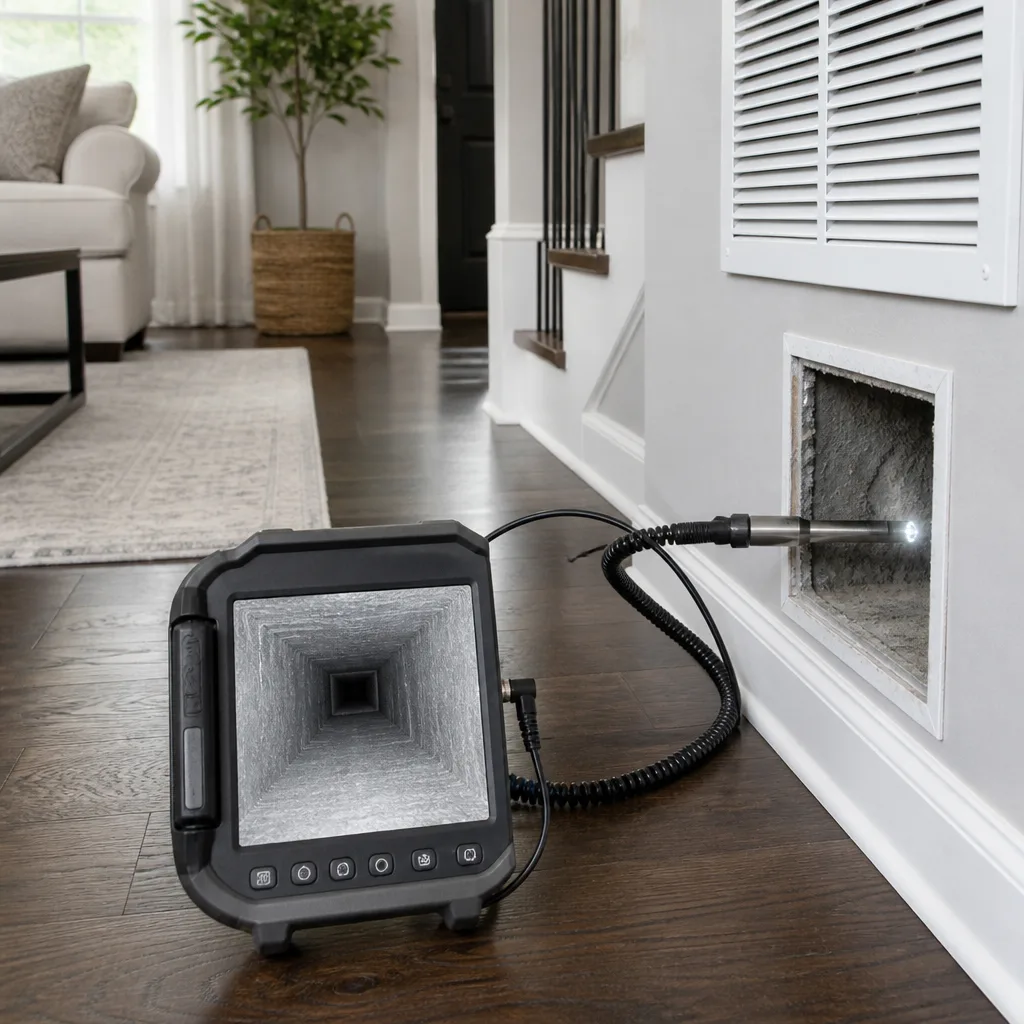 Camera inspection
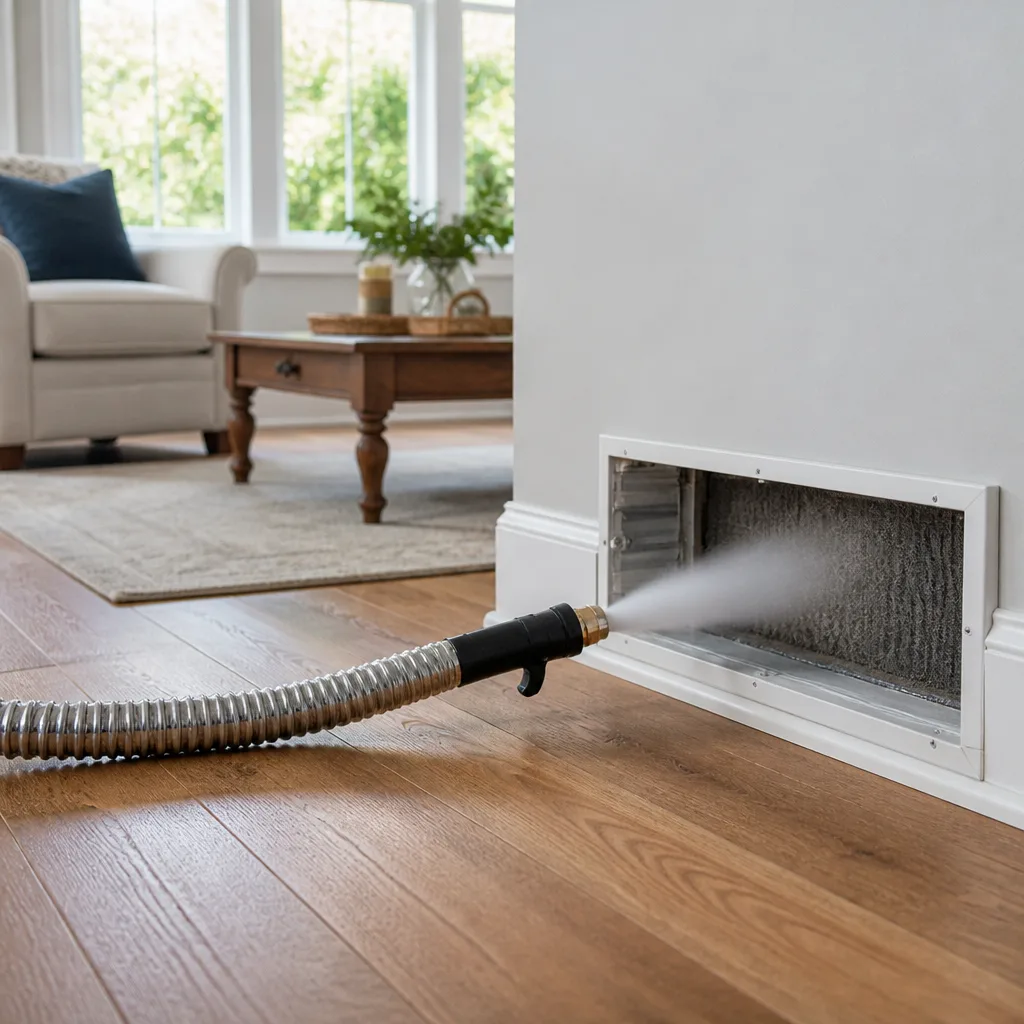 Sanitizing & deodorizing
Whole-system duct and dryer vent check with before-and-after photos - you see exactly what came out of your vents
That "$99 whole-house special" is a bait ad - the real number appears once they are in your hallway, or the "clean" is a shop-vac at the register. We photograph the inside of your ducts before and after instead.
DIY vs Professional Air Duct Cleaning: The Layton Homeowner’s Decision Guide
Most homeowners think about duct cleaning as a money question: rent a shop-vac, save a few hundred dollars, done. The more useful way to think about it is as a physics question. Consumer vacuums can’t create the negative-pressure differential that moves loosened debris to a collection point, so DIY cleaning mostly stirs contamination around rather than removing it. A homeowner with a shop-vac and a vent brush can reach about 18 inches of duct from each register opening. A system with 20 registers and 300 linear feet of trunk line leaves roughly 94% of the debris field untouched. This guide explains exactly where the line falls between useful owner maintenance and professional-grade source removal, and it’s written from Layton, where we see both extremes all the time.
Quick Answer
DIY air duct cleaning only makes sense for surface tasks: wiping register covers, vacuuming return grilles, and cleaning the filter housing. Genuine source removal of dust, debris, and microbial buildup from inside the duct system requires commercial-grade negative-air equipment and rotary agitation tools that no consumer vacuum can replicate. For anyone in Layton dealing with allergies, musty odors, post-renovation dust, or visible buildup, professional cleaning is the only method that actually removes contamination rather than redistributing it.
Styles & brands we work with
- Whole-home duct cleaning
- Dryer vent cleaning
- Camera inspection
- Sanitizing & deodorizing
Table of Contents
- Why duct cleaning is a physics problem, not a shopping problem
- The CFM and static-pressure numbers that separate real cleaning from theater
- What Layton homeowners can legitimately do themselves
- When DIY effort makes contamination worse
- How your situation changes the DIY calculus
- The cost of a botched DIY attempt
- Common mistakes to avoid
- When to call a professional
Why Duct Cleaning Is a Physics Problem, Not a Shopping Problem
Dust inside a duct system doesn’t sit still waiting to be picked up. Air movers push it through the supply trunk at real velocity, and most of it settles in low-velocity zones: the far ends of branches, the corners of plenum transitions, the inside of flex-duct elbows, and the return-air path where static pressure drops. That’s where the accumulation lives. Cleaning means knocking that material loose and then capturing it before it resettles or blows back into the living space.
Two things have to happen at once for that to work. First, mechanical agitation: a rotary brush or air whip physically scrubs the duct wall. Second, negative pressure: a powerful vacuum pulls the loosened debris toward a single collection point while the agitation is happening. If you do one without the other, you either polish the surface while leaving the debris in place, or you loosen the debris and blow it into the rooms.
Consumer vacuums don’t have the airflow or the containment to do the second part. A shop-vac pulls a few dozen CFM at best through a small hose, and it dumps filtered exhaust right back into the room you’re trying to clean. Professional systems running Rotobrush or Nikro equipment hook a high-volume negative-air unit to the main trunk and hold the whole system under suction while the brush runs through each branch. That’s the difference between cleaning and rearranging.
The Layton housing mix reinforces why this matters here. A lot of local homes have long trunk runs through unconditioned attic space, which means temperature swings and condensation cycles that caked dust onto duct walls over years. That accumulation doesn’t lift off with a handheld vacuum. It has to be broken up mechanically and pulled out under sustained suction.
The CFM and Static-Pressure Numbers That Separate Real Cleaning From Theater
Professional duct cleaning systems are built around airflow, and the numbers matter more than the marketing. A proper negative-air setup on a residential system needs to move enough cubic feet per minute (CFM) through the trunk to keep the entire duct network under suction during agitation. Consumer equipment doesn’t come close. Here’s the practical comparison:
- Consumer shop-vac: typically 100 to 200 CFM of peak airflow through a 1.25 to 2.5 inch hose, and the airflow collapses the moment the filter loads up with dust. No containment of fine particulate.
- Professional rotary-brush and negative-air systems: high-volume vacuum units paired with 8 to 12 inch collection hoses, designed to hold the entire trunk under negative pressure while a rotating brush works through each branch.
- Containment filtration: commercial systems route exhaust through HEPA-stage filtration, so what comes out of the vacuum is cleaner than what went in. Shop-vacs push fine dust right back into the room.
Static pressure is the other half of the equation. When a real cleaning system pulls the trunk negative, debris doesn’t just fall out of the duct. It travels toward the collection point because the pressure differential is consistent throughout the network. In a shop-vac setup, the only pressure differential is right at the hose tip. Two feet away from the nozzle, the duct is at normal room pressure and the dust stays where it is.
There’s also the matter of what we find in Layton homes during professional work. Rotary agitation doesn’t just lift loose dust. It breaks up the bonded film that forms on duct walls over years of normal use. That film is the source of the musty odor many homeowners notice when the furnace first kicks on. A shop-vac, even with a brush attachment, can’t break that film. It can only skim the surface.
Equipment manufacturers like Abatement Technologies build negative-air containment units specifically for this scale of work. Those units are what allow a professional to clean a Layton home without leaving a fine dust film on the furniture in the next room. That containment is a big part of why professional cleaning is a whole-house process rather than a per-register job.
What Layton Homeowners Can Legitimately Do Themselves
Not every indoor-air task requires a truck and a rotary system. Some routine maintenance genuinely belongs in the homeowner’s hands, and doing it well extends the life of the system between professional cleanings. Here’s what’s safe and effective:
- Register and grille cleaning. Remove supply and return covers, wash them in warm soapy water, dry fully, and reinstall. This removes the visible dust layer that collects on the face of the grille and gets pushed into the room every time the system runs.
- Filter housing cleaning. With the filter out, wipe the inside of the filter slot and the immediate return-air path. This is where fine dust accumulates and where a dirty filter housing keeps contaminating a fresh filter. It’s a five-minute job that pays off.
- Accessible flex-duct inspection. In an unfinished basement or attic, you can visually inspect any flex-duct sections that are exposed. Look for crushed sections, disconnected joints, or torn outer jackets. Don’t try to clean inside them, but flagging damage early prevents bigger problems.
- Dryer-vent maintenance. Pull the dryer out, disconnect the vent, and remove lint from the immediate connection and the exterior termination point. This is one of the highest-value DIY tasks in any home, and we cover the full process on our dryer vent cleaning page.
- Condensate and drain pan checks. If you have a central AC system, keep the condensate drain clear and the pan dry. This isn’t duct work, but it directly affects indoor humidity, which affects what grows inside the ducts.
We recommend Layton homeowners treat these as maintenance, not as substitutes for a proper cleaning. Register wiping and filter-housing cleaning are worth doing every few months. The actual duct internals need a professional pass when the indicators show up, which we’ll get to below.
When DIY Effort Makes Contamination Worse
There are three specific ways a DIY duct effort can leave a system in worse shape than it started. Each one is common enough that we see the aftermath regularly.
1. Agitating debris without adequate suction
Running a brush or a shop-vac hose into a register and scrubbing loosens the dust bonded to the duct wall. Without the negative pressure to pull that material to a collection point, it goes airborne inside the system. The next time the blower runs, that loosened debris gets distributed through every branch of the duct network and out into the rooms. A duct that was dirty in one area becomes dirty everywhere.
2. Introducing moisture near metal ducts
Some DIY guides suggest damp-wiping duct interiors or spraying diluted cleaners. On galvanized metal duct work, moisture promotes surface oxidation and gives any mold spores a foothold. On insulated duct, moisture compromises the insulation itself and can lead to microbial growth in the liner. Either way, a wet duct is worse than a dry dirty one, because microbial remediation is much more involved than a standard cleaning.
3. Disturbing insulated flex duct
Flex duct has a thin inner liner and an outer jacket, and both are easy to damage with a rotary brush or an aggressive vacuum nozzle. Once the inner liner is torn, the duct sheds fiberglass particles into the airstream, and the only fix is replacing that run. We see torn flex duct in Layton homes often enough that we treat it as a normal part of professional work: inspecting for damage before we start, and repairing or replacing any compromised section as we go. That’s part of our duct repair and sealing service, and it’s why we say we can clean, repair, and seal in a single visit.
How Your Situation Changes the DIY Calculus
The DIY-versus-professional question isn’t one answer for every Layton household. It depends on why you’re thinking about cleaning in the first place. Here’s how the main scenarios break down.
Routine maintenance (no symptoms)
If the system runs well, there are no odors or allergy complaints, and no recent renovation, DIY register and filter work is genuinely sufficient for a while. Professional cleaning becomes useful after several years of normal use, or when a visual inspection of the accessible duct shows meaningful accumulation.
Post-renovation
Drywall dust, sawdust, and construction particulate are extremely fine and highly mobile. They coat every surface in the duct system and load up the blower and evaporator coil. This is where DIY falls short: the dust is everywhere, not just near the registers, and it needs a whole-system negative-pressure cleaning to remove. Layton has steady renovation activity, and we recommend professional cleaning after any major project that involved cutting into walls or ceilings.
New construction
New construction leaves construction debris inside the ducts, and the system itself may not have been sealed properly before drywall went up. Professional cleaning here is standard practice, and it’s also the right moment to schedule HVAC cleaning on the blower and coil, plus a duct-sealing check. If a return run was crushed behind a wall or the flex jacket was punctured during installation, catching it early saves you an expensive repair later.
Mold concern or musty odor
If you smell a persistent musty odor when the system runs, or you’ve seen visible growth on a register or in the condensate pan, DIY cleaning is the wrong move. Agitating spores without proper containment spreads them through the home. This scenario calls for professional cleaning with negative-air containment, followed by sanitizing. We use Guardsman-based sanitizing treatments applied after the mechanical cleaning to address residual biological contaminants, and that step matters more here than in any other scenario.
Worsening allergies or rising energy bills
Both are downstream symptoms that a DIY cleaning won’t fix. Allergies often tie back to accumulated dust and microbial load, and energy bills rise when a dirty blower and coil force the system to run longer. A proper cleaning, plus a look at whether the system needs better filtration, addresses the root cause. We install Honeywell and Aprilaire air-quality hardware when a home would benefit from upgraded filtration beyond a standard filter slot.
The Cost of a Botched DIY Attempt
We’re careful about publishing specific dollar figures because Layton homes vary widely in system size, duct layout, and condition. But the cost structure of a botched DIY effort is consistent, and it’s worth understanding what you’re risking.
If a DIY cleaning breaks up debris without catching it, you’re looking at a professional cleaning that’s now more involved: longer agitation, more containment, and often a sanitizing step to address what the loose debris left behind. If the effort damaged insulated flex duct, you’re looking at the cost of a duct repair or replacement on top of the cleaning. If moisture introduced microbial growth, you’re looking at full remediation with sanitizing, and possibly replacement of affected duct sections.
The common theme is that a botched attempt doesn’t save money. It adds a repair layer to a cleaning bill that was coming anyway. Worst case, it converts a cleaning into a remediation project, which is a different service category entirely. We’re set up to handle every one of those outcomes, including air duct cleaning in the standard sense and the full repair path when something has gone wrong, but the cheaper path is almost always to clean properly the first time.
The same logic applies to the “cheap” professional cleaning you sometimes see advertised. A two-hour in-and-out job with a shop-vac style setup has the same physics problem as DIY: it can’t hold the system under negative pressure, so it can’t do source removal. The reason some duct-cleaning quotes look dramatically lower than others is that they’re pricing a different job. When a company quotes per-register or per-vent, it’s often pricing a surface pass, not a whole-system cleaning. We quote per system, so the price matches the work.
Common Mistakes to Avoid
- Assuming a shop-vac and a brush attachment counts as duct cleaning. It counts as surface skimming. The system’s accumulated debris lives beyond the reach of that hose, and the vacuum can’t contain fine particulate.
- Spraying moisture-based “duct cleaners” into the system. Metal ducts oxidize and insulated ducts hold moisture. If a cleaning product introduces water into the duct, you’re creating a microbial growth environment.
- Running a rotary brush through flex duct without checking the liner first. Flex duct liners tear easily. Inspect first, and only use equipment that won’t damage the interior surface.
- Cleaning the supply side and ignoring the return. The return path is often where the heaviest accumulation lives, especially near the filter slot and the return trunk. A supply-only pass leaves half the system dirty.
- Skipping the blower and coil. Duct cleaning that stops at the duct leaves the dirtiest components untouched. The blower wheel and evaporator coil collect dust the same way the ducts do, and they need cleaning too.
- Ignoring visible damage to the duct jacket or liner. A small tear turns into a bigger problem. If you see damage during a visual inspection, get it repaired before running a cleaning pass over it.
- Cleaning without sanitizing when musty odors are present. Mechanical cleaning removes the material. Sanitizing addresses what’s left behind. Skipping that step often leaves the odor, which means the problem isn’t solved.
When to Call a Professional
Call a professional when the system shows symptoms you can’t address with surface maintenance. That means persistent musty odors when the HVAC runs, visible dust blowing from registers, worsening allergy symptoms indoors, dust settling on furniture within days of dusting, or signs of moisture or microbial growth in the duct or on a component. Call after any major renovation or new construction, and call before you move into a previously occupied Layton home with an unknown duct history. Also call if your system has flex duct with visible damage, because repair and cleaning need to happen together. Layton Air Duct Cleaning Pros offers free estimates in Layton. Call (855) 726-7045. We answer 24/7. Fast dispatch from 7am to 7pm, Sunday through Friday.
See the difference
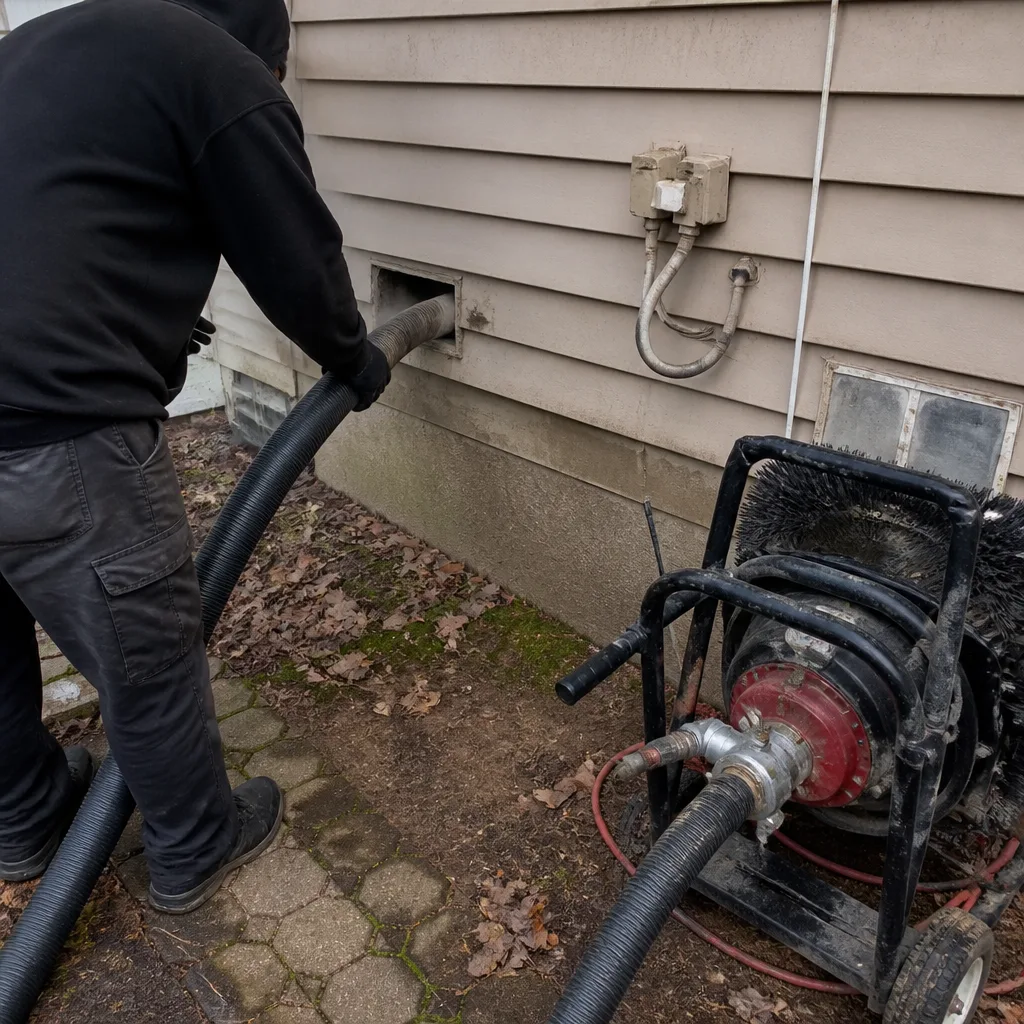 Before
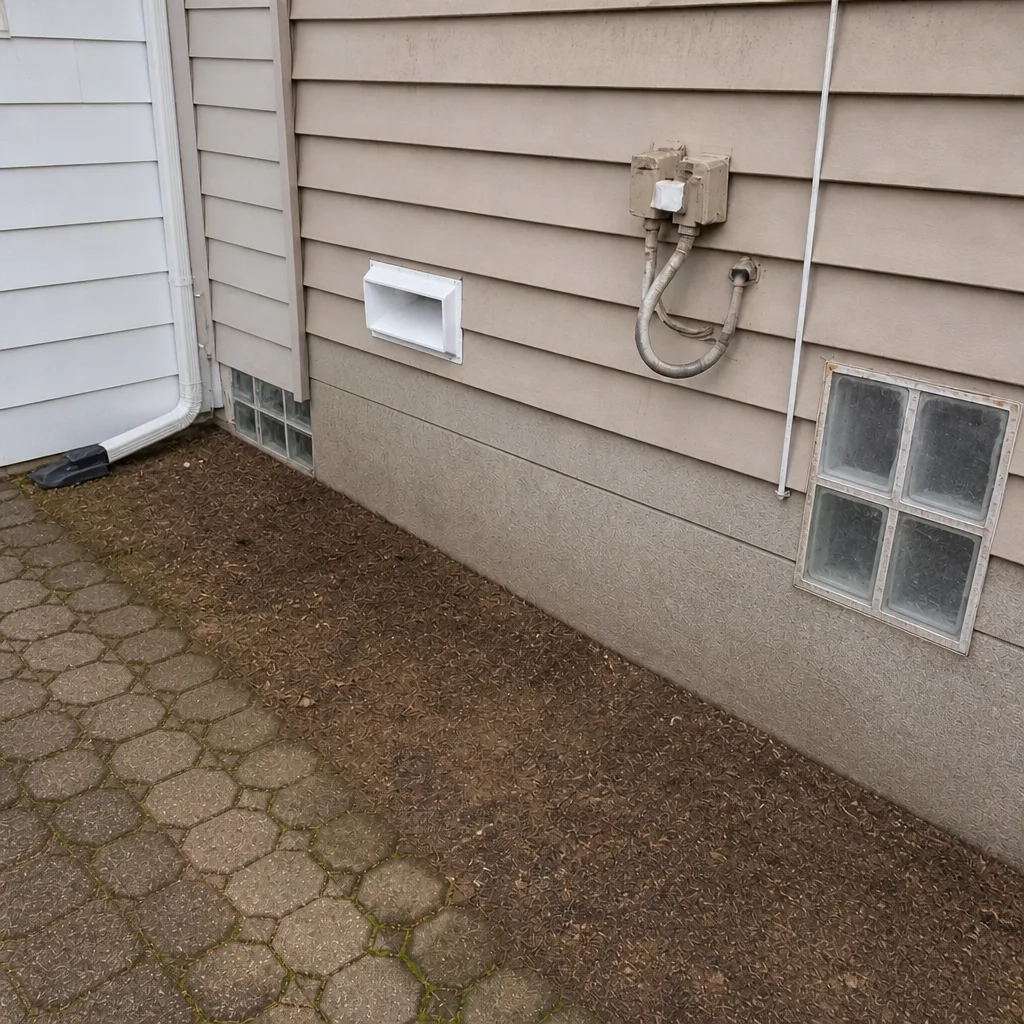 After
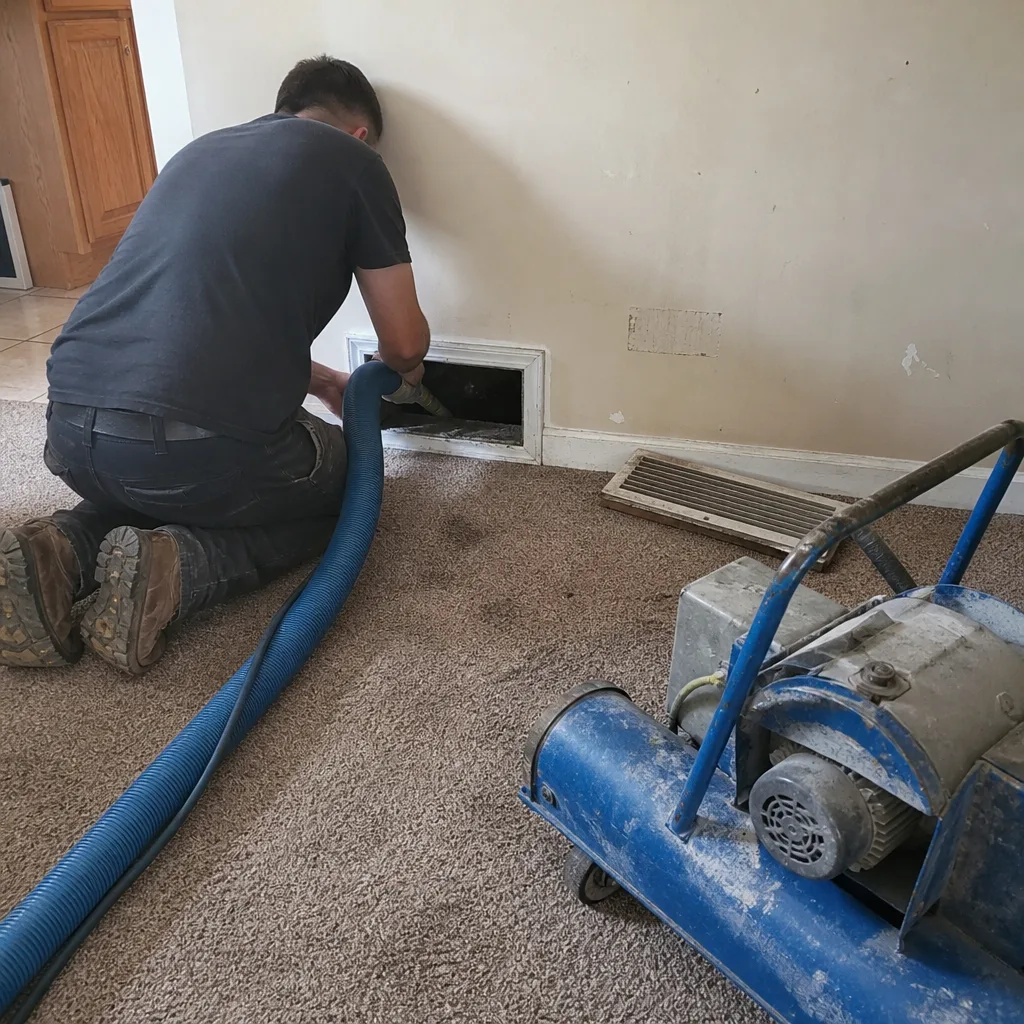 Before
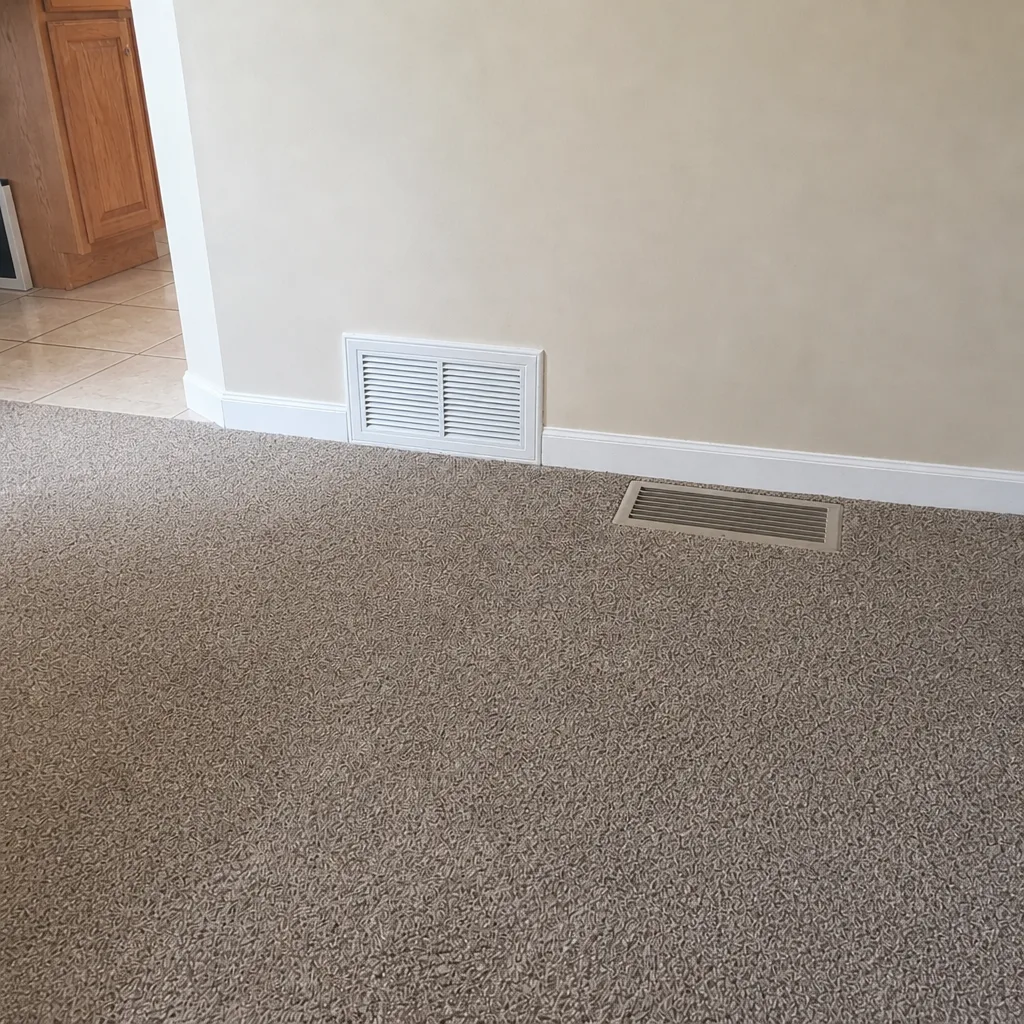 After
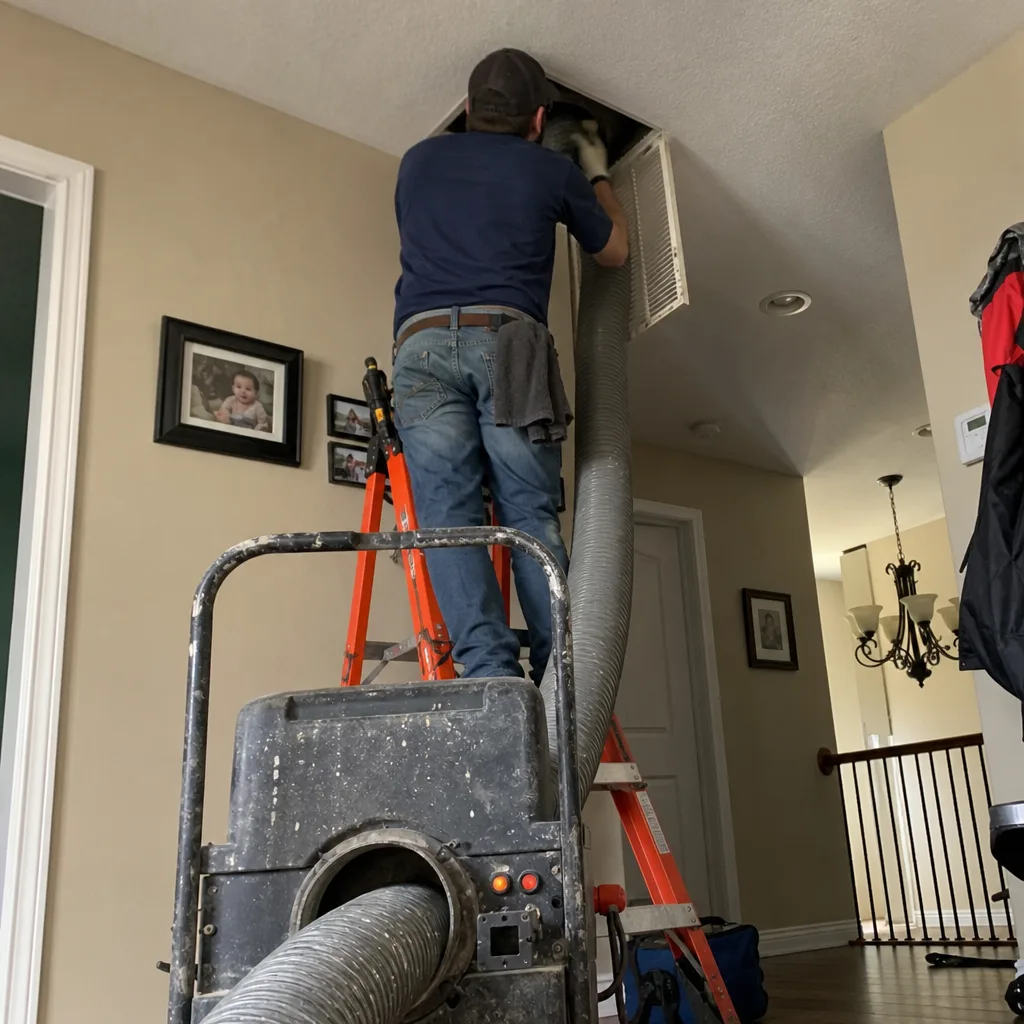 Before
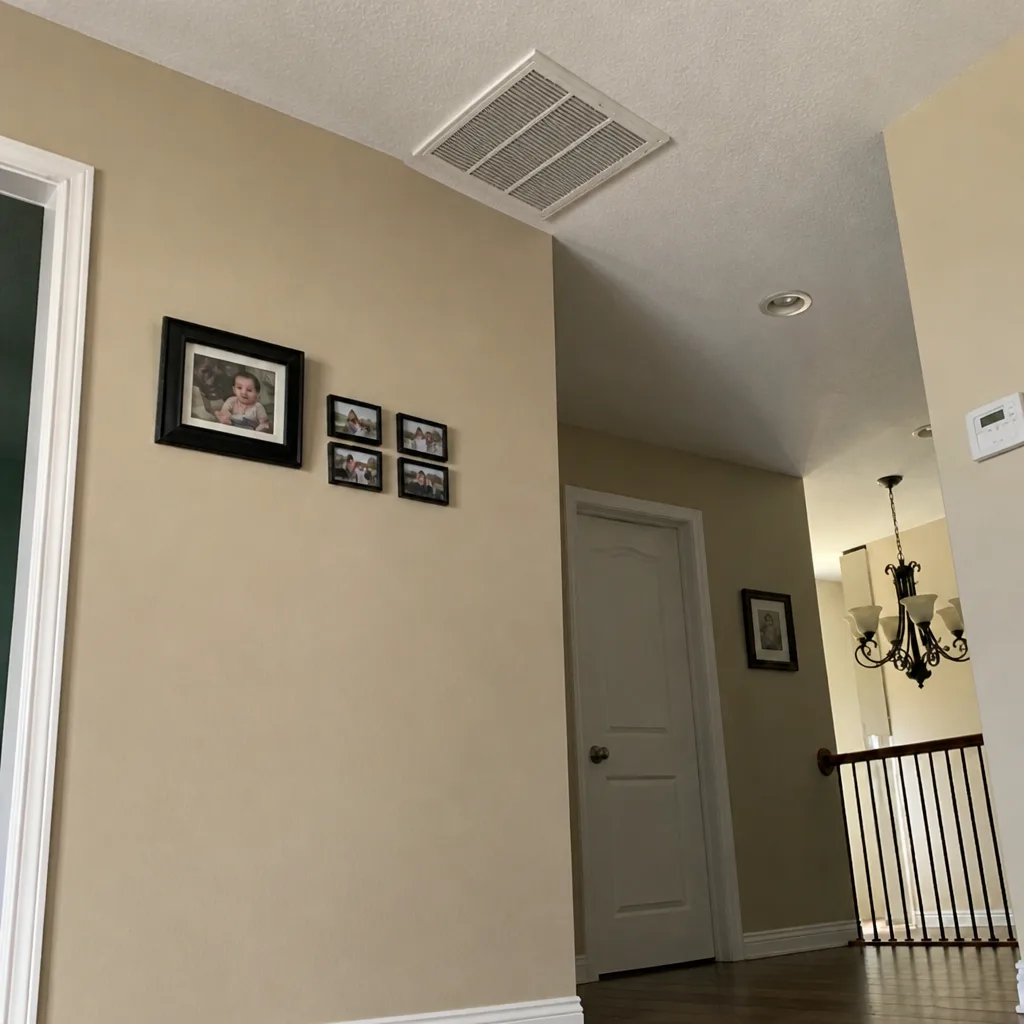 After
Frequently Asked Questions
You can clean register covers and reach about 18 inches into each duct opening, but you cannot clean the duct system itself. A shop-vac can’t hold the trunk under negative pressure, so loosened debris stays in the ducts or blows back into the room. For true source removal, you need professional-grade rotary and negative-air equipment.
Pricing depends on the size of the system, the number of branches, and the condition of the ducts, which is why we quote per system rather than per vent. Call (855) 726-7045 for a free estimate on your Layton home. We’ll look at the layout and give you a written estimate before any work starts.
Because they’re quoting a different job. A low per-vent quote is usually for a surface pass with consumer-grade equipment, which has the same physics limitation as DIY cleaning. A proper whole-system cleaning requires commercial rotary-brush systems, negative-air containment, and a look at the blower and coil. Ask any company what equipment they run and what containment they use before you book. Call (855) 726-7045 if you want to talk through what a full cleaning involves.
Ask for before-and-after documentation of your own ducts. A professional cleaning company should be able to show you what the system looked like before the work and what it looked like after, and it should be transparent about each step of the process. We photograph both ends of every job. Call (855) 726-7045 to schedule an estimate and ask us to walk you through what we’d plan for your system.
There’s no single answer that fits every home. Standard guidance is every few years for typical residential systems, but post-renovation, new construction, mold concerns, and pets all shorten that interval. If the system shows symptoms like odors or visible dust at the registers, that’s the actual signal to schedule the cleaning regardless of the calendar. Call (855) 726-7045 for an assessment of your specific home.
You can and should handle the routine lint removal at the flex connection behind the dryer and at the exterior vent flap. That’s a useful maintenance task. But the duct run through the wall or attic needs professional cleaning periodically, because that’s where accumulated lint becomes a real fire risk. Dryer vents are a fire hazard, not a minor chore, and it’s worth scheduling a dedicated professional cleaning of the full run. Call (855) 726-7045 to add it to your estimate.
The Bottom Line
DIY duct cleaning is useful for the surface tasks: register covers, filter housing, accessible flex-duct inspection, and the immediate dryer-vent connection. Everything beyond that falls on the professional side of the line, because consumer equipment can’t generate the negative-pressure differential required for source removal. If you’re in Layton and dealing with odors, allergy symptoms, post-renovation dust, or visible accumulation, professional cleaning with commercial-grade equipment is the only path that removes rather than redistributes the contamination. When it’s done right, you get clean ducts, a cleaned blower and coil, and the option to add filtration or sanitizing in the same visit.
Our technicians have up to 14 years of experience with Rotobrush and Nikro systems, and we handle duct cleaning, HVAC cleaning, duct repair and sealing, air quality, and dryer vent work as one service. Call (855) 726-7045 for a free estimate. We answer 24/7. Fast dispatch from 7am to 7pm, Sunday through Friday. We’ll see what’s in your ducts before we start, and quote one flat price per system so you know what the job costs before work begins.
Written by the team at Layton Air Duct Cleaning Pros.