
Last updated November 25, 2026
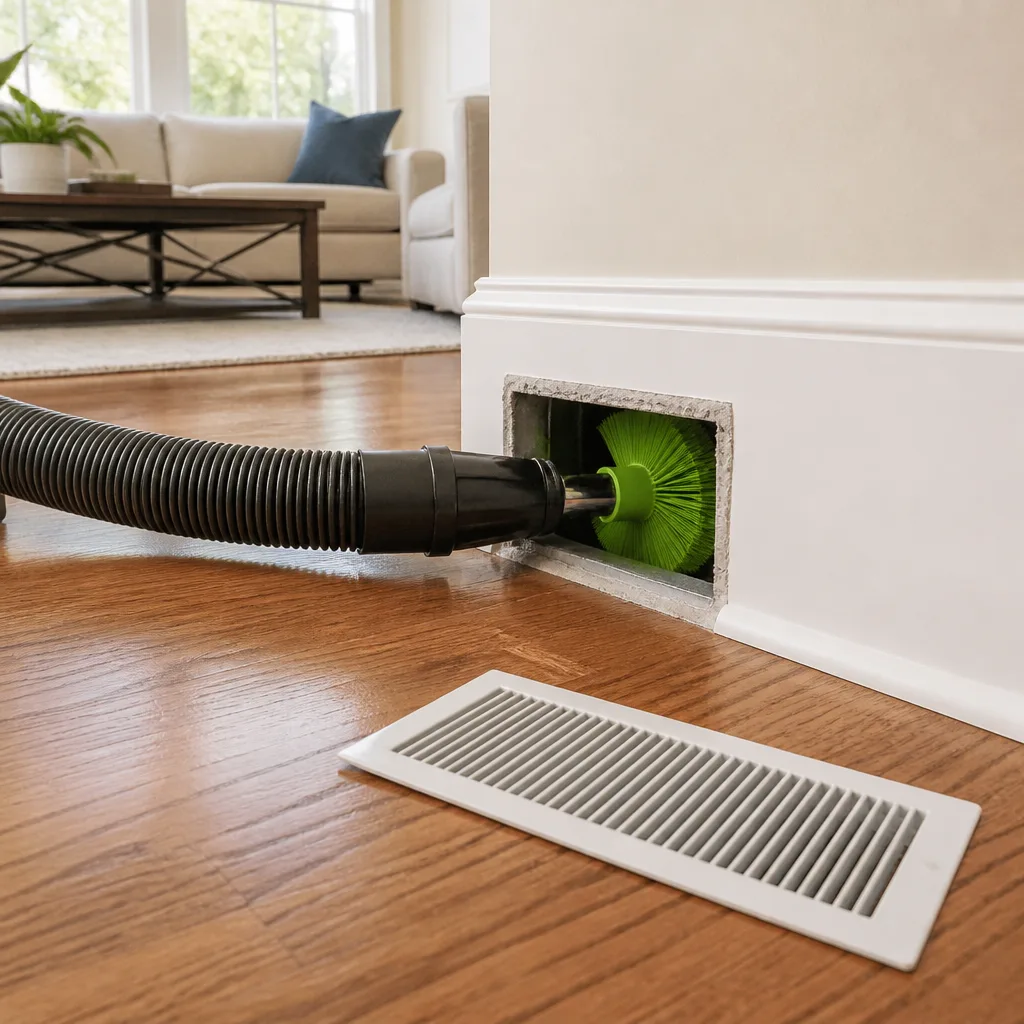 Whole-home duct cleaning
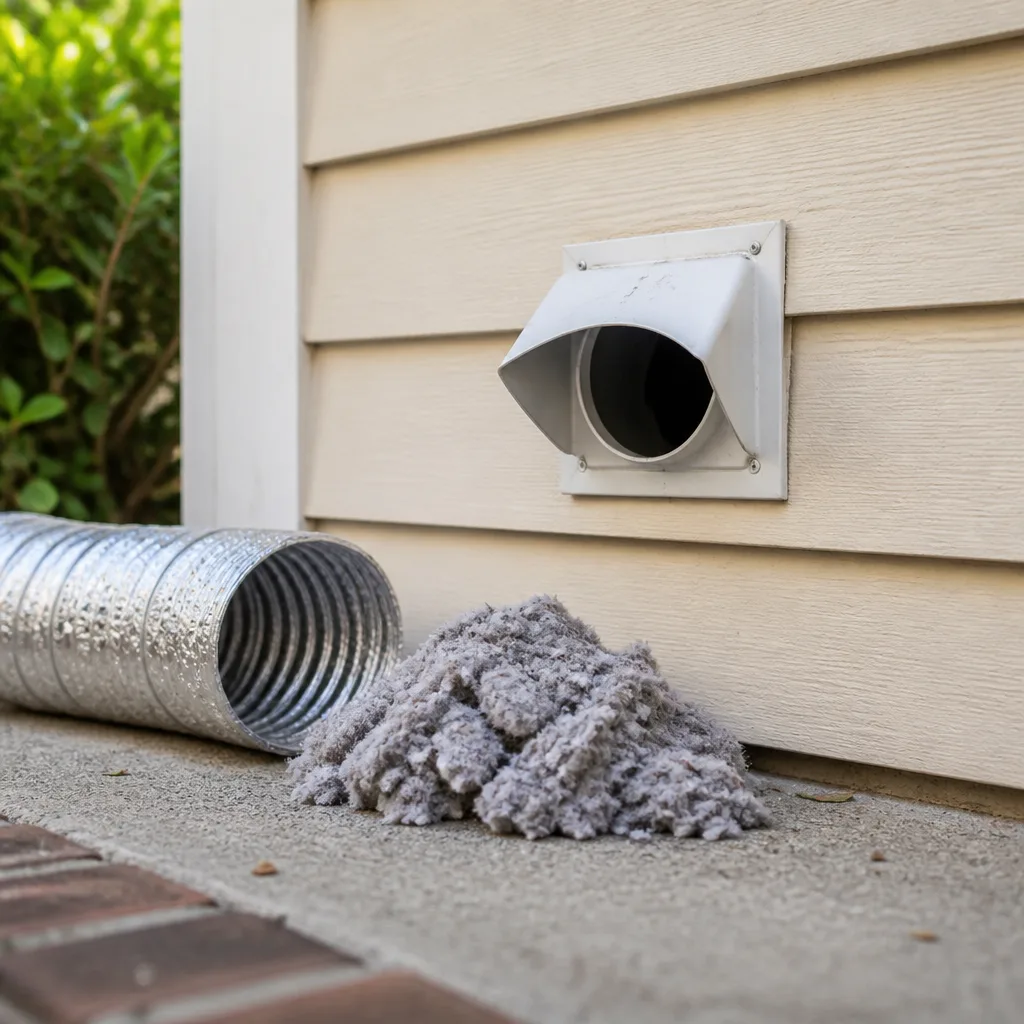 Dryer vent cleaning
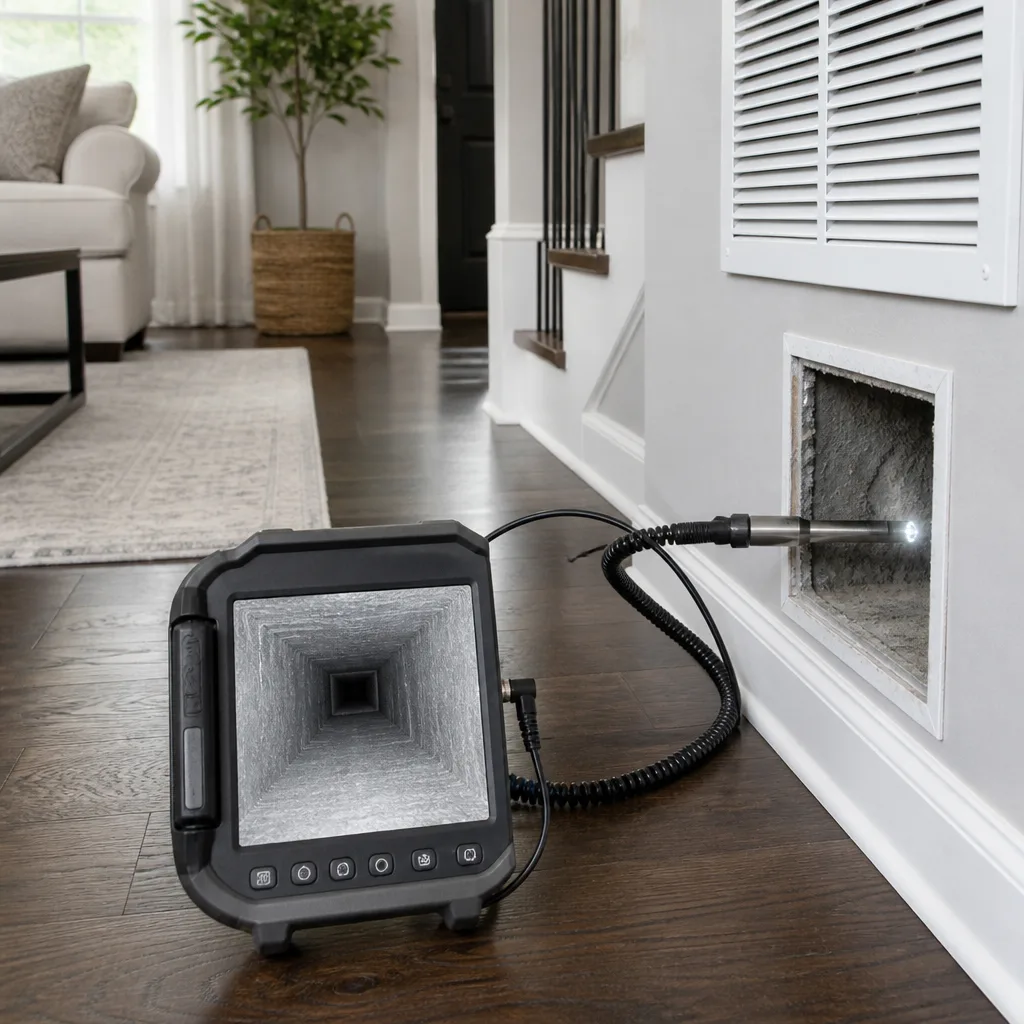 Camera inspection
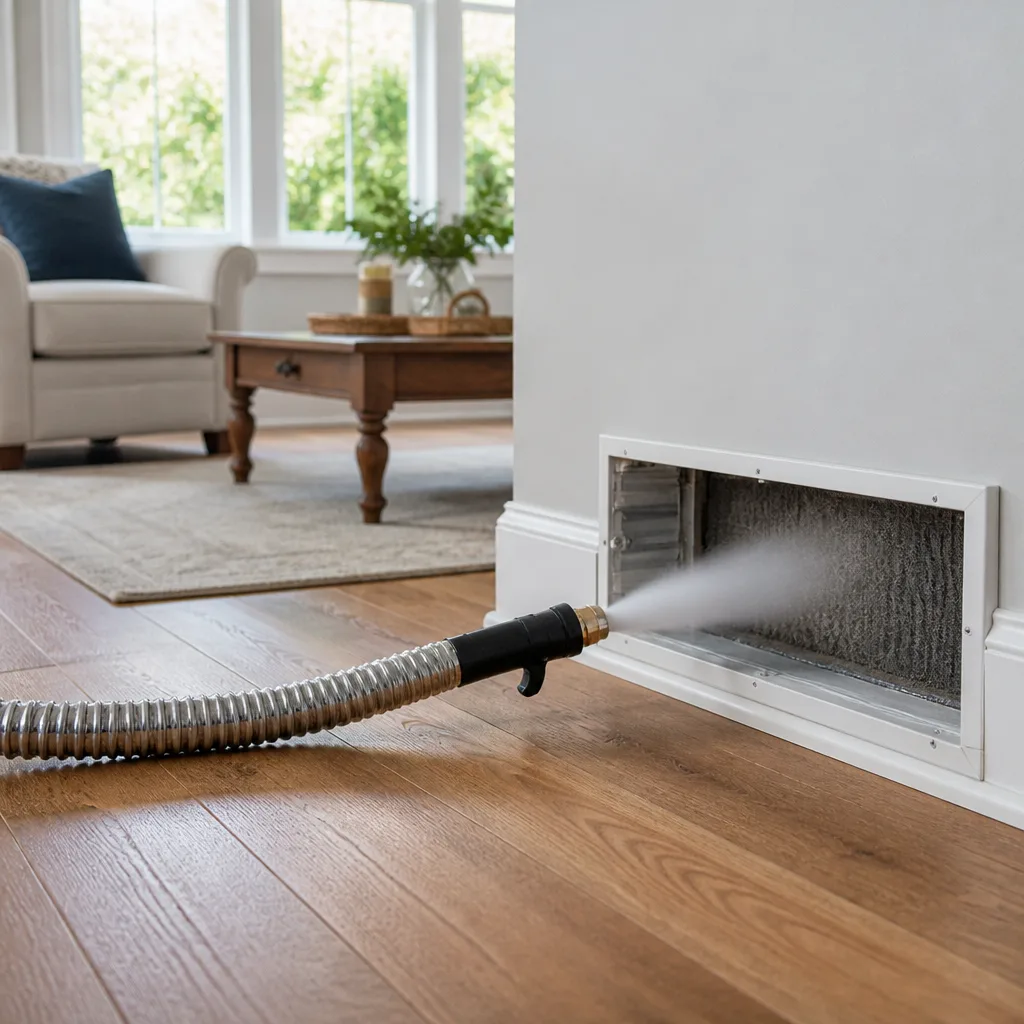 Sanitizing & deodorizing
Whole-system duct and dryer vent check with before-and-after photos - you see exactly what came out of your vents
That "$99 whole-house special" is a bait ad - the real number appears once they are in your hallway, or the "clean" is a shop-vac at the register. We photograph the inside of your ducts before and after instead.
Choosing the Right Air Duct Cleaning Brand: A Buyer’s Guide for Layton
The most heavily reviewed duct-cleaning company in Davis County may be running the same portable vacuum as the operator advertising an $89 whole-house special. That’s the uncomfortable truth about “brand” in this trade. A logo on a van, a franchise name, and a stack of five-star ratings tell you almost nothing about what equipment actually enters your ductwork or how the technician uses it. We’ve watched homeowners in Layton choose operators on brand recognition alone and end up with a system that looks clean and isn’t. This guide teaches you to evaluate duct cleaners on the variables that actually predict cleaning quality: equipment specifications, agitation method, inspection capability, and process transparency.
Quick Answer
Choosing the right air duct cleaning brand in Layton means ignoring the logo and checking three things instead: the equipment specification (source vacuum CFM rating and agitation method), the process transparency (whether they offer before-and-after visual inspection of your own ducts), and the credentials that hold up (NADCA membership, ACCA membership, and verifiable technician training). Brand affiliation, review count, and years in business are weak proxies. A Layton-based specialist who can document commercial-grade equipment and explain the method step by step will clean your system better than a regional chain resting on name recognition.
Styles & brands we work with
- Whole-home duct cleaning
- Dryer vent cleaning
- Camera inspection
- Sanitizing & deodorizing
Table of Contents
- Why Brand Names Are a Weak Proxy for Cleaning Quality
- The Credentials Actually Worth Verifying
- How to Request Equipment Specifications Before Booking
- How to Read Online Reviews Correctly
- The Local Operator Advantage in Layton
- What a Proper Duct Cleaning Job Should Involve, Step by Step
- The Questions to Ask Before You Book
- Red Flags That Signal a Low-Quality Operation
Why Brand Names Are a Weak Proxy for Cleaning Quality
Franchise affiliation tells you how a company was financed, not how it cleans. Many duct-cleaning franchises are owned by people who bought into a marketing system, then equipped their operation with the cheapest portable vacuum that meets the franchise minimum. Review counts grow with marketing spend, not cleaning quality. Years in business can mean a well-run operation or a marketing machine that’s been converting cheap promotions into upsells for a long time. None of these signals describes what happens inside your ductwork.
Duct cleaning quality is a function of three physical variables:
- Contact vacuum power. A negative-pressure source vacuum needs enough airflow (measured in cubic feet per minute, CFM) to keep dust suspended while it’s being loosened. Undersized equipment stirs debris without capturing it.
- Agitation method. Loose dust needs to be physically dislodged from duct walls before the vacuum can pull it out. Rotary brush systems do this; a wand with a hose end does not.
- Inspection capability. Without a camera or clear visual access to the duct interior before and after, nobody, including the technician, can confirm what was actually removed.
In Layton, where many homes are older builds with original sheet-metal ductwork and some have flex-duct runs added during additions or HVAC replacements, the agitation method matters even more. Flex duct responds differently to a rotary brush than rigid galvanized steel. A high-CFM vacuum with an adjustable brush head handles both. A generic portable unit with a fixed head tends to leave flex runs untouched and can damage them.
Our approach to this is simple: we lead with the equipment because we believe that’s the real story. We use Rotobrush and Nikro mechanical systems, the same category of equipment used in commercial and light-industrial duct work, not consumer-grade shop vacuums. That’s the differentiator Layton homeowners can actually verify by asking.
The Credentials Actually Worth Verifying
Credentials fall into two tiers, and they’re not equal. Company-level memberships signal that a business has committed to a standard of practice, at least on paper. Technician-level credentials signal that the person standing in your house has been trained. Ask for both.
NADCA membership. The National Air Duct Cleaners Association is the trade body for this industry. Membership indicates a company has committed to the association’s assessment, cleaning, and restoration standard. It does not guarantee every job meets that standard, but it does verify that the company knows what the standard is. Ask whether the membership is current and whether the company’s technicians are trained to the NADCA standard.
ACCA membership. The Air Conditioning Contractors of America is the HVAC industry’s main association. Membership tells you the company is connected to the mechanical side of the trade, not only the cleaning side. This matters in Layton because duct problems often have HVAC-side causes: leaky plenums, misaligned coils, or return-air configurations that push contamination back into the living space.
Technician-level credentials. Ask specifically what training the person who will be at your house has completed. Not the company’s philosophy. The individual’s training. An honest operator answers this directly. A marketing-driven operation deflects to “our team is highly trained” without naming a course, a standard, or a certification.
One more useful question: does the company offer HVAC cleaning as a coordinated service, or does it only clean the duct runs? Ducts and the air handler are one system. A cleaner who can’t touch the coil and drain pan leaves a significant source of debris untouched.
How to Request Equipment Specifications Before Booking
This is the single most useful move a Layton homeowner can make. Ask for the equipment specification in writing before you book. The operator who hesitates, deflects, or answers “we use the best equipment” is telling you something important.
Here’s what to request, with the specific numbers that separate professional-grade from consumer-grade:
- Source vacuum CFM rating. Ask for the model and its CFM rating. Professional duct-cleaning vacuums are rated well above the small portable units many operators use. If the operator can’t name the model, they don’t know their own equipment.
- Agitation method. Ask what physically loosens dust from the duct walls. A rotary brush, a whip, or a compressed-air nozzle are acceptable professional methods. A shop-vac hose is not. Ask whether the brush can be adjusted for flex versus rigid duct.
- Inspection capability. Ask whether they use a camera or provide before-and-after photos of your own ductwork. This is the closest thing to proof a cleaning actually happened.
- Negative-air containment. Ask whether the equipment uses negative-pressure containment to keep dust out of your living space during the cleaning. Without containment, cleaning stirs contaminants into the air.
- Sanitizing products. Ask what is applied after mechanical cleaning and why. Sanitizing should be a specific, named product application, not a vague “disinfection spray.”
The most transparent operators will confirm these details before you commit to an appointment. The equipment we use includes Abatement Technologies negative-air systems, which is a level of containment more common in commercial projects than in residential duct cleaning. If you’re comparing us to another operator, this is a fair point to ask about.
How to Read Online Reviews Correctly
Review counts and average ratings are noise. The useful signal is inside the text of individual reviews. A five-star review that says “the technician arrived on time and was friendly” tells you the appointment was easy, not that the ducts were cleaned. A three-star review that describes “they ran a camera through and showed me the before-and-after” tells you the operation has inspection capability and demonstrates it.
Here’s what to weight and what to discount:
- Weight: Reviews that name a technology or process (“they used a rotary brush,” “they showed me photos,” “they sealed a leaking joint they found”). These indicate a reviewer who understood what happened.
- Weight: Reviews that describe what surprised the reviewer, positively or negatively. Specificity is a signal of genuine experience.
- Weight: Reviews from repeat customers, especially property managers or homeowners who mention a second appointment.
- Discount: Reviews that only praise punctuality, friendliness, or price. These carry no information about cleaning quality.
- Discount: Very short reviews that read like they could apply to any service business.
- Discount: Patterns of complaints about upsells or unexpected charges on a system that “was dirtier than expected.” That pattern is a red flag for bait-and-switch.
For Layton readers: local reviews carry more weight than reviews from other cities, especially when the reviewer mentions a specific area of Layton or a type of housing stock (older home, new construction, townhome). A cleaning approach that works in a 1980s ranch may need adjustment in a newer build with tighter ductwork.
If you’re comparing us against another Layton operator, read our reviews the same way you’d read theirs. Look for reviews that describe before-and-after photos, duct sealing, or a specific piece of equipment. Those are the ones that carry signal.
The Local Operator Advantage in Layton
Duct work in Layton is not the same as duct work in Phoenix or Seattle, and a regional chain that services many cities at once can’t adjust for that. Three factors make local knowledge matter here.
Housing stock and duct construction. Layton has a mix of mid-century homes, 1990s-2000s suburbs, and newer construction, and the duct systems differ across all three. Older homes often have original rigid galvanized ductwork with more joints and seams, which means more leak points. Mid-era homes frequently mixed rigid trunk lines with flex-duct branch runs. Newer homes typically use more flex duct throughout, which can be more prone to sagging or contamination at fittings. A local technician who has seen all three types knows which sections to scrutinize.
Common failure points. Duct failures in Layton tend to cluster around a few spots: plenums near the furnace, transitions between trunk lines and branch runs, and any duct that runs through unconditioned space. A regional operator may not prioritize the same spots a Layton specialist does.
Local air quality patterns. Layton sits in a valley where winter inversions and seasonal dust can push more airborne particulate into the return side of the system. That has implications for filter selection, sanitizing after cleaning, and the frequency of cleaning in homes with allergy-prone occupants. A local operator knows when to recommend a Honeywell or Aprilaire filtration upgrade, not just a cleaning.
A Layton-based specialist also carries local accountability. If something goes wrong, the operator is in the same market and has a reputation to protect in the same community.
What a Proper Duct Cleaning Job Should Involve, Step by Step
The single most revealing question to ask a duct cleaner is “walk me through the job from arrival to departure.” Here’s what a proper process looks like. Compare it to what your prospective operator describes.
- Pre-cleaning inspection. Camera access or visual inspection to document the current condition of the ductwork, locating heavy debris, moisture, or damage. Before-and-after photos should be part of this step.
- System isolation. The HVAC system is turned off and the return and supply sides are isolated so debris can’t migrate into the air handler or the living space.
- Negative-pressure setup. A source vacuum is connected to create negative pressure throughout the duct system. On larger systems or where contamination is heavy, negative-air containment equipment is set up to protect the surrounding rooms.
- Agitation and cleaning. A rotary brush or equivalent agitation tool is run through every branch and trunk line, working back toward the vacuum source. The brush must be adjusted for duct type as the technician proceeds.
- HVAC component cleaning. The blower, coil, drain pan, and plenum are cleaned if they’re part of the service.
- Repair and sealing. Any leaks, disconnected joints, or damaged sections found during inspection are repaired and sealed. This is where quality diverges sharply. A vacuum-only operator leaves leaks in place.
- Sanitizing. A post-cleaning sanitizing treatment is applied to address remaining biological contaminants and odors. Guardsman-based products are what we use for this step.
- Post-cleaning verification. Before-and-after photographs or camera documentation, reviewed with the customer.
If a Layton operator can’t describe steps 3, 4, and 8 in detail, the operation is likely using undersized equipment or skipping the inspection step. Both are the most common reasons a duct cleaning “doesn’t make a difference.”
The Questions to Ask Before You Book
These are the questions that separate a genuine specialist from a marketing operation. Ask them before you schedule.
- “What specific equipment will you bring to my house?” Looking for: model names, CFM ratings, agitation type. Not: “state-of-the-art.”
- “Will I see before-and-after photos of my own ducts?” The answer should be yes, every time.
- “Do you repair and seal duct leaks, or just clean?” Repair-and-seal capability is the strongest signal that the operator understands duct systems, not just dust removal.
- “What training or certification does the technician have?” Individual-level credentials matter more than company-level claims.
- “Are you a NADCA member? Are you ACCA members?” Either yes or an honest no. Weasel words are a red flag.
- “What does the full job include, and what isn’t included?” A clear scope prevents surprise charges. Written estimates should set the final price.
- “Will you check my dryer vent separately?” Dryer vent cleaning is a fire-risk reduction service. It should be a scheduled service, not an afterthought.
- “What happens if you find damage or a leak?” A specialist will have a protocol. A marketing operation will sell more services.
The Layton Air Duct Cleaning Pros team gets these questions regularly, and we welcome them. A homeowner who asks these questions before booking is the kind of customer we want to work with, because the equipment and process differences matter most when the customer knows to check.
Red Flags That Signal a Low-Quality Operation
Some warning signs show up before the technician ever arrives. A few specific items:
- A per-vent price. Whole-system pricing is the honest model. Per-vent pricing is a marketing structure that leads to bait-and-switch upsells on the day of the appointment.
- “The previous owner never had it cleaned” as a sales tactic. This line, delivered after the technician is in the house, is a common way to push a much larger service.
- Unable to name the equipment. If the front office can’t tell you the source vacuum model or the agitation method, the operation is not technically organized.
- No before-and-after photos. The single most reliable method for documenting work is visual, and an operator who skips it is either unequipped or unwilling to be verified.
- Portable shop-vac style equipment on heavy jobs. A consumer vacuum unit in a residential duct cleaning is standard practice for low-cost operations, and it can stir dust rather than remove it.
- No mention of sanitizing or filtration as real services. An operator who doesn’t offer products like Honeywell or Aprilaire systems is either missing a step or missing the equipment catalog.
- No duct repair capability. A vacuum-only operator cannot fix what’s found, which means leaks, contamination paths, and damage all remain after cleaning.
Common Mistakes to Avoid
- Booking on the coupon price alone. A “$89 whole-house special” is rarely the whole house. Ask what the estimate covers and whether the final price is set by a written estimate before work starts.
- Assuming a franchise name means better equipment. It doesn’t. Some of the most heavily reviewed franchise operations in Davis County use the same portable equipment as budget operators. Verify equipment, not the logo.
- Skipping the before-and-after photos. If you don’t ask for photos, you’re trusting the operator’s word. A specialist-grade operator offers them without being asked.
- Ignoring the dryer vent. A dryer vent fire risk in Layton is real. The dryer vent cleaning service should be its own scheduled appointment, not a “by the way” add-on after the duct work.
- Choosing on review count. Use review content, not review volume. A reviewer who names a piece of equipment or a process has more signal than fifty reviewers who only mention timeliness.
- Assuming “duct cleaning” means one thing. Some operators do mechanical rotary brush cleaning. Others use compressed air alone. Others barely touch the system. Ask which category the operator falls into.
- Not asking about duct sealing. A duct system with leaky joints leaks money and pulls unfiltered attic air into the house. Cleaning without sealing leaves that problem untouched.
See the difference
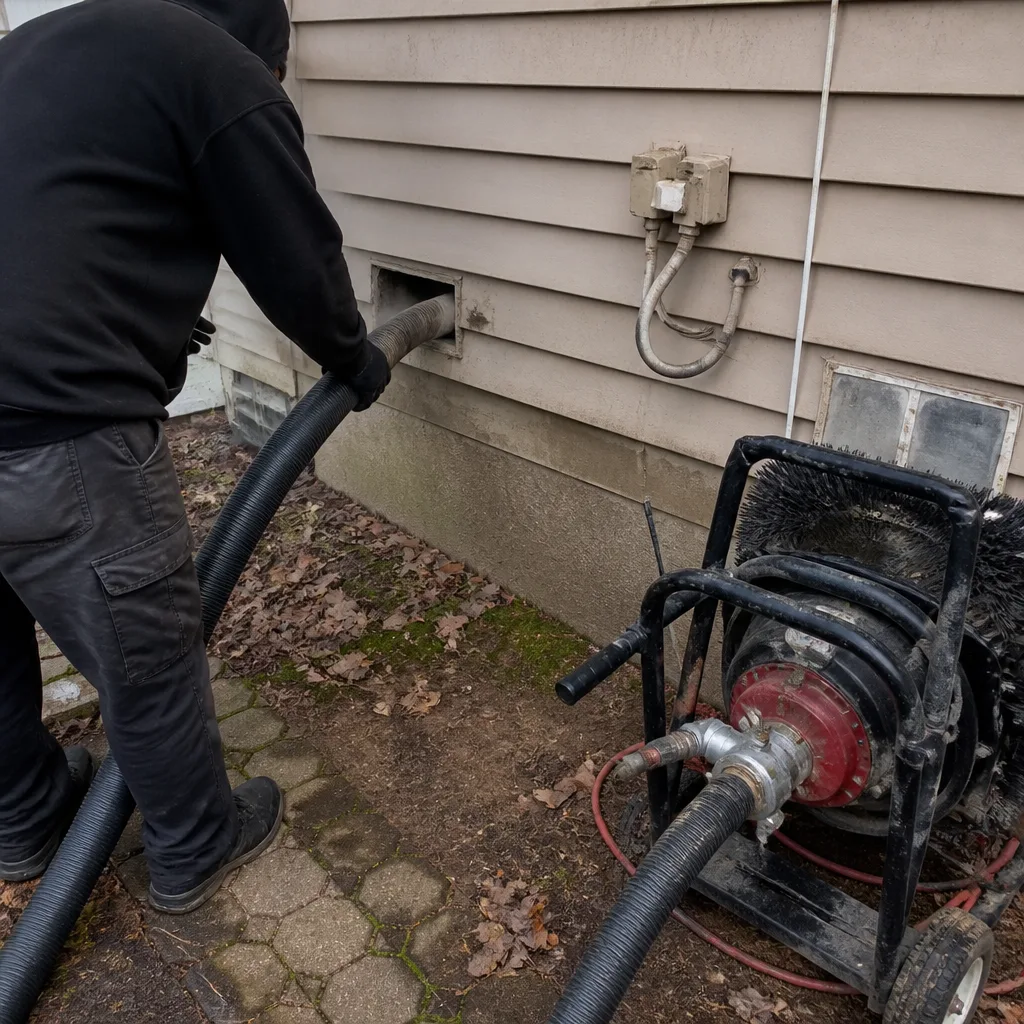 Before
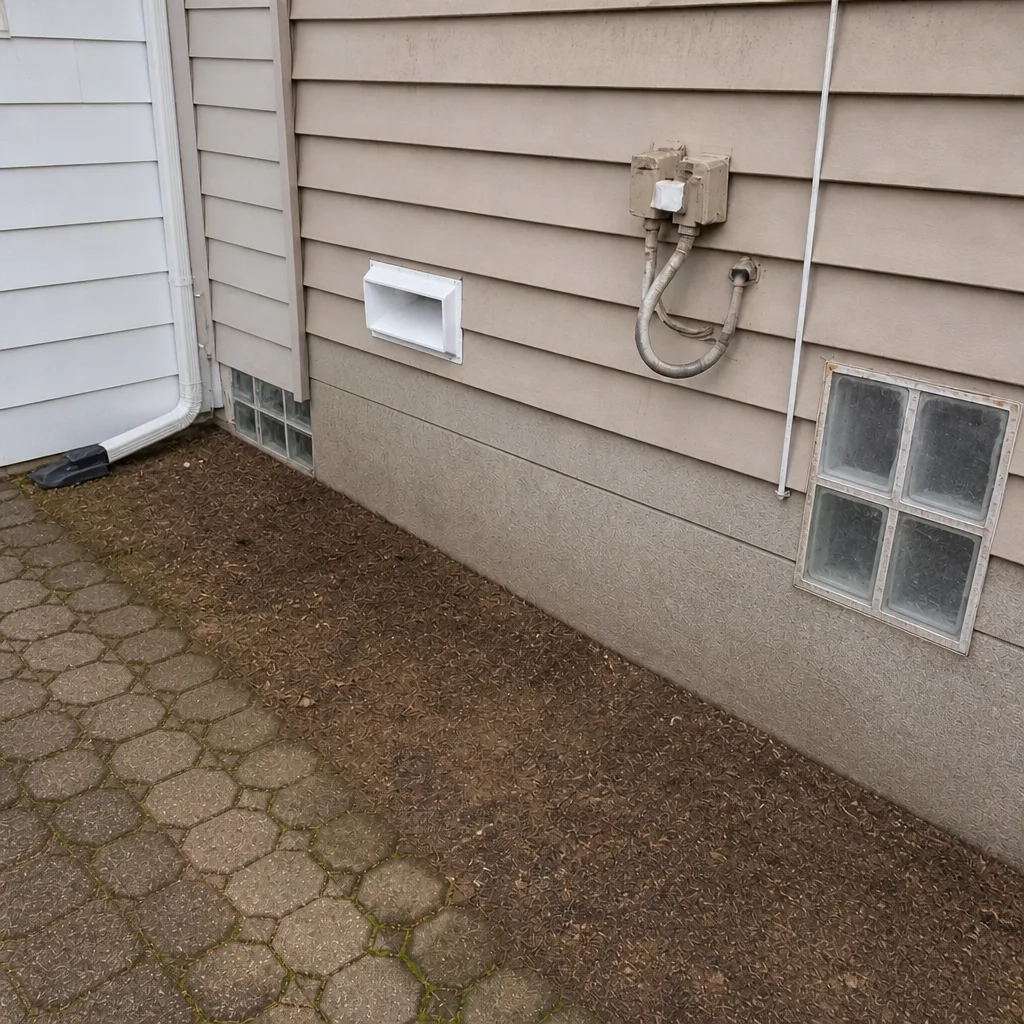 After
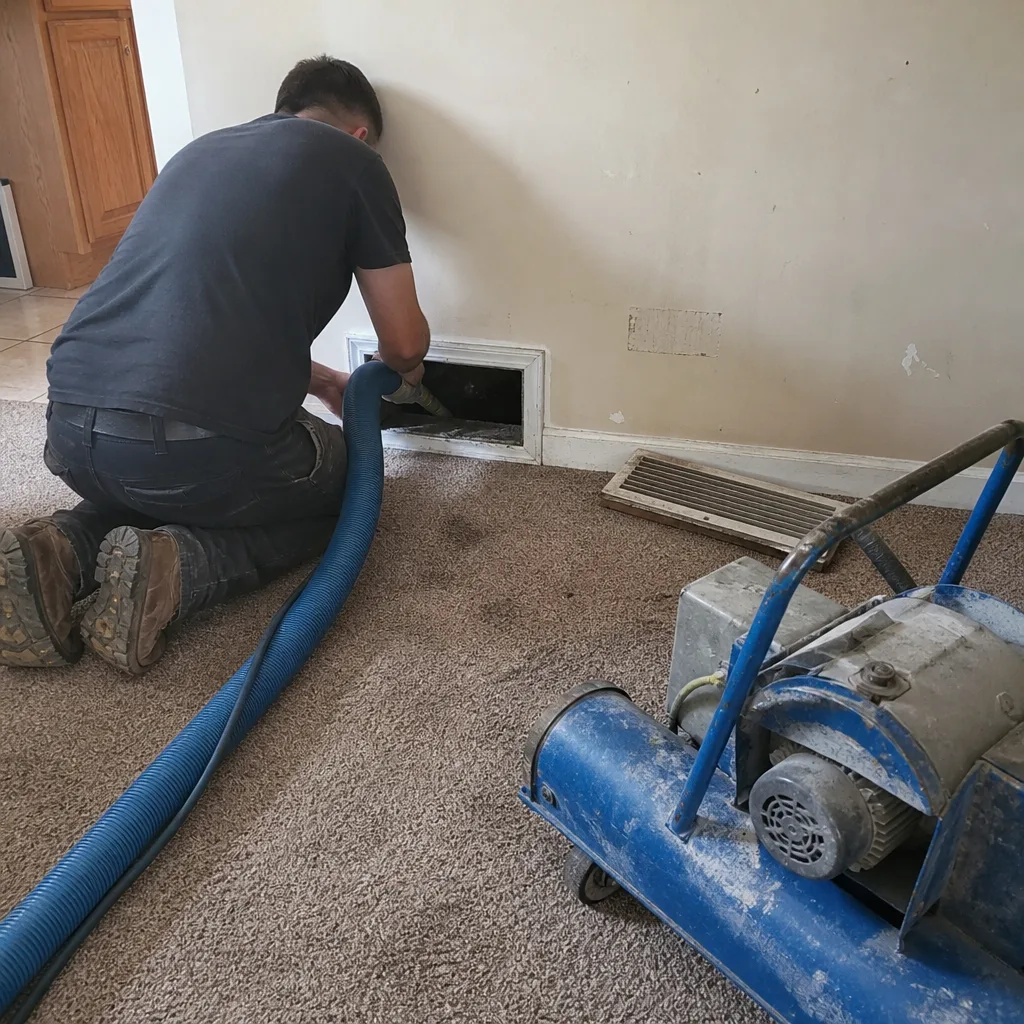 Before
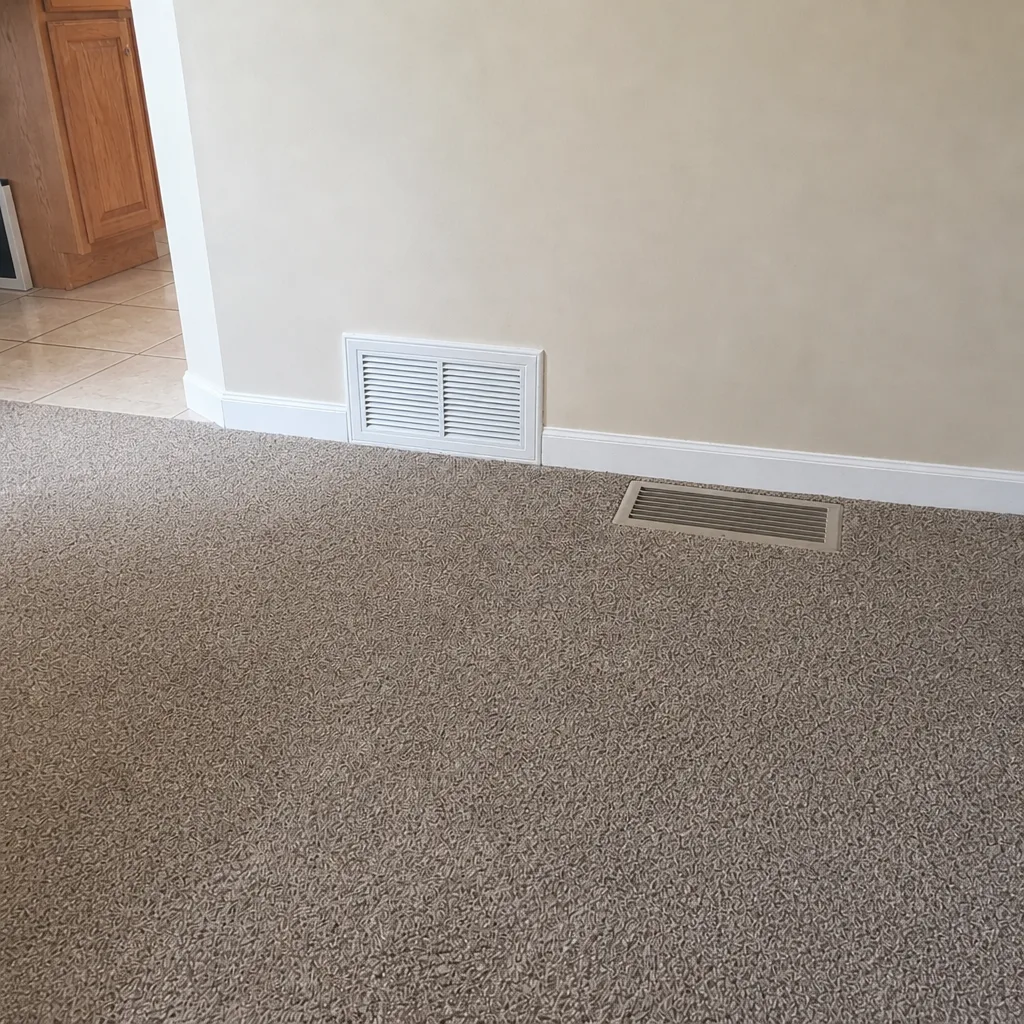 After
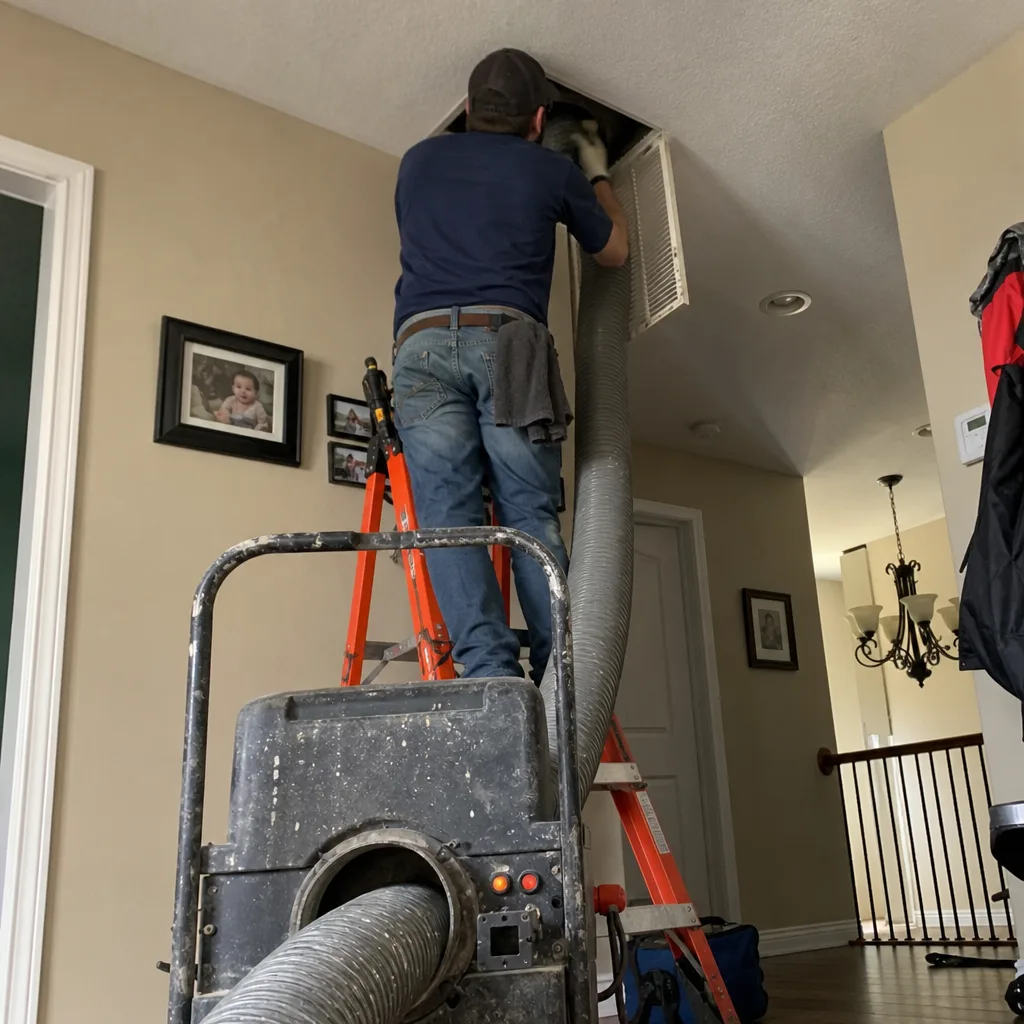 Before
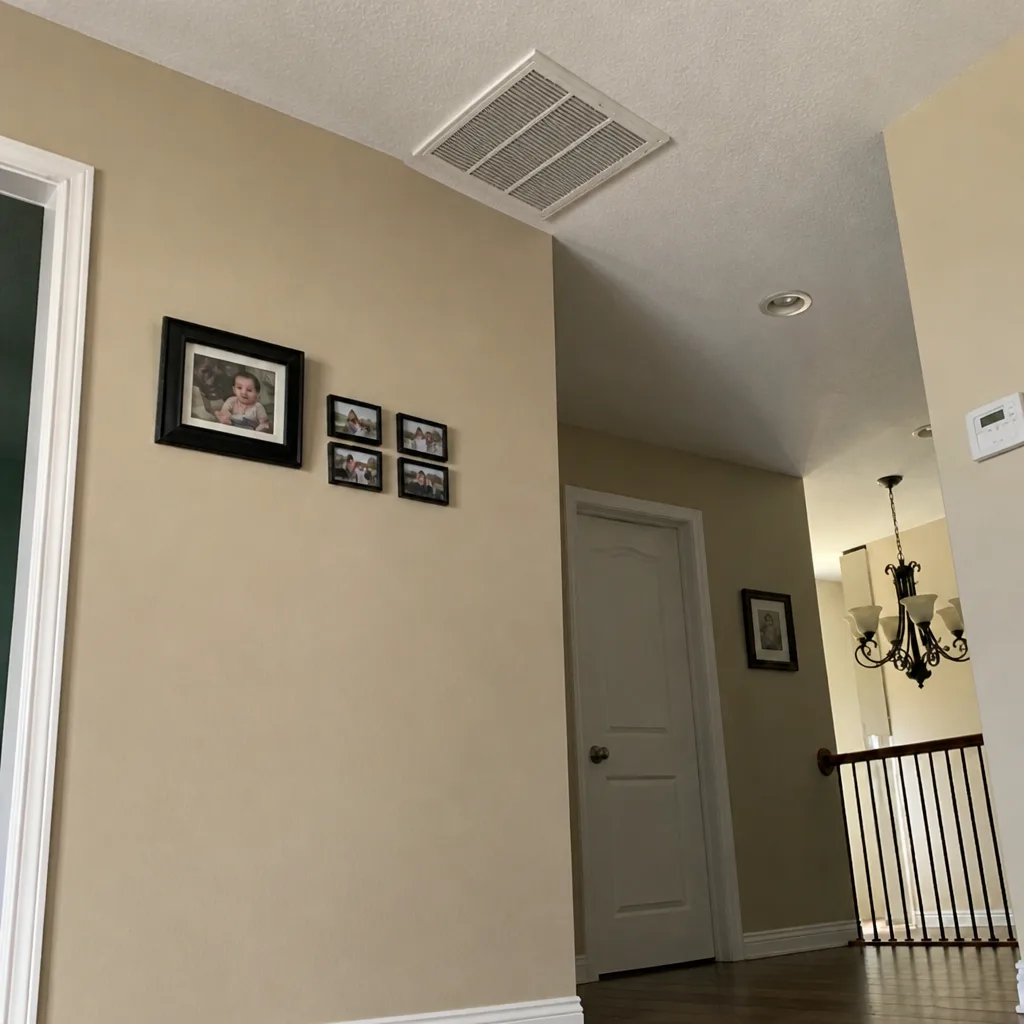 After
When to Call a Professional
There’s a threshold between “I should think about this” and “I should book an appointment.” Call a professional when you notice any of the following: persistent dust on furniture after cleaning; visible dust accumulation at supply registers; musty odors when the HVAC cycles on; worsening allergy or respiratory symptoms that correlate with time inside the house; a recent HVAC replacement or remodel (hidden debris from construction); visible mold growth near the plenum or air handler; or a dryer vent that hasn’t been cleaned in several years. Call sooner for dryer vents. Lint accumulation is the leading cause of residential dryer fires, and the risk increases with every load. Duct cleaning should be on a rough schedule, typically every three to five years for most Layton homes, though households with heavy pet dander, recent construction, or allergy-prone occupants may need it more often. If you’re unsure, an inspection is a cheap way to reduce that uncertainty. Layton Air Duct Cleaning Pros offers free estimates in Layton – call (855) 726-7045. We answer 24/7. Fast dispatch from 7am to 7pm, Sunday through Friday.
Frequently Asked Questions
Most whole-home duct cleaning in the Layton area falls in a broad range depending on the number of vents, duct complexity, and whether repair or sanitizing is included. The written estimate sets the final price, and a reputable operator uses whole-system pricing rather than per-vent charges. If you want a specific number for your house, call (855) 726-7045. We answer 24/7 and estimates are free.
Cheap quotes usually reflect one or more of three choices: undersized portable equipment, skipped inspection and documentation, or a per-vent structure that grows on the day of the visit. The “low quote” is frequently a door-opener, not a final price. The right question to ask is not “whose quote is lowest” but “what equipment, process, and documentation does each operator include?”
Before-and-after photographs of your own ducts are the strongest proof. Beyond that, ask for the source vacuum model and any camera access used during the visit. An operator who offers both is giving you verifiable evidence. An operator who offers neither is asking for trust without verification. If you want that level of documentation, call (855) 726-7045 to book or ask questions about our process.
Every three to five years is a reasonable baseline for most Layton homes. Households with heavy pet dander, recent remodels, allergy-prone occupants, or a history of moisture intrusion may need it more frequently, and homes with clean ductwork and good filtration can stretch to five years or longer. Regular filter changes and a well-maintained HVAC system extend the interval.
Yes, specifically during winter inversion periods, when airborne particulate is higher and more gets pulled through the return side of the system. Homes with allergy-prone occupants often benefit from post-cleaning sanitizing and a filtration upgrade (Honeywell or Aprilaire systems are the practical options here). A local operator who knows the seasonal patterns can tailor the recommendation.
Yes, that’s the main reason we offer duct repair and sealing as its own service category. Many operators stop at vacuuming. We seal leaks, reconnect separated sections, and address damage during the same visit when possible. To schedule a combined cleaning and repair estimate, call (855) 726-7045. We answer 24/7. Fast dispatch from 7am to 7pm, Sunday through Friday.
No. Brand recognition tells you how much the company has invested in marketing. It doesn’t tell you what equipment enters your ducts or how the technician uses it. The better filter is verifiable equipment specs, documented process, and before-and-after inspection. Any Layton operator who can produce all three is worth taking seriously, regardless of the name on the van.
Dryer vent cleaning is its own service, not an upsell after duct work. Lint accumulation in a dryer vent is the leading cause of residential dryer fires, and the risk is independent of duct cleanliness. If you’re booking a duct appointment and haven’t had the dryer vent serviced recently, ask for it. air duct cleaning and dryer vent cleaning are both important, but they address different fire and air-quality concerns.
The Bottom Line
Brand, review count, and years in business are weak signals. What actually predicts duct cleaning quality in Layton is the equipment specification (source vacuum CFM, agitation method, containment), the process transparency (before-and-after documentation, camera inspection), and the credentials that hold up under a direct question (NADCA, ACCA, technician-level training). Use the questions in this guide on whatever operator you’re considering, whether that’s us or someone else. Layton homeowners who evaluate on specifications and process end up with cleaner systems, verifiable evidence, and fewer surprises on the invoice. If you want a specialist-grade operator that leads with equipment, process, and documentation, that’s what we’ve built our business around. Five services, commercial-grade tools, and one team that can clean, repair, seal, and sanitize in a single visit.
Ready to see what’s in your ducts before we start? Call (855) 726-7045 for a free estimate. We answer 24/7. Fast dispatch from 7am to 7pm, Sunday through Friday.
Written by the team at Layton Air Duct Cleaning Pros.