
Last updated November 25, 2026
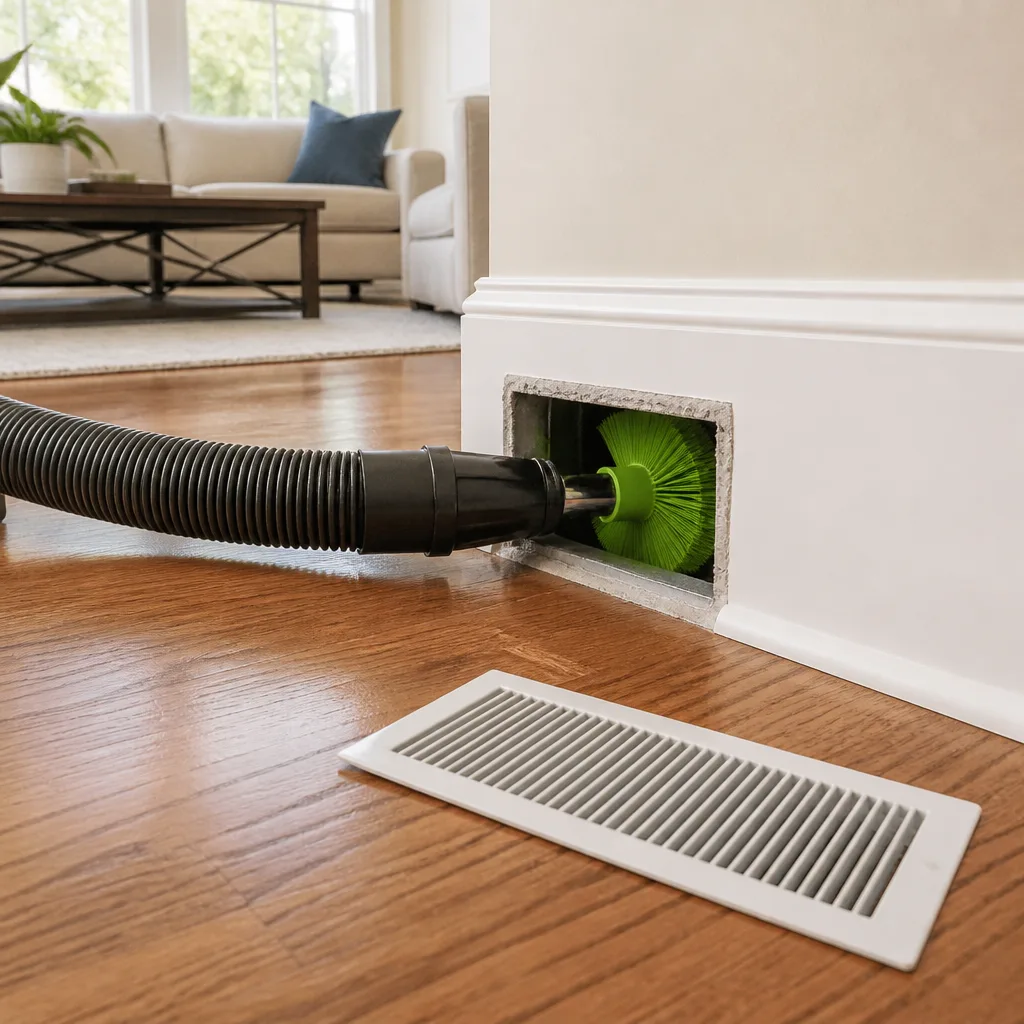 Whole-home duct cleaning
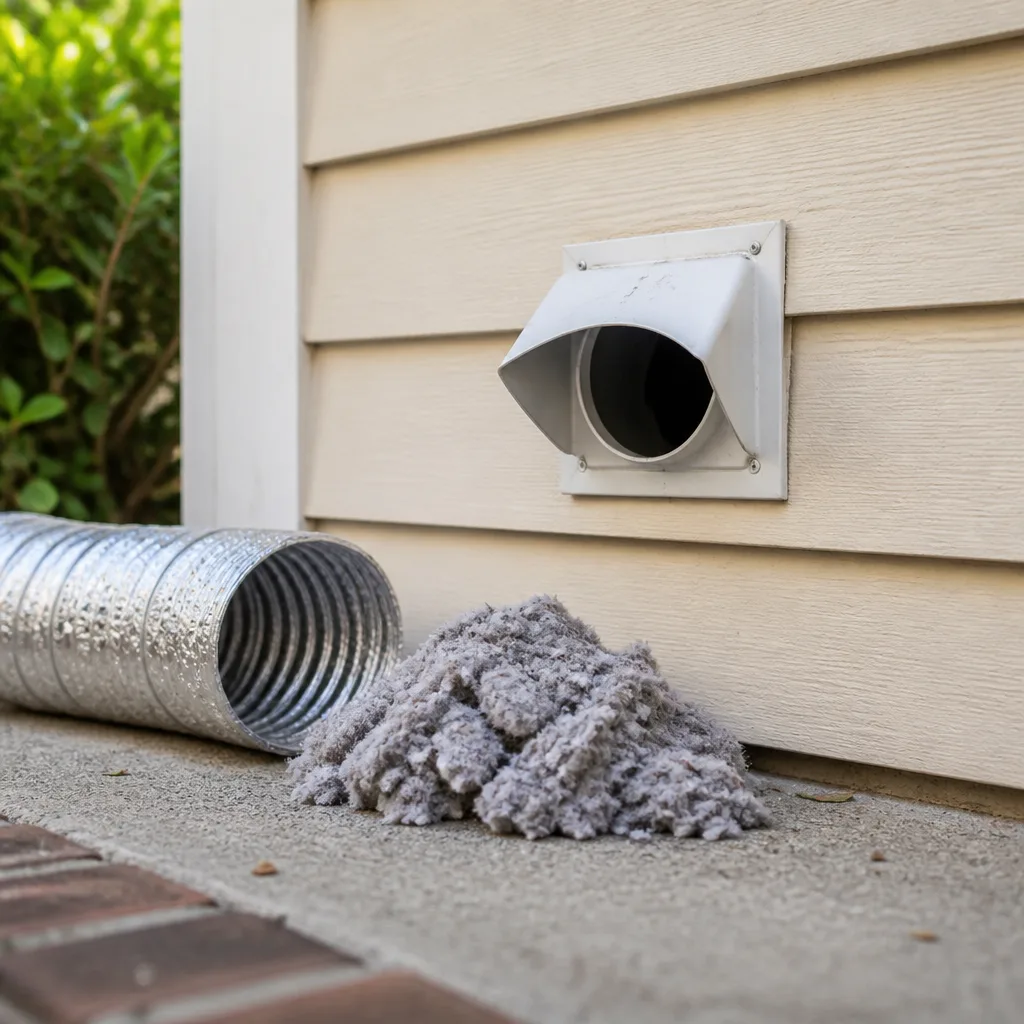 Dryer vent cleaning
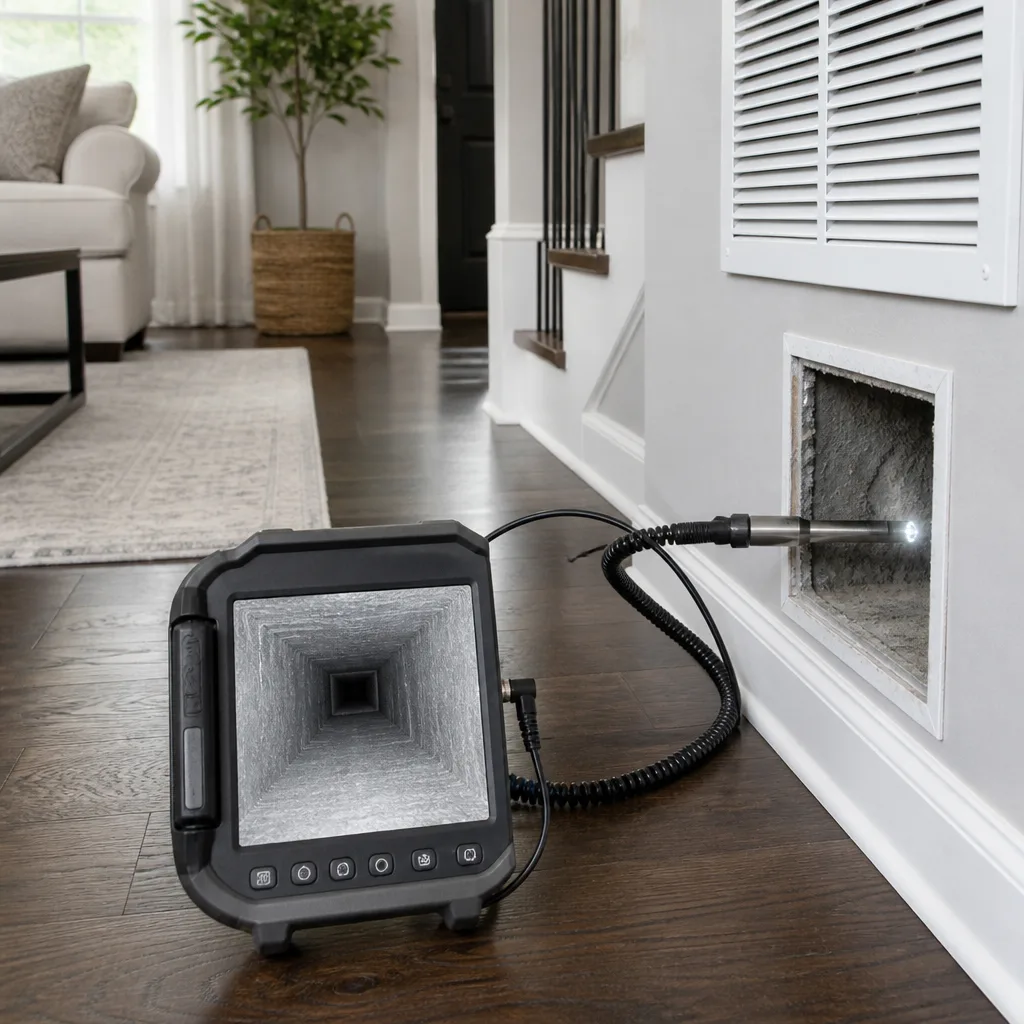 Camera inspection
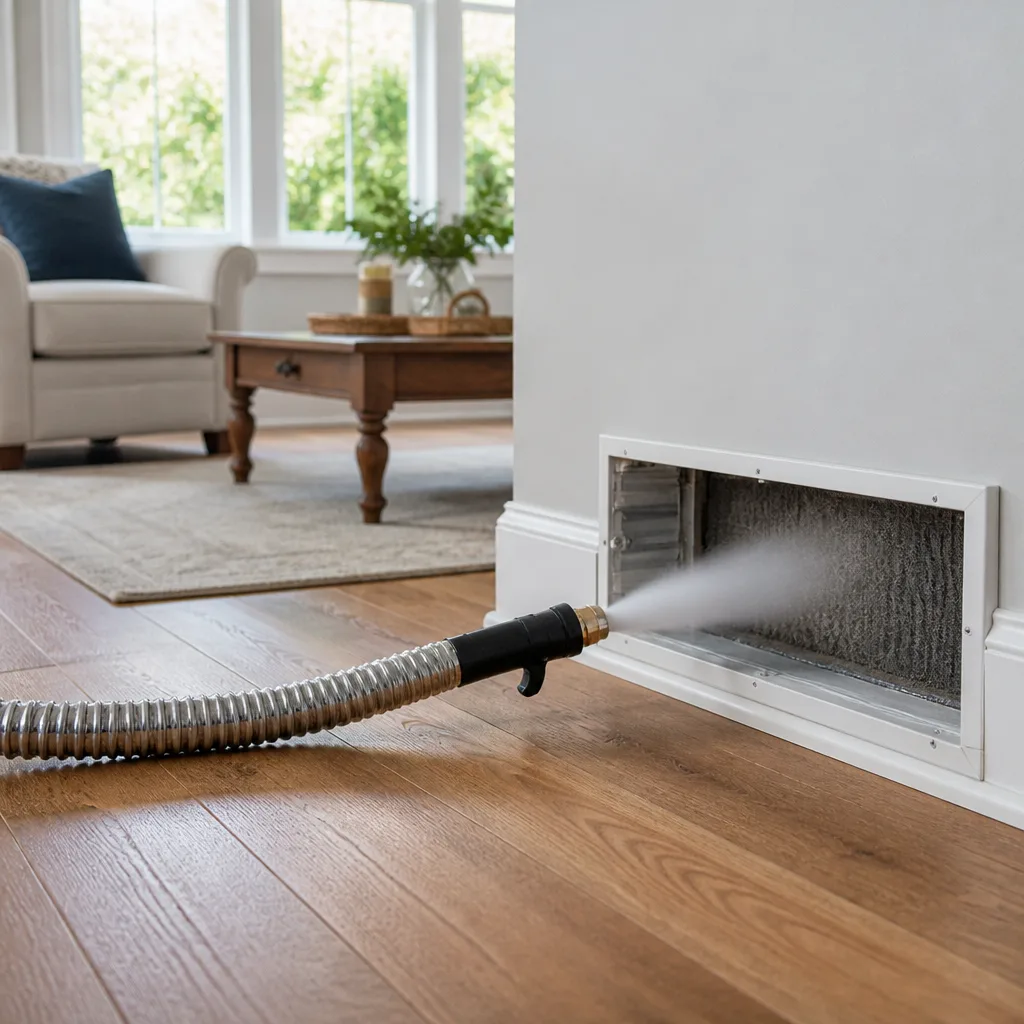 Sanitizing & deodorizing
Whole-system duct and dryer vent check with before-and-after photos - you see exactly what came out of your vents
That "$99 whole-house special" is a bait ad - the real number appears once they are in your hallway, or the "clean" is a shop-vac at the register. We photograph the inside of your ducts before and after instead.
Air Duct Cleaning Permits, Codes & Inspections in Layton, UT: What You Need to Know
No permit is required to vacuum your ducts. But if that cleaning reveals a disconnected trunk line and someone patches it with mastic and foil tape, you may now have unpermitted mechanical work on your hands, and it can surface on a home inspection report years later. That gap between cleaning and repair is where most Layton homeowners get surprised. This guide maps the regulatory boundary precisely: when duct work stays maintenance, when it crosses into permitted mechanical work under Utah’s adopted building code, how mold remediation changes the documentation picture, and what records to keep for insurance and future disclosure. We’ll also cover how new-construction duct cleaning interacts with builder warranties in Layton’s active growth corridors.
Quick Answer
Air duct cleaning itself does not require a permit in Layton. Routine cleaning, vacuuming, and sanitizing fall under maintenance. However, duct repair, sealing, component replacement, or reconfiguration of the mechanical system typically requires a mechanical permit through Layton City’s building department, and mold remediation in ductwork triggers separate documentation and possibly a licensed remediation contractor. If your cleaning uncovers a real repair, ask who is pulling the permit before work starts.
Styles & brands we work with
- Whole-home duct cleaning
- Dryer vent cleaning
- Camera inspection
- Sanitizing & deodorizing
Table of Contents
- Cleaning vs. repair: where Layton’s permit line sits
- How Layton City regulates mechanical systems
- Mold and microbial contamination: a different rulebook
- Duct sealing and duct replacement under Davis County permit schedules
- New-construction duct cleaning and builder warranties
- How to verify your contractor is pulling the right permits
- What documentation to keep for insurance and disclosure
- What a mechanical inspection actually checks
Cleaning vs. repair: where Layton’s permit line sits
The distinction is simple to state and slippery in practice: cleaning removes contaminants, and repair changes the system. Cleaning is maintenance. Repair is mechanical work. Layton’s building department regulates the second category, not the first.
In our experience, the boundary gets tested most often when a routine cleaning uncovers a problem the homeowner didn’t know existed. A trunk line has pulled loose. A boot connection in a slab has separated. Flex duct has been crushed by furniture or flattened in a tight attic run. The cleaning crew reports it, and the natural next question is, “Can you fix that today?”
Where the line usually falls
- Maintenance, no permit: vacuuming and mechanical agitation of duct interiors, sanitizing with an approved product, filter replacement, register cleaning, closing gaps with code-compliant sealant on accessible joints.
- Mechanical work, typically permitted: replacing duct sections, adding or removing supply or return runs, reconfiguring airflow, replacing components of the HVAC system, repairing or replacing the air handler, connecting new equipment to the duct system.
- Separate track: mold remediation or biological contamination cleanup, which is governed more by insurance, disclosure, and industry remediation standards than by a single permit.
The exact line depends on the scope of the work and how your local inspector reads it. We tell every Layton customer the same thing: when in doubt, call the building department and describe the specific scope, not the general category. “Cleaning” and “cleaning plus a repair” get different answers.
How Layton City regulates mechanical systems
Layton City enforces the Utah statewide adopted building codes, which include the International Residential Code and the International Mechanical Code as adopted by the state. That means the mechanical system in your home is regulated at the point of installation and alteration, and the trigger is alteration, not routine service.
For homeowners, this matters because the permitting and inspection system is what protects you from a bad repair. A permitted job gets inspected. An unpermitted job does not. And an unpermitted job, however well-intentioned, can later be flagged by a home inspector, an appraiser, or an insurance adjuster as an open item.
How to check whether your job needs a permit
- Describe the exact work to the Layton City building department, not the category. Say “replace a 12-foot run of supply duct” rather than “duct work.”
- Ask whether the scope is considered maintenance or alteration under the adopted code. Ask for the answer in writing if it matters for a future sale.
- Ask who is expected to pull the permit: the homeowner or the contractor.
- Ask what inspections, if any, would follow the work.
- Keep the answer with your project records.
We don’t issue permits, and we don’t decide what the code requires for your specific job. That’s the building department’s call. What we do is tell you clearly when we think a scope is likely to cross the line so you can get the right answer before we start. Our air duct cleaning service is cleaning, not repair, and that distinction is stated on every estimate.
Mold and microbial contamination: a different rulebook
Mold in ductwork is not a permit question in the way a mechanical repair is. It’s a documentation, insurance, and remediation-standards question. And it changes who should be doing the work.
Layton sits in a high-desert valley with cold winters and a swing between humid summer monsoon weeks and dry air most of the year. Duct systems in Layton homes can develop condensation issues inside metal plenums, especially in basements and in homes with oversized central air relative to the envelope. Add a return duct that pulls air from a damp crawl space and you have a plausible environment for microbial growth, regardless of climate.
How the mold track differs from a standard cleaning
- Scope: remediation is not just vacuuming. It involves containment, filtration, removal of contaminated porous materials, and verification of the result.
- Documentation: most remediation work should be documented with before-and-after photos, moisture readings, and a written summary. That record matters if the issue returns or an insurer asks.
- Insurance: whether a policy covers microbial remediation depends on the specific policy and cause. We can work with your insurer and provide documentation, but we cannot promise what a policy covers.
- Disclosure: a treated mold issue is usually not a disclosure item once it is fully resolved and documented, but an undocumented one can become a negotiating problem at sale.
For a small amount of surface growth, cleaning plus a Layton Air Duct Cleaning Pros sanitizing treatment using Guardsman products is often sufficient. For anything more than that, we recommend a dedicated remediation contractor and a clear documentation trail. This is not a job where we cut corners to keep the price down. We set a flat price per system after we see the scope, and the written estimate is the final word.
Duct sealing and duct replacement under Davis County permit schedules
Duct sealing is the most commonly misclassified duct job in Layton. Sealing accessible seams and joints with mastic or code-compliant tape on an existing system is maintenance. Replacing a section, rerouting a run, adding a supply, or connecting new equipment is mechanical work that the county and city permit schedules treat as alteration.
Davis County follows the statewide code adoption with local administration at the city level. For Layton properties, the Layton City building department is the point of contact for mechanical permits. In unincorporated Davis County parcels adjacent to Layton, the county handles it. Both operate under the same adopted code, so the practical distinction for a homeowner is who to call, not what the rules are.
Sealing vs. replacement at a glance
- Sealing, typically no permit: mastic or mesh on accessible joints, closing small gaps at boots and registers, sealing a plenum where the material is reachable and there’s no change to system configuration.
- Sealing, permit may apply: sealing the entire distribution system as part of a performance improvement project, especially when it’s paired with a system change.
- Replacement, permit typically required: any new run of duct, removal and replacement of a segment, conversion between duct types, relocation of a return, and any work that changes airflow design.
We clean, repair, and seal in one visit when the scope allows. That’s a real advantage to the homeowner because it means a loose boot found during cleaning gets addressed alongside the cleaning. Where the scope crosses into permitted work, we tell you clearly and we tell you what to ask the city. Our promise is not that every repair is permit-exempt. It’s that we will not quietly do permit-worthy work and call it maintenance. That’s the bait-and-switch pattern this industry is known for, and it’s the reason so many Layton homeowners ask us about permits before we start. For a related look at how the system itself gets cleaned, see HVAC cleaning.
New-construction duct cleaning and builder warranties
New construction is the fastest way to create a permit-versus-warranty problem in Layton. Duct systems in new homes regularly contain construction debris: drywall dust, sawdust, caulk fragments, insulation fibers, and small objects dropped between the studs before the drywall went up. Cleaning that debris out is a legitimate service. The mistake is doing it wrong, or doing it without regard for the builder warranty.
What to know before cleaning ducts in a new Layton home
- Read the warranty first. Many builder warranties state that duct cleaning must be performed by a qualified contractor and may require notice or a specific protocol. Some require documentation of the work.
- Wait for the certificate of occupancy. A new home’s certificate of occupancy is issued after final inspections, and the mechanical system is part of that inspection. Cleaning before the final inspection can confuse the process.
- Don’t touch the system during the warranty period without documentation. Any work on a warrantied system should be documented with photos, a written scope, and a description of the method used.
- Use mechanical cleaning, not compressed air alone. Blowing compressed air through construction debris dislodges it into the home instead of removing it. A proper job uses a negative-air setup with containment, which is one reason we run Rotobrush and Abatement Technologies equipment on residential jobs.
- Keep your certificate of occupancy, inspection paperwork, and duct cleaning report together.
Layton’s development corridors have added a lot of new housing in recent years, and post-occupancy duct cleaning is one of the most common jobs we get asked about. It’s also the job where documentation matters most, because the warranty period overlaps with the cleaning window. See our air duct cleaning overview for what the process looks like on a new system.
How to verify your contractor is pulling the right permits
Homeowners rarely verify permits, which is exactly why the industry has a reputation problem. Verifying takes ten minutes and it protects you from a disclosure item years later. Here’s the sequence.
- Ask the contractor who is pulling the permit for the specific scope. The answer should be specific, not “we handle all of that.” If the contractor says no permit is needed, ask them to describe why the scope is considered maintenance.
- Confirm the license and insurance. The local pro is licensed and insured as their state requires, and you are entitled to ask for confirmation before work starts. Our estimates state the scope in writing and the price is set per job.
- Call Layton City building department and ask whether a permit exists for your address. If a permit was pulled, the record is there. If it wasn’t, you now know.
- Check whether an inspection is scheduled. If the work is permitted, inspection should be part of the process.
- Keep the permit number with your home records.
For a job that clearly requires a permit and the contractor balks, that’s information. Walk away. The right answer is not to argue the contractor into compliance; it’s to find the technician who already expects to pull it. Our technicians have up to 14 years of experience, and on jobs where the scope blurs the line, we tell the homeowner what to ask the city before we book the work. Our dryer vent cleaning service is a similar case in a different system: lint removal is maintenance, and a full dryer vent reroute is a different scope with potentially different documentation. Dryer vents are a fire hazard, not a minor chore, and the same rule applies: clear scope, clear documentation.
What documentation to keep for insurance and disclosure
Regardless of whether a permit was required, keep documentation. This is the single most underrated habit in home maintenance. The record is what protects you in an insurance claim, a real-estate transaction, or an HVAC problem that returns later.
What to keep in your home maintenance file
- The written estimate or invoice. It should state the scope in plain language, including what was cleaned, what was repaired, and what was sealed.
- Before-and-after photos. See what was in your ducts before we start is not just a marketing line. Photos turn a verbal claim into a record.
- Product documentation. If a filter, sanitizer, or air-quality component was installed, keep the product spec sheet. Honeywell and Aprilaire components have model numbers that matter for warranty and future service.
- Permit number and inspection record, if a permit was required.
- Mold remediation documentation, if applicable. Photos, moisture readings, and a written summary.
- New-construction paperwork. Certificate of occupancy, warranty, and any post-occupancy cleaning report.
- Insurance correspondence. Any emails or letters related to a claim.
When a home in Layton is sold, the real-estate disclosure form typically asks about unpermitted work and known defects. A clean, complete file makes those answers easy. A missing file makes them a negotiation. If you’ve had duct repair done, or duct sealing done as part of a performance project, and you don’t have documentation, request a copy from the contractor now, before you need it.
What a mechanical inspection actually checks
A mechanical inspection on a permitted job is not the same as a home inspection. It’s narrower and more specific. Understanding what an inspector looks at tells you what the permit system is actually protecting.
What inspectors focus on
- Materials and installation method. Duct material type, sealant compatibility, support and fastening.
- Connections and sealing. Whether joints are properly sealed, boots are fastened, and plenum connections are intact.
- Configuration. Whether the system matches the approved design if the permit includes a design document.
- Sizing and airflow, where applicable. Static pressure and airflow checks are part of a full performance review, though not typically part of a routine inspection.
- Clearance and accessibility. Equipment access, clearances to combustibles, and whether the system can be serviced.
- Venting. Flue and exhaust connections where the mechanical scope touches them.
If you’ve had a permitted repair done and something feels wrong afterward, the inspection record is your starting point. Call the inspector who signed off, describe the symptom, and ask what was verified. Most will tell you. That record is one reason we encourage homeowners to ask about permits, even when the answer is that no permit is needed: the follow-up trail matters.
Common Mistakes to Avoid
- Assuming cleaning covers repairs. A cleaning crew that offers to “just fix” a disconnected run during the visit may be doing permitted mechanical work under the guise of maintenance. Ask who is pulling the permit before the mastic comes out.
- Not asking the building department the exact question. “Does duct cleaning need a permit” and “does replacing a section of duct need a permit” get different answers from Layton City. Describe the scope, not the category.
- Skipping documentation on a job with no permit. Even maintenance work should have a written scope and photos. The disclosure form at sale doesn’t care whether a permit was required; it cares what happened.
- Cleaning new-construction ducts before checking the warranty. Some builder warranties specify conditions for duct cleaning. Read the warranty before you book the job.
- Confusing mold cleaning with mold remediation. A quick sanitize is fine for surface growth. Anything beyond that needs a remediation contractor and a documented process, not a vacuum and a spray.
- Relying on a low coupon as the total price. The per-vent price is the most common bait-and-switch in this trade. Ask for a flat price per system, in writing, before work starts.
- Not verifying that the contractor is licensed and insured. The local pro is licensed and insured as their state requires. Ask for confirmation before work begins, not after.
See the difference
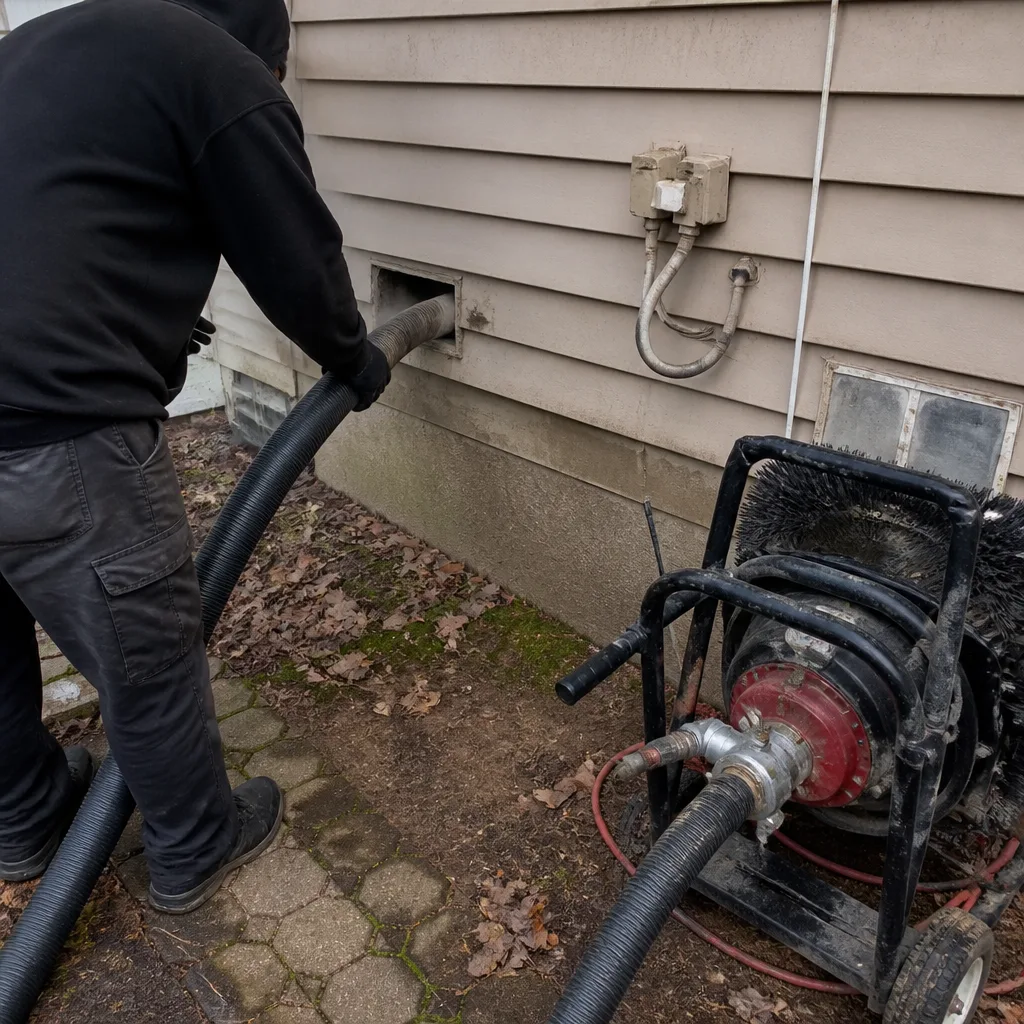 Before
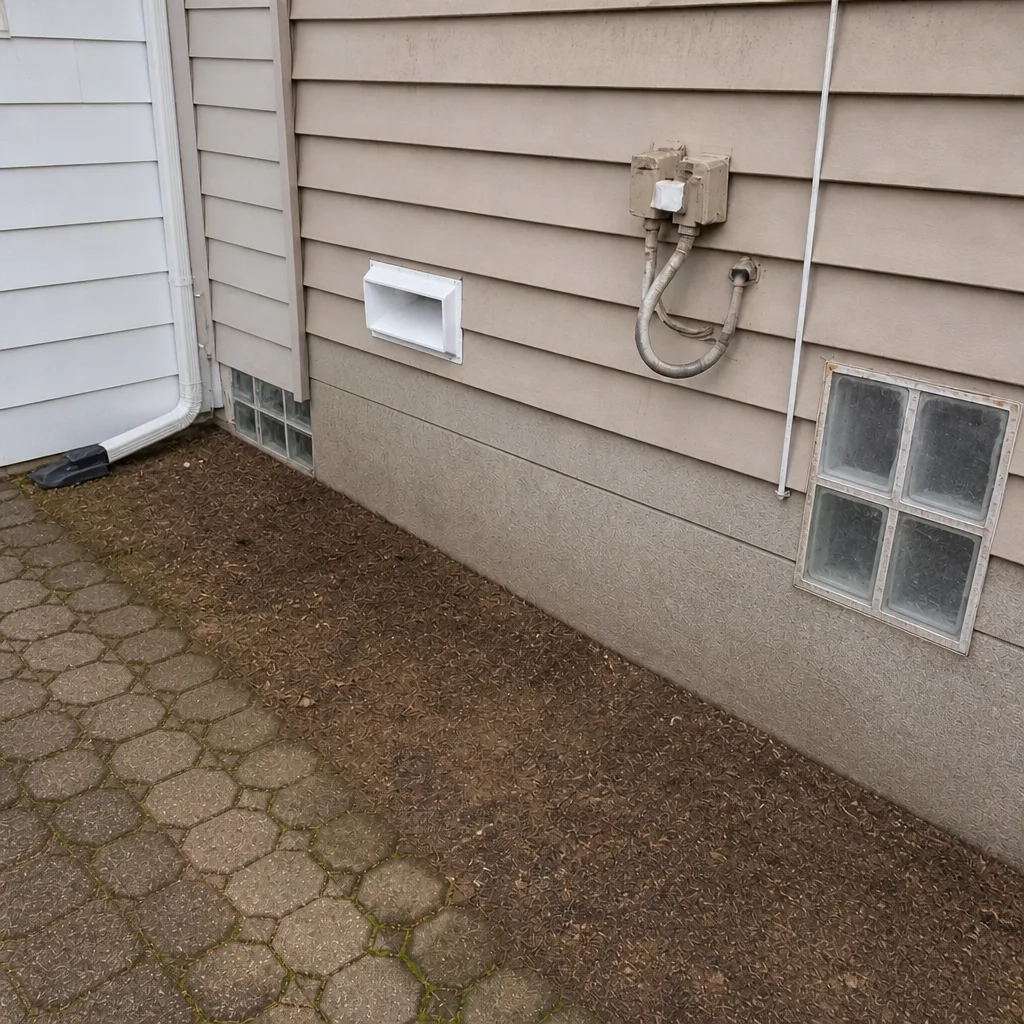 After
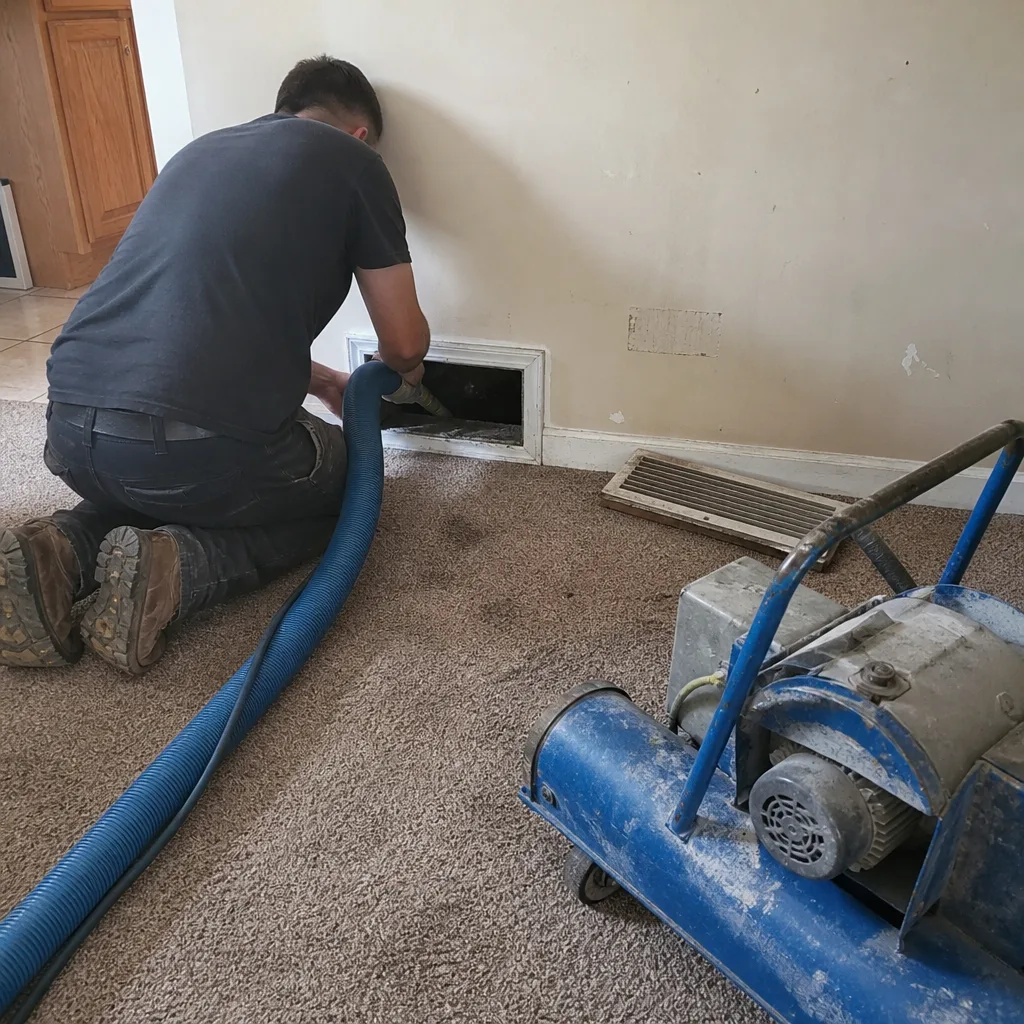 Before
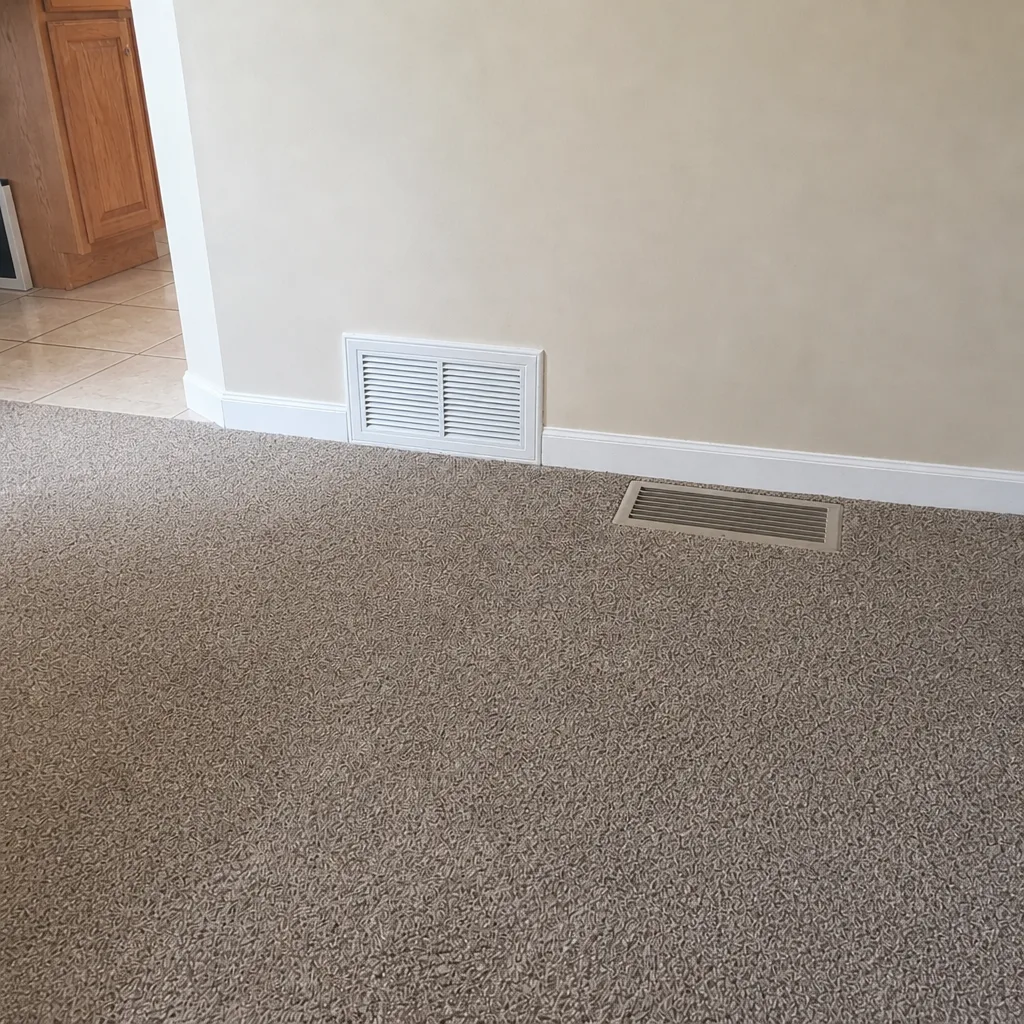 After
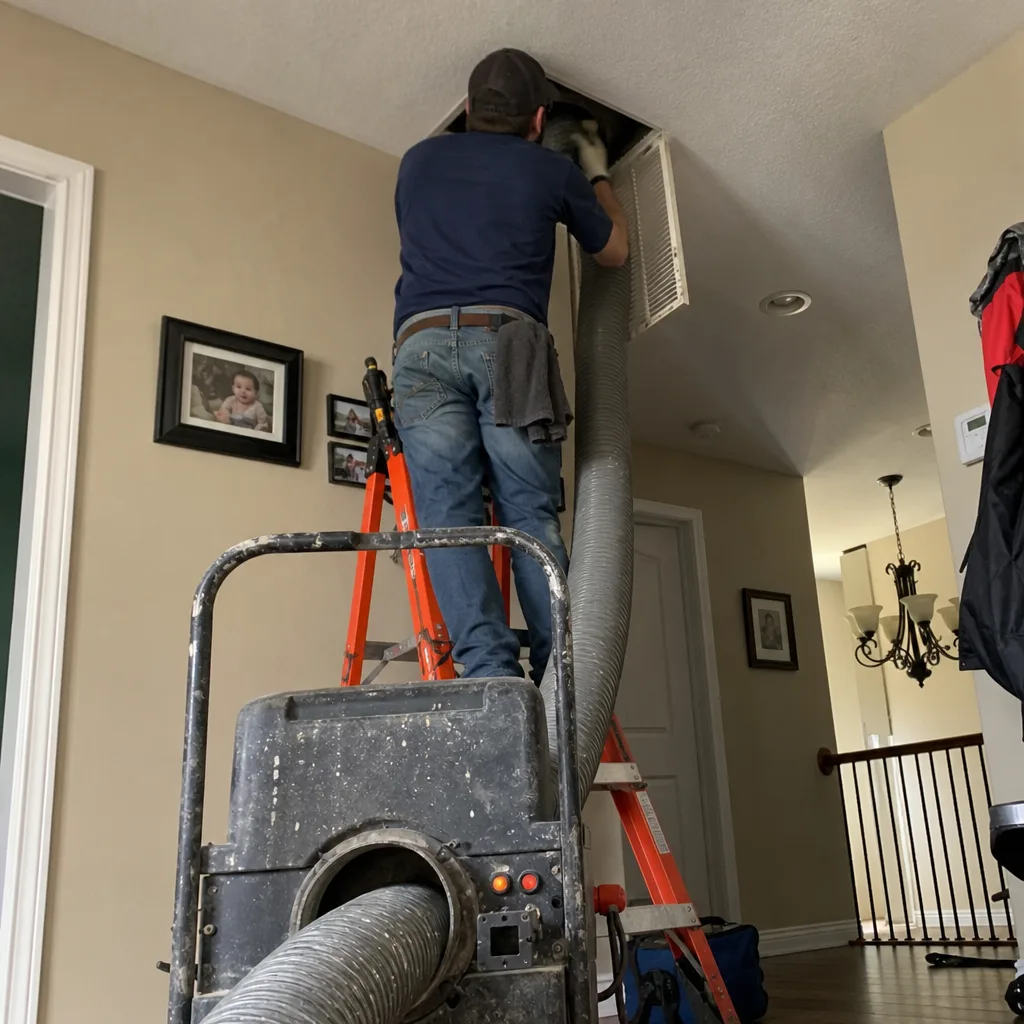 Before
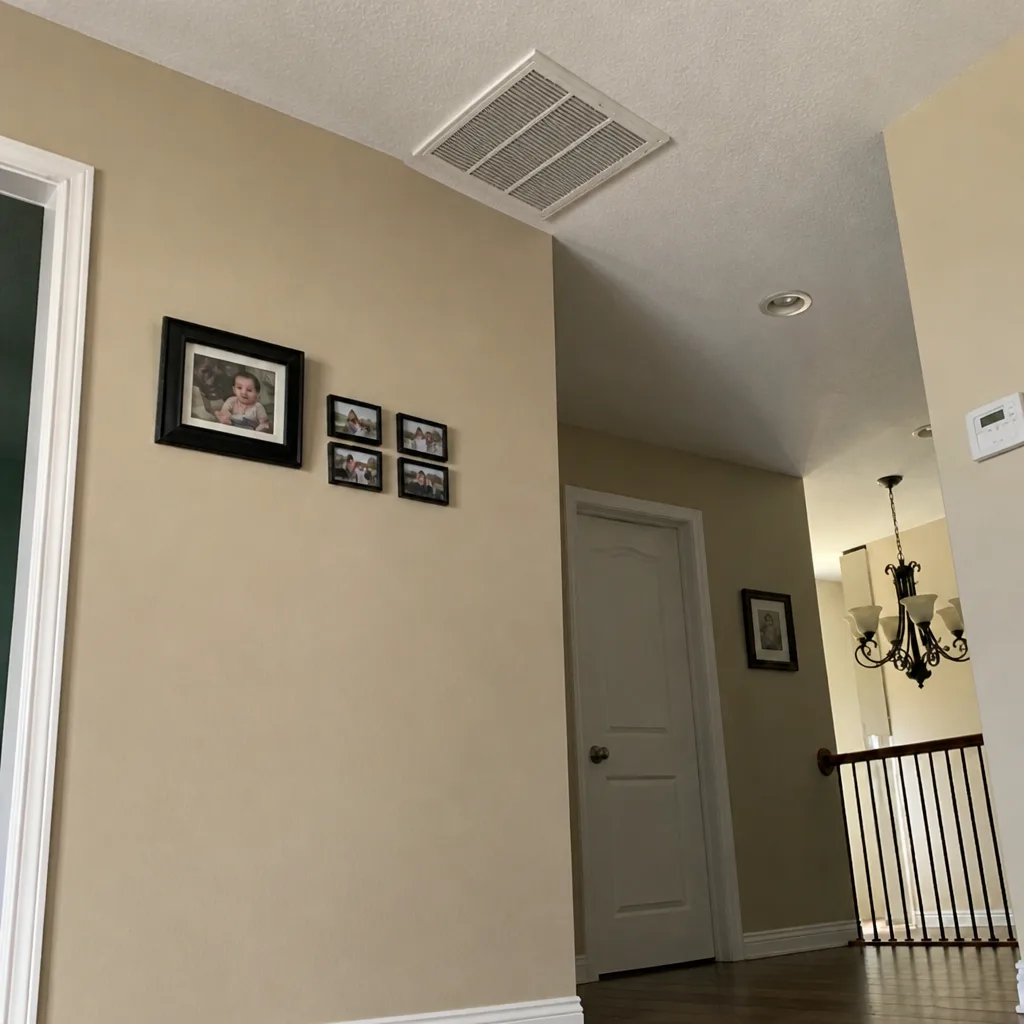 After
When to Call a Professional
Some duct problems are clearly a job for a specialist, and waiting rarely helps. If a cleaning reveals a disconnected trunk line, you’re seeing dust blow out of a register after cleaning, your energy bill is climbing without explanation, or you smell something musty near a return, those are signs the problem goes beyond dust. If you’re buying a Layton home and the inspection report flags “no documentation of duct cleaning or repair,” that’s also a reason to call. If mold is visible inside a register or on a plenum, call a remediation contractor first. Layton Air Duct Cleaning Pros offers free estimates in Layton and can tell you whether the scope is maintenance or permitted work before you book. Call (855) 726-7045. We answer 24/7. Fast dispatch from 7am to 7pm, Sunday through Friday.
Frequently Asked Questions
No. Routine air duct cleaning is maintenance and does not require a permit in Layton. Vacuuming, mechanical agitation, sanitizing, and register cleaning fall under maintenance. A permit is typically required when the work changes the system: replacing a duct section, adding a supply, or connecting new equipment. Call us if you’re unsure, and describe the exact scope to Layton City’s building department for a definitive answer. Call (855) 726-7045 for an exact quote; estimates are free.
Cleaning removes contaminants from an unchanged system. Repair alters the system’s configuration or replaces components, and that distinction is what the code cares about. Sealing an accessible joint is maintenance; replacing a run of duct is alteration, and alteration is the category that gets permits. If a cleaning uncovers a repair, ask before the mastic goes on whether the scope crosses the line.
Not typically a permit, but a different process and documentation standard. Mold remediation in ductwork is governed more by industry remediation standards, insurance policy terms, and disclosure requirements than by a single permit. Small surface growth on accessible duct surfaces can often be cleaned and sanitized; anything beyond that should go to a dedicated remediation contractor with documented verification.
Call Layton City’s building department and give them your address. Permit records are public. If a permit was pulled, the record is there and an inspection may be scheduled. If it wasn’t, ask the contractor why they consider the scope maintenance. Documentation is the whole point: a permit number on your home file protects you later.
It can. Read the warranty before booking the job. Some builder warranties specify conditions on duct cleaning and may require documentation. Clean after your certificate of occupancy is issued, use a mechanical cleaning method that doesn’t blow construction debris into the home, and keep the report with your warranty paperwork. If the warranty is unclear, ask the builder in writing first.
We set a flat price per system after we see the scope, and we don’t quote a per-vent price. The final price is set by the written estimate before work starts, not after. We do not sell a low coupon that becomes a much larger invoice once the technician is on site. Call (855) 726-7045 for an exact quote; estimates are free.
The Bottom Line
The rule to remember: cleaning your ducts is maintenance, and repairing or replacing them is mechanical work that typically requires a permit from Layton City’s building department. Mold remediation runs on a separate track with different documentation. New-construction cleaning needs to be coordinated with the builder warranty and the certificate of occupancy. None of it is complicated if you ask early and keep a file. What matters is that you know which category your job is in before work starts, that you ask the building department the specific question, and that you get a flat price per system in writing. When a cleaning uncovers a repair, we tell you clearly. Call (855) 726-7045 for a free estimate on duct cleaning or duct repair. We answer 24/7. Fast dispatch from 7am to 7pm, Sunday through Friday.
Written by the team at Layton Air Duct Cleaning Pros.